
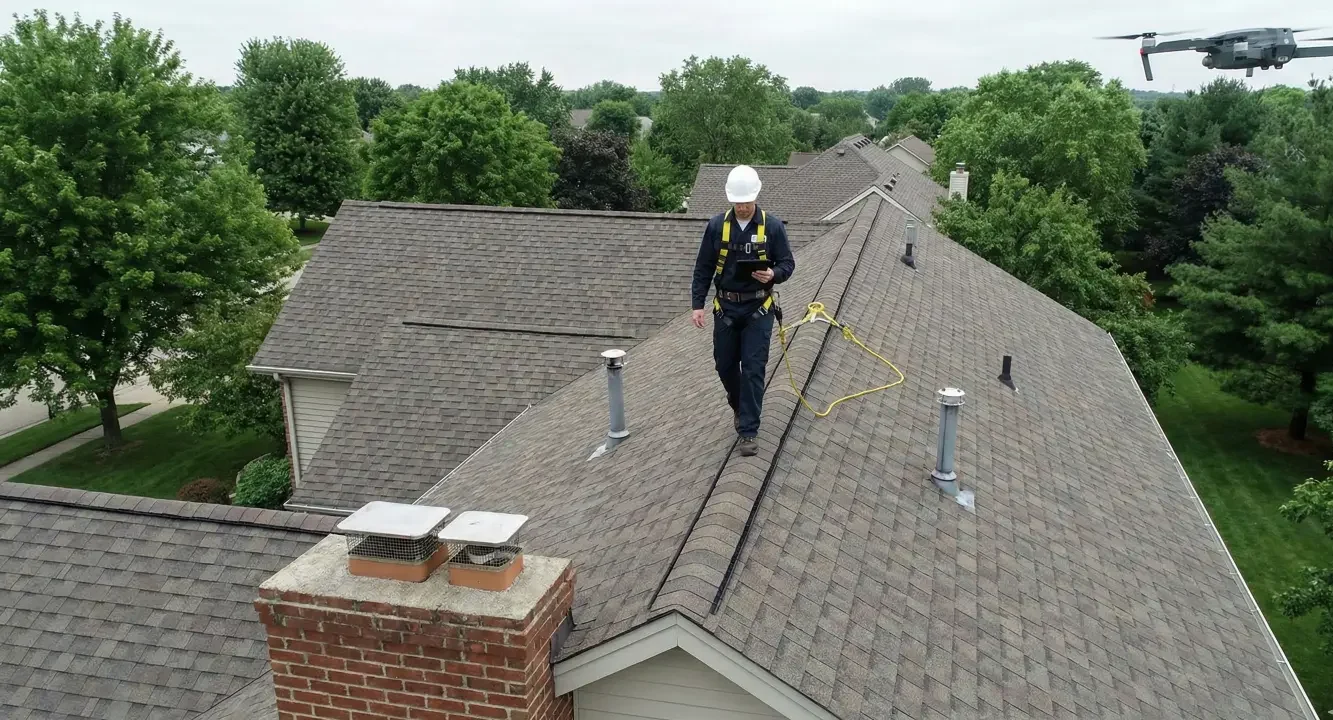
When you hear hail hammering your roof or see neighbors getting new shingles, it’s natural to wonder: “Do I have damage—and what kind of inspection do I actually need?” You need a claim ready roof inspection!
Most homeowners are offered a “free roof inspection” and picture a contractor glancing around for five minutes and saying yes or no. The problem is that this kind of casual look isn’t built for today’s hail and insurance environment.
Across the U.S., hail is responsible for hundreds of thousands of property claims every year, with annual hail-related losses now topping $20 billion according to industry analyses. Georgia and the Atlanta metro are firmly in that risk zone, with dozens of on-the-ground hail reports and frequent severe weather warnings in recent years. At the same time, research from the Insurance Institute for Business & Home Safety (IBHS) and others shows that repeated small hail events can significantly accelerate shingle aging—even when stones are below the size many people think of as “severe.”
In that world, a claim-ready roof inspection isn’t a quick yes/no. It’s a structured, documented process that gathers the evidence your carrier needs to make an informed decision—without crossing the line into “gaming the system.” That’s what the framework below is designed to do.
Red Top Roofing Atlanta uses this kind of methodical, claim-ready approach so that when we say your roof is fine, needs repairs, or should be replaced, there’s a clear trail of photos, notes, and context behind it.
Why “Free Roof Inspections” Aren’t All Created Equal
The difference between a quick look and a structured assessment
A quick “free inspection” often looks like this:
- Contractor walks around the house, maybe climbs a slope or two
- Spots anything obvious (missing shingles, big hits)
- Delivers a verdict in the driveway
A structured assessment, by contrast, has an internal checklist and sequence. Industry checklists for storm damage recommend:
- A full ground-level walkaround checking for fallen materials and collateral damage
- Examination of soffits, fascia, and gutters for impact marks and water staining
- Systematic inspection of roof surfaces, vents, and penetrations with photo documentation at each step
The first version might answer, “Is anything obviously wrong today?” The second answers, “What’s the full condition and story of this roof in light of recent storms—and what evidence supports that?”
How incomplete inspections lead to under-scoped repairs
When damage isn’t documented thoroughly, carriers tend to err on the conservative side. Adjusters are dealing with high claim volumes and must distinguish true storm damage from age, wear, or unrelated issues.
If your inspection only highlights one or two obvious hits, the scope might cover:
- Spot repairs in a small area
- Minimal or no code upgrades
- No mention of borderline, hail-weakened areas
But detailed protocols for assessing hail-damaged roofing emphasize that the first step is distinguishing storm damage from non-hail damage and then quantifying how that damage affects service life across the roof—not just in one corner. Incomplete inspections miss that bigger picture, which is how homeowners end up with recurring leaks and multiple small claims instead of one well-documented solution.
Why documentation matters more as hail and storm claims surge
Carriers are reacting to a long-term trend: hail-related insured losses have multiplied several-fold over the past few decades, and property losses from hail in North America now routinely reach into the high single- to low double-digit billions.
In response, many insurers have:
- Tightened guidelines for approving full roof replacements
- Increased scrutiny on whether damage is functional vs cosmetic
- Leaned more heavily on forensic weather and hail-risk data tools
A claim-ready roof inspection doesn’t guarantee approval—but it gives the adjuster a complete, organized picture instead of scattered phone photos and vague descriptions. In a world of higher scrutiny, that’s a major advantage.
The Four Pillars of a Claim-Ready Inspection
Red Top’s framework is built around four intuitive pillars you can remember: Surface, Structure, Surroundings, Story.
Surface: shingles, flashing, vents, and obvious impact marks
This is what most people imagine when they think “roof inspection,” but our process goes deeper than looking for a few dents. A thorough surface review draws on common best practices for storm damage inspections:
- Shingles: Check for bruises, granule loss, fractures, and creases—not just missing tabs.
- Flashing and metal: Inspect around chimneys, walls, and step flashing for dents, cracks, or lifted edges.
- Vents and accessories: Look for hail dents, chipped coatings, or cracked plastic on box vents, pipes, and skylights.
- Ridges and hips: Examine high points where impact can be concentrated and wind uplift is more likely.
Each finding is photographed close-up and in context, so an adjuster can see both the detail and the location on the roof.
Structure: decking, ridges, valleys, and potential hidden damage
Surface damage is only half the story. A structured inspection also looks at how the roof deck and critical transition areas are performing:
- Decking: Soft spots, deflection, or nail pull-through can indicate moisture intrusion or long-term deterioration.
- Valleys: These are high-traffic water pathways; even minor damage or installation defects can have outsized consequences.
- Ridges and transitions: Check for cracked ridge caps, improperly lapped underlayment, or signs of previous patch jobs.
The goal isn’t to diagnose structural engineering issues, but to flag when hail or wind may have compromised the roof’s ability to shed water over time.
Surroundings: gutters, siding, windows, and collateral storm impacts
Claim decisions aren’t made in a vacuum. Pros look for collateral damage that supports the story of the event:
- Gutters and downspouts: Dents and impact marks consistent with hail size and direction.
- Siding, trim, decks, and fences: Chips, cracks, or splatter that show storm intensity.
- Windows and screens: Tears and pockmarks that align with hail direction and wind speed.
Storm-damage guides emphasize that this collateral evidence helps distinguish true hail damage from random cosmetic issues or age.
Story: dates, weather events, prior repairs, and policy context
Finally, a claim-ready inspection documents the story around the roof, not just the surfaces:
- Storm dates: Match visible damage with known hail or wind events in your ZIP code. Services tracking hail reports and maps for Georgia highlight how often specific communities see impactful storms.
- Prior repairs: Note patched areas, mismatched shingles, and previous invoices where available.
- Age and materials: Record estimated installation date, shingle type, and any known upgrades.
- Policy context (light touch): Homeowner shares deductible, coverage type, and any known exclusions; the roofer stays away from promising what’s “covered,” but understands the stakes.
This “Story” layer turns a pile of photos into a narrative that makes sense to adjusters and agents.
Primary CTA (after Four Pillars): Get a Claim-Ready Inspection
If you’re in Atlanta or North Georgia and suspect storm damage, get a claim-ready inspection from Red Top Roofing. We’ll walk through Surface, Structure, Surroundings, and Story so you have a clear, documented picture—whether you file a claim or not.
How Pros Capture Evidence Adjusters Can Use
Photo standards: angles, close-ups, and context shots
Contractor checklists and insurer-facing guides all stress the same thing: good photos win arguments that words can’t.
A claim-ready inspection typically includes:
- Context shots: Wide views of each slope and elevation to show location.
- Medium shots: Sections of shingles, vents, or gutters that show patterns.
- Close-ups: Clear views of individual impacts, cracks, or lifted materials.
Each image is labeled or grouped so an adjuster can follow the logic without guessing which side of the roof they’re looking at.
Hail test squares, chalking, and why pattern matters
Many hail specialists use chalk test squares—carefully outlined areas on shingles where hail hits are marked—to demonstrate the density and distribution of impacts.
Why it matters:
- A few isolated hits in one area might justify repair.
- Consistent hits across test squares on multiple slopes support the case for system-level damage.
Research on hail impact and asphalt shingle performance backs this approach: cumulative impacts and granule loss can significantly reduce future resistance to storms, even if the hail itself was below “dramatic” sizes.
Writing notes in carrier-friendly language without misrepresenting coverage
The written report should focus on facts, not promises:
- “Granule loss and bruising consistent with recent hail event in [date range].”
- “Soft decking noted at northeast valley; recommends further evaluation during tear-off.”
- “Vent and gutter dents aligned with storm path documented on [hail map source].”
Claim-savvy contractors avoid phrases like “insurance must cover this” and instead describe what’s damaged, what code requires, and what a proper repair or replacement would involve. Coverage decisions stay with the carrier and, where needed, the homeowner’s professional advisors.
POV: Documentation Isn’t “Gaming the System”—It’s Leveling the Field
Why lightly documented claims often lose to highly documented ones
In a world where hail-related property losses have risen sharply and carriers are using more sophisticated hail-risk tools, thin evidence is easy to push aside.
Well-documented claims, by contrast, typically include:
- Clear proof that a qualifying storm occurred in your area
- Consistent damage patterns tied to that event
- A logical connection between observed damage and the scope being requested
You’re not “coaching” the claim—you’re simply making it possible for an adjuster, who may have 8–10 inspections in a day, to understand your roof without guesswork.
How good evidence protects both insurers and homeowners
Strong documentation actually helps both sides:
- Homeowners avoid under-scoped repairs that leave problems unresolved.
- Carriers can separate legitimate storm damage from unrelated wear more reliably.
Organizations like IBHS and FEMA emphasize the importance of better hail detection, modeling, and exposure data so that risk can be priced and managed fairly. A claim-ready inspection is the property-level counterpart to that effort.
Where contractors cross the line—and how Red Top avoids it
There is a line, and good contractors respect it. Red flags include:
- Pressuring homeowners to file claims regardless of actual damage
- Using aggressive language about “forcing” carriers to pay
- Altering or exaggerating evidence
Red Top’s approach is different: we’re there to document what’s real, explain it in plain language, and accompany you to inspections as a technical resource—not as a substitute for legal or coverage advice.
Decision Point: When Do You Need a Claim-Ready Inspection vs a Routine Checkup?
After named storms and known hail events in your ZIP code
When a significant hailstorm is documented in your area—through NOAA reports, hail maps, or local storm trackers—it’s reasonable to ask for a claim-ready inspection, not just a quick look. Georgia-specific hail statistics show more than a hundred documented hailstorms in recent years, with some events producing hailstones over 2.5 inches near Atlanta.
That doesn’t mean you automatically have major damage, but it does mean your roof has just experienced something worth documenting properly.
Before policy renewal or home sale
Even if you never file a claim, a structured inspection before:
- Renewing your homeowners policy, or
- Listing your home for sale
can surface issues early and provide a written record of condition. Real estate and contractor guides both stress that newer or well-documented roofs smooth inspection negotiations and can support better pricing.
When neighbors are filing claims but you’re unsure about your roof
If half the street has insurance yard signs out front and you truly don’t know whether your roof was hit as hard, a claim-ready inspection gives you:
- An unbiased look at your specific slopes and materials
- Evidence to decide whether filing makes sense
- Confidence that you’re not ignoring damage—or filing needlessly
Primary CTA (Decision Point): Get a Claim-Ready Inspection
If recent storms have your neighbors filing claims and you’re not sure what’s happening on your roof, schedule a claim-ready inspection with Red Top Roofing. We’ll give you a clear, photo-backed report so you can decide your next move.
Mistakes Homeowners Make Around Inspections
Calling the carrier first without understanding their roof’s story
Many homeowners call the insurer first, then scramble to find a contractor after the adjuster visit. Storm-damage checklists from restoration firms increasingly recommend the opposite: document your roof thoroughly, then decide whether to file.
That way, you’re not relying on a rushed, first-look inspection to define your roof’s fate.
Letting anyone on the roof without vetting credentials and insurance
A “free inspection” shouldn’t mean “no standards.” Reputable sources urge homeowners to verify:
- Licensing and insurance
- Local references and reviews
- Clear written processes and safety protocols
You’re giving someone access to a major structural system—make sure they treat it as more than a sales opportunity.
Failing to save photos, estimates, and reports in one place
Even good documentation loses value if it’s scattered across texts, emails, and cloud folders. Many inspection checklists now explicitly tell homeowners to organize and store all notes, photos, and reports in a single bundle that can be shared with the carrier if needed.
Secondary CTA (here): Download Our Claim-Ready Inspection Checklist
To make this easier, Red Top can provide a Claim-Ready Inspection Checklist you can use to track photos, notes, and documents from day one—whether you work with us or not.
Transformation: From “I Think There’s Damage” to “Here’s the Evidence”
Emotional shift: from guessing to feeling prepared
The biggest change clients describe after a claim-ready inspection isn’t just a better report—it’s relief. Instead of staring at a ceiling stain and guessing, they have:
- Clear photos of what’s happening on the roof
- A written explanation of likely causes
- A set of options (watch, repair, or consider a claim)
In a high-claim environment, that clarity is worth a lot.
Easier conversations with adjusters and agents
When you can send a single PDF with labeled photos, inspection notes, and storm date references, your conversations with adjusters and agents become less emotional and more factual. That’s exactly what many insurers and claims professionals say they want: well-organized, honest documentation.
Better long-term maintenance planning even if you never file a claim
Even if you decide not to file, the claim-ready report becomes your maintenance roadmap:
- Which areas to keep an eye on
- Where minor repairs could extend life
- When to start budgeting for full replacement
It’s a planning tool as much as a claims tool.
Next Steps: Booking a Claim-Ready Roof Inspection with Red Top
What to expect during the visit, step by step
A claim-ready inspection with Red Top Roofing typically looks like this:
- Brief conversation: We gather your roof’s basic story—age, prior work, recent storms.
- Exterior walkaround: Document surroundings, gutters, siding, and obvious impacts.
- Roof inspection: Follow the Surface / Structure / Surroundings / Story framework with photos and notes.
- Safety and cleanup: No aggressive tactics, no unnecessary walking on fragile areas.
This isn’t a ten-minute drive-by; it’s a focused diagnostic and documentation session.
What you’ll receive afterward (photo report, recommendations)
Afterward, you receive a photo-rich roof report that typically includes:
- Labeled images by slope and feature
- Written findings tied to each of the four pillars
- Clear recommendations: no action, monitor, repair, or consider claim
Contractors in other markets are increasingly delivering similar photo reports specifically so homeowners can provide them to insurers when requested.
How the report can be used—with or without a claim
Your report is designed to be useful whether you file a claim or not:
- Share it with your insurance agent or adjuster if you decide to file.
- Keep it as a baseline for future inspections and maintenance.
- Use it as documentation for buyers or inspectors if you later sell the home.
Get a Claim-Ready Inspection
If storms have you wondering what’s happening above your ceiling, don’t settle for a quick glance. Book a claim-ready roof inspection with Red Top Roofing Atlanta and get a structured, photo-documented view of your roof that you—and your carrier—can actually use.
Disclaimer: This article is for general information only and is not legal, engineering, or insurance advice. Coverage decisions depend on your specific policy and circumstances; always review findings with your insurer and, if needed, a qualified professional advisor.