
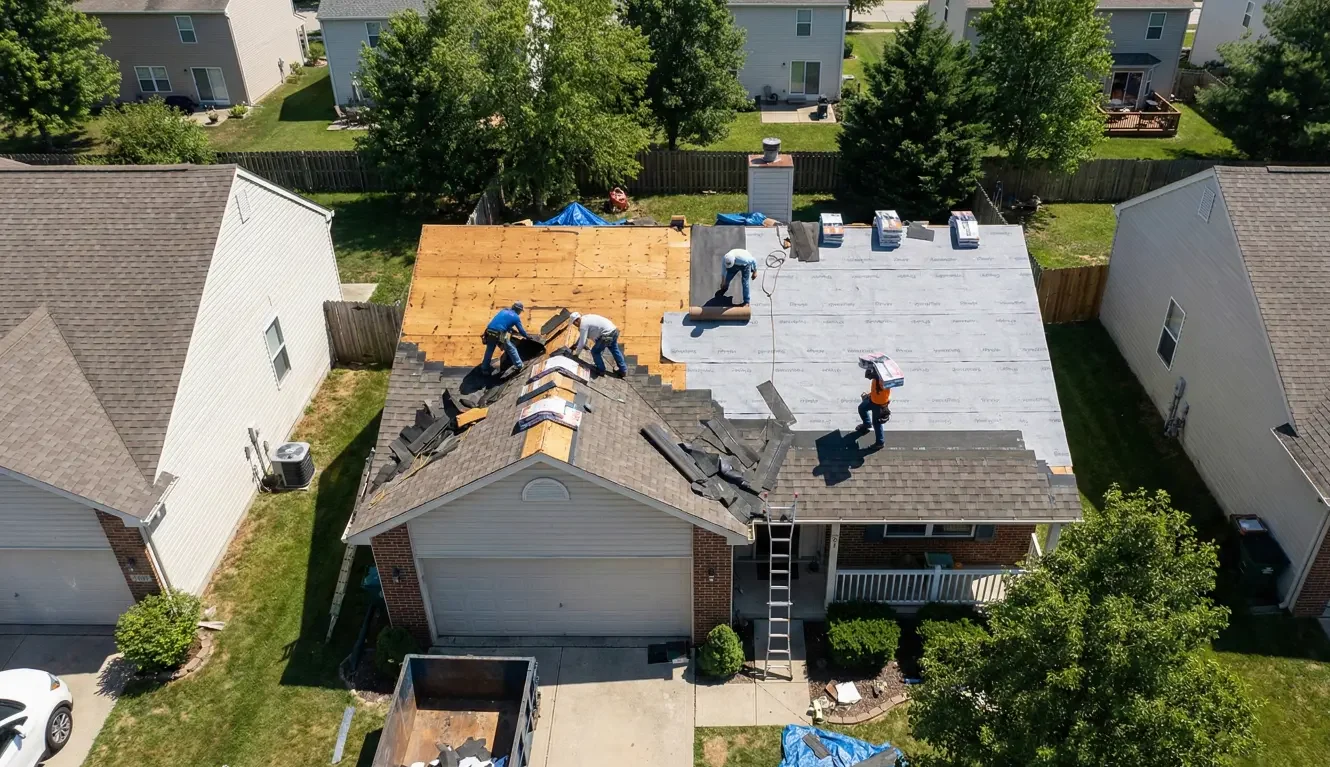
Roof projects don’t usually fail at install—they fail at closeout, when details get missed and documentation gets “promised later.” If you’re days away from sign-off, this is the moment to verify what’s visible, confirm what’s in writing, and capture an evidence trail you’ll need for warranty support. This checklist helps you review the roof like a technical gatekeeper: observations, documents, and the final questions that prevent expensive callbacks.
This is not a roofing system design guide, and it’s not a substitute for your contract, spec, or manufacturer requirements. It’s a practical closeout framework you can run in a repeatable way—so the work can truly be accepted, not just “finished.”
We’ve got a Roof Project Closeout Checklist for Building Engineers.
Closeout is where roof projects quietly go sideways
Final acceptance is not the same as “it looks done.”
A roof can appear clean and complete from 20 feet away, while the closeout risk is hiding in details that only show up when you slow down: incomplete terminations, unverified transitions, missing documentation, or a punch list written so vaguely it never truly closes. The problem isn’t that contractors are always careless—it’s that closeout is where schedules tighten, stakeholders get impatient, and everyone wants the last invoice processed.
Here’s what the building engineer is actually protecting at closeout:
- Future leak risk: Not by trying to diagnose every detail yourself, but by making sure obvious deficiencies, damage, or incomplete work are documented and addressed before you lose leverage.
- Dispute prevention: Clear scope tie-out and documentation reduces “that wasn’t included” arguments later.
- Warranty friction: Warranties are only useful when the paperwork is correct, the installed system matches what’s documented, and your ownership team can prove what was done (and when).
- Operational continuity: A roof that isn’t truly closed out becomes an ongoing distraction—repeat visits, internal emails, vendor back-and-forth, and frustrated stakeholders.
Closeout also tends to amplify a specific failure mode: everyone is looking at different “truth.” The contractor has their punch list. The owner has a mental model of what was paid for. The PM has schedule pressure. The building engineer has technical responsibility. Your job is to convert “truth by memory” into “truth by evidence.”
The closeout mindset: verify details before final payment, not after
There are two different closeout confirmations happening at the same time:
- Workmanship confirmation: Is the installation substantially complete, free of obvious defects, and consistent with the observable scope?
- Documentation confirmation: Do you have the records you’ll need to enforce scope, support warranty, and plan future maintenance?
If you only do the first one, you’re signing off on something you may not be able to support later.
A simple rule that keeps closeout clean:
If it isn’t documented, it’s hard to enforce later.
That doesn’t mean you need a perfect binder. It means you need enough structure that you can answer basic questions a year from now without digging through old email threads:
- What was installed?
- Where were key transitions and penetrations addressed?
- What changed from the original scope?
- What was the final acceptance date?
- What documentation proves it?
- What warranty terms apply, and how do we use them?
Closeout is also about leverage. Before final payment, you can require corrections and complete documents as conditions of acceptance. After final payment, your leverage shifts—sometimes dramatically—into “please help us out,” which is not where you want to be if a detail becomes an issue.
Roof walkdown checklist: what to visually verify on the roof
Before you walk a roof, follow your site’s safety rules. Don’t access roofs without permission, training, and safe conditions. If roof access is not permitted or conditions are unsafe (weather, icy surfaces, unstable access), document from safe vantage points and request vendor support.
Think of your walkdown as an evidence-gathering pass, not a diagnosis pass. The goal is to confirm general conditions, identify obvious deficiencies or damage, and produce a photo set that supports punch list closure.
1) General conditions (the “is this actually done?” pass)
- Cleanliness and debris: Roof surface should be free of loose materials, trash, tools, fasteners, cut-offs, and packaging. Debris is more than cosmetic—it can obscure issues and create future damage.
- Obvious damage: Look for punctures, tears, displaced components, or visible impact damage. Don’t label cause unless you have evidence; document what you see.
- Incomplete areas: Scan for unfinished terminations, missing components, open edges, or areas that look temporary.
- Access and protection details: Check that roof access points (hatches, ladders, walkway pads if applicable) are consistent with the project’s scope and that protective measures (if included) are in place.
2) Field details (penetrations, edges, transitions—observe, don’t diagnose)
Use a consistent approach: wide → mid → close photos for each item you inspect.
- Penetrations: Pipes, conduits, vents, equipment curbs, skylights, and other penetrations should appear consistently finished (sealed, flashed, and integrated). You are not confirming the internal assembly—just documenting visible completeness and any irregularities.
- Edges and terminations: Roof edges, parapet interfaces, and terminations should look continuous and intentional, not patched or uneven. If something looks inconsistent, document it and ask for clarification against the spec/detail.
- Transitions and tie-ins: Anywhere the roof changes plane, material, elevation, or ties into a wall or curb is a common location for future issues. Your job is to create a photo record and note questions, not to decide the technical fix on the spot.
3) Drainage indicators and “watch areas” to photograph and track
Drainage problems often become operational complaints long after closeout. You don’t need to prove the root cause, but you should document conditions that may warrant attention.
- Drains/scuppers/gutters (as applicable): Are they clear and unobstructed? Do they appear properly integrated? Document any debris, blockages, or unusual conditions.
- Low spots/ponding indicators: If you see areas that appear prone to standing water or uneven drainage, photograph them. Use cautious language: “Area appears low/collects water” rather than “ponding defect.”
- Traffic paths and equipment zones: Areas near rooftop units, service paths, or frequently accessed zones should be documented for surface condition and any protection measures.
A practical photo checklist for your walkdown
For consistency across projects (and across different engineers), capture:
- A roof overview set (four corners / roof zones)
- Each penetration type (wide-mid-close)
- Each edge/termination zone (wide-mid-close)
- Drainage points and any “watch areas”
- A punch list photo set (each item labeled and easy to match to your notes)
When you label photos, use a simple naming convention that survives email forwarding:
Building – Roof Zone – Date – Item
Example: “BldgA_RoofZone3_2026-01-27_Penetration-RTU2_CurbWide”
The misconception to fix: “If it’s under warranty, we’re covered”
A warranty is not a safety net you can ignore until you need it. In practice, warranty support often depends on:
- Documentation: proof of what was installed and when, and what the agreed scope actually included
- Maintenance and access: records showing the roof wasn’t neglected or damaged by unrelated work
- Clarity of scope and details: alignment between installed materials/details and what the warranty documentation describes
- Process: whether required steps (like registration or final documentation) were completed
Warranty requirements vary by manufacturer and by system, and the exact terms matter. If a closeout package is missing key warranty documents or if the terms are unclear, you can end up with delays—or disputes—right when you need fast action.
Why missing closeout details become warranty disputes later:
- The contractor’s memory fades, teams change, and “we always do it this way” becomes hard to prove.
- If the documentation doesn’t clearly show what was installed, it’s harder to prove your roof qualifies for a specific warranty level.
- If you can’t tie observations to a roof zone or detail, you waste time recreating the narrative during an issue.
- When stakeholders disagree about what’s “included,” warranty becomes a battleground instead of a tool.
Closeout is where you reduce warranty friction. Not by demanding perfect paperwork—by demanding usable paperwork.
Closeout documents checklist: what should be in the handover package
This is the second checklist: the paperwork that makes the roof manageable long-term.
Closeout packages vary by contract and system. The safest way to use this checklist is to treat it as a baseline and then align it to your scope/spec.
1) Contract scope tie-out (what we paid for vs what we received)
- Executed contract / scope of work (final version)
- Approved change orders (with dates and descriptions)
- Final invoice that clearly reflects scope + change orders
- Closeout summary from contractor/PM that describes what was completed (avoid vague “completed per contract” statements—ask for a short, specific scope recap)
What you’re looking for is consistency. The scope described in documents should match what was installed and what is being invoiced.
2) Photos and inspection evidence (what “good” documentation looks like)
You don’t need a thousand photos. You need the right photos:
- Roof overview (zones or key areas)
- Critical details (edges, transitions, penetrations)
- Before/after where it matters (repairs, tear-off, deck work, problem areas)
- Punch list closure evidence (photos of corrected items)
Good documentation is labeled, organized, and tied to locations. Weak documentation is a random image dump with no context.
If you’re receiving photos, request basic structure:
- A folder structure by roof zone or building area
- A naming convention that includes date and location
- A short index/list that maps photos to key conditions or punch list items
3) Material and product documentation (as provided—avoid assumptions)
This is often where closeout goes thin. Ask for what was actually provided/required by the project:
- Material submittals (if part of the project process)
- Product information sheets (as applicable)
- Any project-specific documentation that identifies what was installed (systems vary)
Avoid making claims that a specific product automatically implies a specific performance level unless you have the manufacturer documentation in the package. Your goal is traceability, not marketing language.
4) “Holdback until received” mini-list
If your payment process allows leverage, these are common candidates for “required before final sign-off” (tailor to contract):
- Final closeout package delivered in agreed format
- Punch list items closed with evidence
- Warranty documents delivered (and any required steps confirmed)
- As-built documentation delivered (if required)
If your team uses retainage or conditional acceptance, write the conditions clearly and tie them to deliverables, not vague “completion.”
Warranty + as-built review: what to confirm before you sign
This section is where being “the paperwork person” pays off later.
Warranty documents: what to confirm (without assuming the terms)
Warranty terms vary, so approach this as a verification exercise:
- What warranty document(s) are provided? Is it a manufacturer warranty, contractor workmanship warranty, or both?
- Is the roof/system described clearly? The documentation should identify the roof/system in a way that matches your project.
- What is the term and coverage type? If it’s unclear, request clarification in writing.
- Are there steps required to activate/register? This is often where projects slip. If registration is required, confirm who is responsible and what proof you will receive.
If the contractor says, “It’s covered,” ask for the documents that define “covered.” If the documents aren’t ready, treat the warranty as not yet usable.
Safe closeout language when specifics are unknown:
- “Warranty requirements vary; provide the manufacturer warranty terms and confirm any registration/maintenance requirements in writing.”
As-builts: what to confirm (TBD specifics, but aim for usability)
As-built expectations vary by project. If as-builts are required (or if they’re useful for long-term operations), focus on practicality:
- Roof plan or zone map that a future technician can use to locate areas
- Labeled zones that match your photo naming and future inspection notes
- Locations of key penetrations/units (at least in a way that is navigable)
- Detail references to explain how critical transitions/terminations were executed (if provided)
If the project doesn’t include formal as-builts, you can still request a simplified roof zone map and a labeled photo set. In many real-world operations, that becomes your practical as-built.
What to ask for in writing if something is missing
Keep it simple and specific. Examples:
- “Please provide the final warranty document(s) and confirmation of any registration steps required.”
- “Please provide a roof zone plan (or equivalent) that aligns with the photo set and can be used for future maintenance documentation.”
- “Please provide a final closeout package index listing included documents and photo folders.”
Avoid asking for “everything.” Ask for the minimum set that makes the roof manageable.
Punch list logic: how to write closeout items so they actually get closed
Closeout punch lists fail when items are written like complaints instead of tasks. A contractor can’t close “looks messy near drain” the same way they can close “remove debris, re-document drain area, provide photo closure.”
Use this structure for each punch list item:
Observation → location → impact → requested action → proof required
Example punch list language (useful, not argumentative)
- Observation: Unlabeled photo set provided; roof zones not identified
Location: Closeout documents package
Impact: Documentation not usable for future maintenance/warranty support
Requested action: Provide folder structure by roof zone + photo naming convention + short index
Proof required: Updated closeout package delivered; index included - Observation: Area appears unfinished / inconsistent at roof edge termination (see photo references)
Location: Roof Zone 2, parapet edge near southwest corner
Impact: Potential future leak point / incomplete work concern
Requested action: Review against project detail; correct if needed; provide closure photos
Proof required: Closure photos wide-mid-close; brief written note referencing detail used
Notice what’s missing: you’re not saying “this is wrong” in a technical sense. You’re saying “this appears inconsistent” and requesting verification/correction tied to documents.
Photo labeling and version control so issues don’t get “lost”
A punch list becomes chaos when photos and revisions aren’t traceable. Keep it controlled:
- Assign each punch list item an ID (PL-01, PL-02…)
- Reference photo names in each item (so anyone can locate them)
- Require closure evidence that includes the same view angle (wide-mid-close)
- Track versions (PunchList_v1, v2) and don’t mix revisions in email threads without a clear “current version” statement
If you do nothing else, do this: make your punch list readable by someone who wasn’t on the project. That’s the standard that protects you later.
Final sign-off decision: approve, conditional approval, or do-not-sign
When you’re at the decision point, the mistake is treating closeout like a binary “yes/no” with no structure. In reality, you often need three outcomes:
1) Approve (clean closeout)
Approve when:
- Work appears complete with no unresolved critical observations
- Punch list items are minor/cosmetic and truly non-critical (and agreed by stakeholders)
- Closeout documentation is delivered and usable
- Warranty documents are delivered (and any required steps are confirmed or clearly assigned)
2) Conditional approval (acceptance with explicit conditions)
Conditional approval can work when:
- The roof is operationally complete
- Remaining items are limited in scope and can be closed quickly
- You have a clear mechanism for holdback/retainage or a written commitment tied to dates
Conditions must be explicit:
- List remaining punch list items by ID
- List remaining documents required
- Set deadlines and proof requirements
- Tie payment release to completion (if your contract/process allows)
Avoid “we’ll send it later.” Replace it with “deliver X by date Y with proof Z.”
3) Do-not-sign (red flags justify a holdback)
Red flags that commonly justify refusing final sign-off (adapt to your contract):
- Significant punch list items remain unresolved or undocumented
- Closeout package is missing critical documentation and no clear delivery commitment exists
- Warranty documentation is unavailable or unclear (and cannot be confirmed)
- Observations suggest possible incomplete work or damage that hasn’t been addressed
- Stakeholders are pressuring sign-off without allowing verification time
This doesn’t need to be combative. It needs to be procedural: “We can’t sign off until these items are resolved because they directly affect enforceability and future operations.”
A short closeout meeting agenda (15–30 minutes, structured)
If you can, run a focused closeout meeting with the PM/owner rep and contractor:
- Confirm closeout decision target date
- Review punch list items (IDs, responsibilities, closure proof required)
- Review closeout documents index (what’s delivered, what’s missing, delivery dates)
- Warranty/as-built status (what documents exist, what steps remain)
- Confirm next steps and who signs what, when
The meeting isn’t about arguing the roof. It’s about aligning on the closeout pathway.
Low-friction next step: get an inspection-ready closeout package
When closeout is messy, it’s rarely because nobody cares. It’s because documentation and verification weren’t structured into the process—so you’re trying to reconstruct order at the end.
Documentation-led inspections reduce ambiguity because they:
- Create a consistent photo/video record tied to roof zones and observed conditions
- Produce a clearer summary that helps owners/PMs decide what is “monitor,” what is “repair,” and what requires escalation
- Reduce repeat site visits caused by vague reports and missing context
If your team wants a more inspection-ready closeout package—or if you’re being pushed to sign off without confidence—Red Top Roofing can support with an evidence-based inspection approach and a structured summary deliverable that helps you close out with fewer unknowns (scope and deliverables may vary by project; confirm what’s included for your building).
FAQ content
1) What should a building engineer check at roof project closeout?
Start with a structured walkdown (general condition, penetrations, edges/transitions, drainage indicators) and document observations with a wide-to-close photo sequence. Then confirm the closeout package is usable: scope/change order tie-out, organized photos, punch list closure proof, and clear warranty/as-built documentation (as required by your contract/spec).
2) What closeout documents are needed for a commercial roof project?
Closeout needs vary by contract, but commonly include executed scope, approved change orders, a final invoice tie-out, an organized photo set, a punch list with closure evidence, and warranty documentation. If as-builts or a roof zone plan are required (or operationally useful), request them in a format that supports future maintenance and troubleshooting.
3) What should be verified before final payment on a roof replacement?
Verify two things: (1) the roof appears complete and free of obvious damage/incomplete work based on your walkdown documentation, and (2) you have the documentation needed to enforce scope and support warranty later. If key documents or punch list items are still pending, consider conditional approval with explicit holdback conditions (if your process allows).
4) How do you review roof warranty documents for completeness?
Confirm what type of warranty is provided (manufacturer and/or contractor), that the roof/system is clearly identified, and that key terms and any required steps (like registration or maintenance requirements) are documented. Warranty requirements vary—if the documents are missing or unclear, request clarification in writing before sign-off.
5) What should a building engineer include in a roof punch list?
Write punch list items so they can be closed: observation, exact location (roof zone + nearby reference), why it matters (impact), requested action, and proof required (closure photos and/or a brief written confirmation tied to the project detail/spec). Avoid conclusions that you can’t support; stay evidence-led.
6) What’s the difference between substantial completion and final acceptance?
Definitions can differ by contract, but “substantial completion” generally means the work is usable for its intended purpose, while “final acceptance” is the formal closeout sign-off that confirms completion of remaining items and documentation. Use your project agreement as the source of truth and align your sign-off to those definitions.
Request a documentation-led closeout inspection
If you’re nearing sign-off and want a clearer evidence trail, don’t rely on vague “it’s done” assurances. Red Top Roofing can provide a documentation-led closeout inspection—photos, a structured summary, and a punch-list-ready view of what to verify—so your team can finalize acceptance with confidence.
RELATED LINKS: