
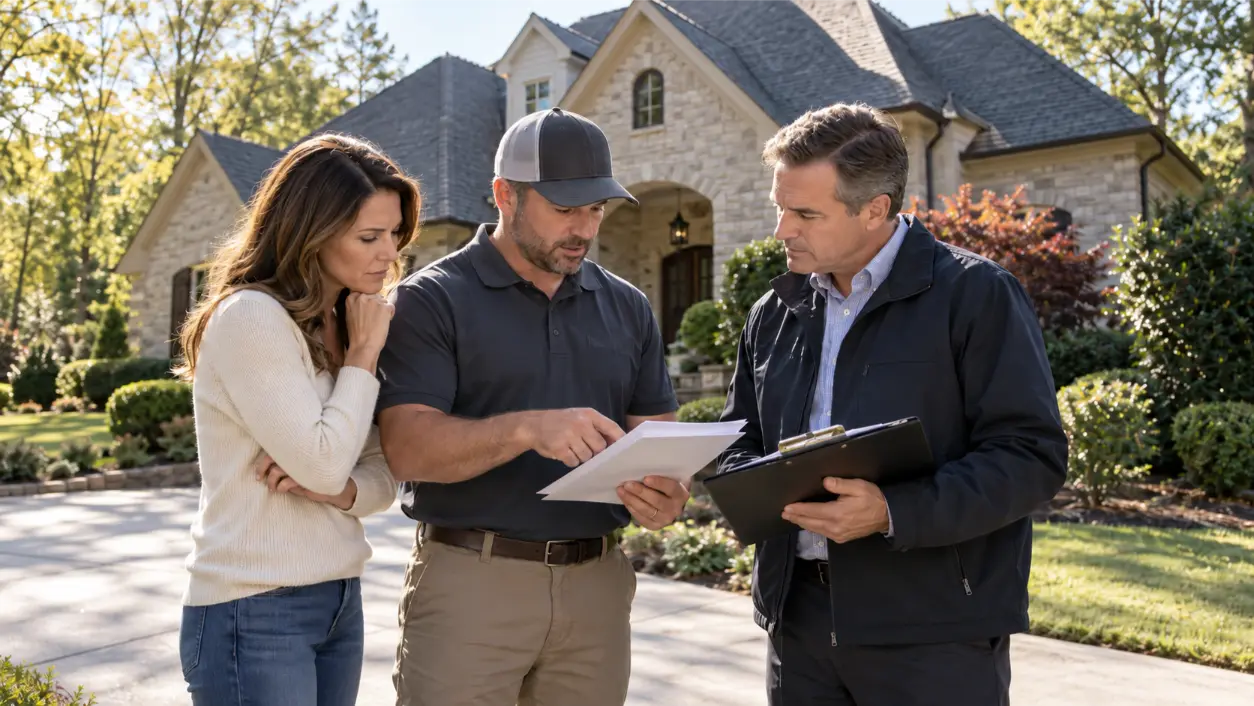
If an insurance company has scheduled a second look at your storm-damaged roof, knowing how to prepare for roof claim reinspection can make the conversation more productive.
You may disagree with the first estimate, believe damage was missed, or feel uneasy about inviting your roofing contractor to meet the adjuster. A reinspection does not need to become an argument. The strongest preparation is a clear record of what you want reviewed, a shared understanding of each person’s role, and a plan to document what happens next.
What Happens at a Roof Reinspection?
A roof claim reinspection is an additional review of the property or specific claim findings. It may happen because new evidence is available, the homeowner has questions about the original assessment, the contractor identified additional conditions, or the insurer wants another inspection. The process and purpose vary by carrier, policy, and claim. A second visit does not automatically mean the claim will be approved, denied, or expanded.
Before the appointment, ask the claims representative whether the visit is intended to examine previously disputed items, newly reported conditions, the roof as a whole, or the scope and price of repairs. Confirm who is attending and whether your contractor may be present. Some reinspections involve a field adjuster; others may involve an engineer or another specialist. Knowing the agenda reduces surprises.
Keep the Three Main Roles Clear
The homeowner: the policyholder and point of contact
You are responsible for describing the loss, sharing relevant records, asking claim questions, and making decisions about your property. Keep your policy number, claim number, and written communications organized. You can ask your insurer to explain its findings, identify what information it still needs, and provide its decision in writing. Avoid assuming your roofing contractor can make coverage decisions on your behalf.
The roofer: the building-condition and repair-scope expert
A roofing contractor can explain visible damage, show inspection photographs, identify construction details, and describe a proposed repair or replacement scope. They can help the adjuster find relevant roof areas and clarify why particular materials or steps are included in an estimate. Their useful contribution is evidence about the roof—not a promise that the insurance policy will pay for any specific work.
The adjuster: the insurer’s claim investigator
The insurance adjuster assesses the loss for the carrier and applies the insurer’s claim procedures and policy terms. A contractor and adjuster may disagree about conditions, quantities, or work needed; the disagreement can be discussed without personal accusations. If you want someone to represent you in claim settlement negotiations, understand that public adjusting is a separate, regulated service. Georgia’s insurance regulator provides information on public adjuster licensing.
Seven Essential Steps Before Reinspection Day
1. Read the insurer’s first estimate and decision letter
Start with the actual documents rather than a verbal summary. Compare the adjuster’s estimate, photographs, coverage correspondence, deductible information, and any explanation of excluded or deferred items. Highlight specific differences: for example, one roof slope included but another omitted, a missing flashing item, an unresolved interior stain, or a quantity that needs clarification. Write each question in plain language.
Separate three categories: damage observed, repair work proposed, and insurance coverage questioned. They are related, but they are not interchangeable. This separation prevents a technical discussion about shingles from turning into an unsupported claim about what the insurer must cover.
2. Build a small, date-labeled evidence packet
Gather before-and-after pictures if available, storm-date notes, interior leak photographs, temporary repair receipts, and earlier inspection reports. Ask your roofer for a concise photo set with roof-area labels and a written explanation of the suspected damage. Put your most important observations first. Avoid sending dozens of nearly identical images without context.
If damage has continued, record the dates and conditions. The National Association of Insurance Commissioners’ homeowner claim guidance emphasizes documenting damaged property and keeping records. Never climb onto a roof to gather photos yourself; leave roof access and close-up evaluations to qualified professionals.
3. Ask your roofer for a focused, itemized explanation
A useful contractor report identifies each observed condition, where it appears, why it matters to the proposed repair, and what evidence supports it. It should distinguish possible storm effects from ordinary aging, wear, installation issues, or conditions that require further evaluation. When replacement is suggested, ask what makes a localized repair unsuitable for this particular roof, rather than relying on a blanket statement that every storm requires a new roof.
Red Top Roofing & Exteriors describes a documented roof inspection process covering shingles, flashing, decking, ventilation, and storm impacts. That kind of organized inspection record helps focus a reinspection on observable facts.
4. Confirm attendance and permission before the visit
Tell the claim handler you would like your roofing contractor to attend and explain why: to point out documented roof conditions and answer repair-scope questions. Ask whether the insurer has a process for contractor participation, whether anyone else will attend, and what access is needed. Share the contractor’s contact information when appropriate. Do not assume the roofer is automatically invited or that all parties may access every area.
5. Agree on respectful ground rules
A brief conversation with your roofer before the appointment can prevent awkward moments. Explain that you want a calm, factual visit with one person speaking at a time. Ask them to show locations and explain materials, installation concerns, and repair methods without arguing over policy interpretation. You can tell the insurer you expect the same clear, professional exchange from everyone present.
6. Prepare five specific questions
- What areas will be reinspected, and what new evidence is being considered?
- Can you explain any differences between the field observations and the current estimate?
- What additional photographs, measurements, or documentation would be helpful?
- If a particular item remains excluded, where can I find the written explanation?
- What are the next steps, contact person, and expected communication method?
7. Plan access and weather contingencies
Confirm the meeting time, parking, attic access if relevant, and whether pets should be secured. Make sure any damaged interior areas can be viewed safely. Rain, wind, lightning, steep slopes, and fragile decking can make a roof unsafe; the onsite professionals should decide what access is appropriate. If conditions prevent a complete inspection, ask how and when the remaining items will be addressed.
How to Talk to the Adjuster Without Escalating the Disagreement
Begin by naming the goal: a thorough review of the documented items. Instead of saying, “Your first adjuster missed everything,” try, “We have photographs of three areas that do not appear in the current scope. Could we review them together?” A specific request is easier to answer than a broad accusation.
When the roofer and adjuster see something differently, ask each person to describe the evidence. For example: “What condition is visible here? What would confirm whether it is storm-related? How will that conclusion be recorded?” If they disagree about an item, record the disagreement accurately rather than forcing an instant decision on the roof.
Be cautious about phrases such as “the insurance company has to replace the whole roof” or “the roofer guarantees approval.” Coverage depends on policy language, facts, and the insurer’s determination; repair requirements depend on the roof and applicable standards. A productive reinspection clarifies the record. It does not require every participant to agree during the visit.
Roof Reinspection Checklist for Homeowners
- Save the original claim decision, itemized estimate, and relevant correspondence.
- Prepare an organized photo set, storm timeline, and repair receipts.
- Ask the contractor for a written list of disputed roofing conditions.
- Confirm the purpose of the reinspection and attendees with the insurer.
- Request permission for the roofer’s attendance where required.
- Keep questions centered on identifiable roof areas and missing information.
- Use safe, professional roof access only; do not go onto the roof yourself.
- Take notes on which items were reviewed, by whom, and what follow-up was promised.
- Afterward, ask for any revised estimate or decision in writing.
What to Do After the Reinspection
Within a reasonable time after the appointment, send a brief written summary to the claim handler. List the date, attendees, roof areas discussed, photos or estimates shared, and outstanding questions. Ask the insurer to correct anything that you misunderstood and to explain when you should expect an updated written response. Keep the message factual rather than argumentative.
If the insurer requests additional documentation, ask exactly what is missing and who should supply it. Your roofer can address roof measurements or construction details; you may need to provide receipts, dates, or other claim records yourself. When you receive a revised estimate, review changes line by line. An estimate that changes is not necessarily a final coverage decision, so confirm the claim status and any deadlines with the insurer.
Georgia’s Office of Commissioner of Insurance and Safety Fire advises policyholders to preserve photos, receipts, and correspondence, and to request an itemized explanation of a settlement. Its official insurance claim tips are a helpful reference for keeping the process documented. Protect the property from additional damage using safe temporary measures and preserve evidence as your policy requires; consult your insurer before permanent repairs that could affect inspection.
What if You Still Disagree?
Ask the carrier to identify which points are disagreements about facts or repair scope and which are disagreements about policy coverage. If a missed roof area or repair item is in question, provide the supporting photographs and a concise request for reconsideration. If the insurer relies on a policy exclusion or limitation, ask for the relevant language and written rationale. Review policy terms and any stated deadlines before choosing another step.
If normal communication does not resolve the matter, Georgia residents can consult the state regulator’s consumer insurance complaint process. This is not a guarantee of a changed claim decision, and it does not replace advice from a qualified attorney or properly licensed insurance professional when individual legal or coverage questions arise.
Do not sign a roofing contract solely because someone says insurance approval is inevitable. Review scope, payment terms, responsibilities, and contingencies first. Red Top’s questions to ask before signing a roofing contract offers a separate checklist for that decision.
Frequently Asked Questions
Should my roofer attend a roof claim reinspection?
It can be useful when the contractor has clear photographs, measurements, or repair-scope concerns to explain. Confirm with the insurer before the appointment that attendance is permitted and agree on the roofer’s technical role. If attendance is not possible, ask how to submit the evidence for review.
What happens at a roof reinspection?
The assigned professional reviews the roof or specified disputed items, documents findings, and may ask for more information. The insurer then handles its claim evaluation under the applicable policy. The visit itself does not guarantee an immediate answer or payment.
How should I talk to the insurance adjuster at reinspection?
Use short, neutral questions tied to specific photographs or roof locations. Ask what was observed, what further information would help, and how conclusions will be documented. Keep coverage disagreements separate from technical repair observations.
Can a roofer negotiate my insurance claim for me?
A roofing contractor can explain roofing conditions and construction estimates, but acting as a public adjuster or negotiating insurance settlement on a policyholder’s behalf may require separate authority and licensing. Check Georgia’s current requirements before authorizing anyone to represent you.
Does a second inspection mean the insurance company will approve a new roof?
No. A reinspection is another opportunity to review relevant information; the result depends on the evidence, policy terms, and the carrier’s determination. Ask for any changes and the reasoning behind the outcome in writing.
Get the Facts, Not a Fight
The best way to prepare for a roof claim reinspection is to make the roof condition understandable to everyone in the conversation. Organized photographs, an itemized roofing scope, and calm questions give the insurer something concrete to review and help the homeowner keep track of unresolved points.
For homeowners in Atlanta, Cartersville, Roswell, Marietta, Acworth, and nearby communities, Red Top Roofing & Exteriors offers free, documentation-focused roof inspections. If a reinspection is scheduled, ask whether Red Top can attend to explain its roofing observations and help you prepare a factual repair-scope record. Request a Free Roof Inspection to start with evidence rather than guesses.
Disclaimer: This article is general educational information, not legal, engineering, or insurance-coverage advice. Procedures, deadlines, licensing requirements, access rules, and coverage decisions vary by insurer, policy, location, and circumstances. Consult the insurer and appropriately qualified professionals about your specific claim and avoid unsafe roof access.
RELATED LINK: Georgia Office of Commissioner of Insurance and Safety Fire — Insurance Claim Tips