
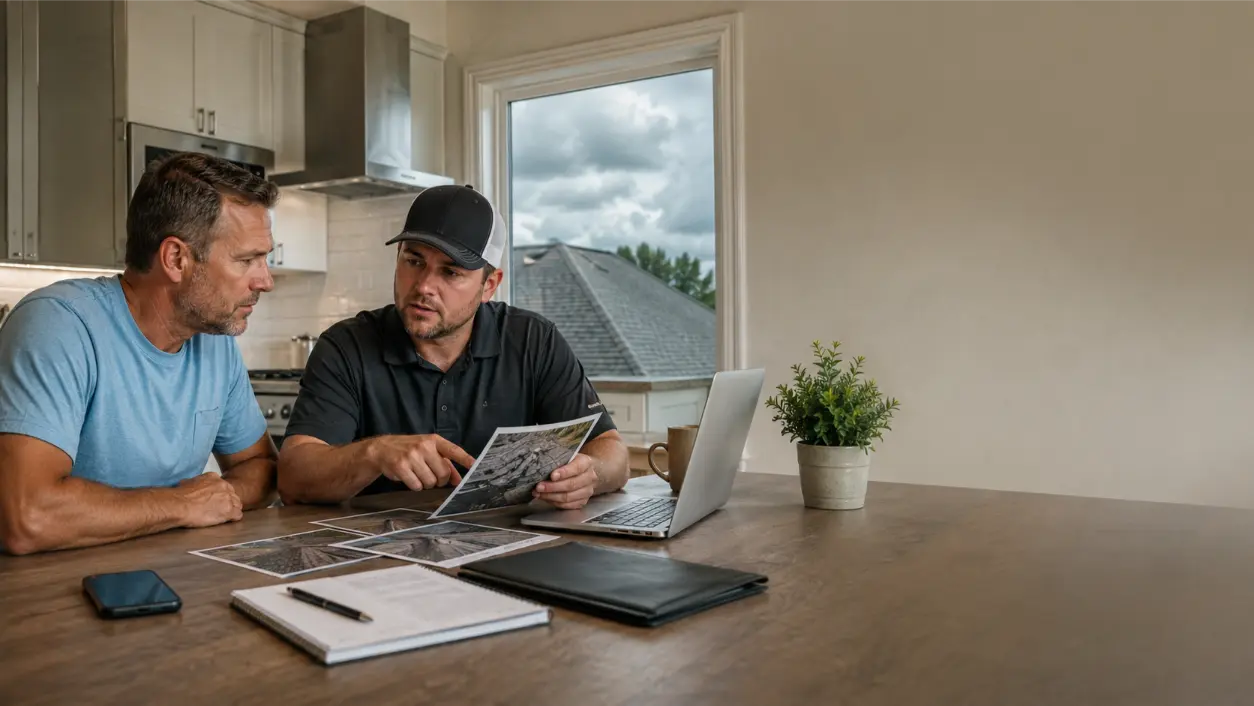
Mistakes homeowners make with roof insurance claims often begin before the adjuster ever visits the property. After a hailstorm, it is easy to feel pressure to call immediately, explain what happened, and get the process moving. But the first conversation works best when the homeowner knows the policy, sticks to observable facts, documents the damage, and understands which steps are urgent versus which should wait.
The goal is not to find a clever phrase that guarantees coverage. It is to create a clear, accurate record from the beginning.
Red Top Roofing & Exteriors serves Atlanta, Cartersville, Roswell, Rome, Alpharetta, Dallas, Kennesaw, Acworth, Marietta, Canton, Woodstock, and surrounding Georgia communities. Its inspection-first approach emphasizes photo and video documentation, shingles, flashing, decking, ventilation, and storm impacts before recommending the next step. That process can help homeowners better understand what a roofer can actually observe, while the insurance company remains responsible for interpreting the policy and making coverage decisions.
Why the First Insurance Call Matters
The Georgia Office of the Commissioner of Insurance and Safety Fire advises consumers to know what their policy covers, understand exclusions and deductibles, report a claim as soon as possible, provide complete and correct information, keep copies of correspondence, and document damage before temporary repairs when possible. Those are simple principles, but they are easy to overlook after a storm.
The first call usually creates part of the permanent claim record. You do not need to diagnose the roof yourself, estimate the repair cost, or prove that every mark came from hail. You do need to be accurate about what you observed, when you noticed it, and what has been documented so far.
Mistake 1: Calling With Assumptions Instead of Facts
One of the most common mistakes is turning a suspicion into a conclusion. A homeowner may see granules in a gutter, a ceiling stain, or dents on a vent and immediately tell the carrier, “My roof was destroyed by hail.” That may eventually prove accurate, but it is still a conclusion before an inspection has connected the evidence.
A better approach is factual and neutral:
- State the date or approximate date of the storm if known.
- Describe what you observed afterward.
- Say whether you have photos, video, or an inspection report.
- Distinguish confirmed damage from suspected damage.
- Avoid estimating the cause, extent, or cost if you do not know.
Georgia’s insurance regulator specifically advises policyholders to provide complete and correct information because incomplete or incorrect information can delay a claim. Accuracy helps everyone work from the same starting point.
Mistake 2: Waiting Too Long Because You Want a Perfect Inspection First
Inspection-first does not mean “wait indefinitely before notifying your insurer.” Georgia’s insurance guidance says claims should be reported as soon as possible and notes that a policy may require notice within a certain time frame. The policy itself controls the homeowner’s duties.
A documentation-led roof inspection can be useful before or around the time of claim notice because it can help identify observable roof conditions and create an evidence trail. But if the policy requires prompt notice, do not postpone notification simply because you are still waiting for a contractor appointment.
A practical sequence is:
- Review the policy and notice requirements.
- Document visible damage safely.
- Protect the property from further damage if necessary.
- Arrange a professional roof inspection as soon as practical.
- Notify the insurer within the required time frame and provide factual information.
There is no universal rule that says “always call the roofer first” or “always call the insurer first.” Timing depends on the policy, the severity of the damage, safety, and how quickly an inspection can occur.
Mistake 3: Failing to Document Damage Before Temporary Work
After hail or wind, homeowners may need to act quickly to prevent more water from entering the house. Georgia’s insurance regulator recommends protecting property from further damage and keeping receipts for temporary repairs. It also advises photographing or videotaping damage before temporary work when possible.
Useful documentation can include:
- Wide photos of each roof slope taken safely from the ground or by a professional.
- Close-up professional photos of shingles, flashing, vents, gutters, or other affected components.
- Interior photos of stains or active leaks.
- Attic photos showing wet decking or drip paths when safely accessible.
- Photos of hailstones or storm debris if available.
- The storm date and the date each condition was discovered.
- Receipts for tarps or other emergency mitigation.
Red Top Roofing’s inspection-first process is built around documenting roof conditions rather than relying on a quick visual guess. That can be especially helpful when a homeowner needs to explain what was found later to an adjuster or insurer.
Mistake 4: Making Permanent Repairs Before the Carrier Can Inspect
Another common mistake is moving from emergency protection straight into permanent repair before the insurer has had a chance to inspect. Georgia’s Office of the Commissioner of Insurance and Safety Fire specifically warns consumers not to make permanent repairs before damage is inspected because doing so can create claim problems.
This does not mean a homeowner should allow the property to deteriorate. Temporary mitigation may be necessary. A tarp, emergency dry-in, or other protective measure may help prevent additional damage. The important distinction is between protecting the property and permanently changing the evidence before inspection.
Before authorizing permanent work, ask:
- Has the insurer inspected the damage or waived inspection?
- Have photos and video documented the original condition?
- Have temporary repair receipts been saved?
- Is the scope of permanent work clear?
For urgent conditions, communicate with the carrier and qualified contractor so the home can be protected without unnecessarily compromising the documentation trail.

Mistake 5: Treating the First Estimate or Adjuster Conversation as the Final Word
The first conversation is the beginning of the process, not necessarily the final scope or settlement. Georgia’s insurance regulator advises consumers to ask questions, request the specific policy language when there is a disagreement, obtain a written explanation for a denial, and ask for an itemized explanation of a settlement offer.
A contractor can help document roof conditions and explain construction scope. The insurer determines coverage under the policy. Those roles are related, but they are not the same.
If an inspection reveals items that were not included in the initial scope, the homeowner can ask how the carrier wants additional documentation submitted. Red Top Roofing’s claim-support positioning focuses on documentation, reinspections, and aligning construction scope with applicable code and manufacturer requirements where relevant. That does not guarantee that an insurer will approve any particular item.
What to Gather Before You Call
You do not need a huge claim binder before the first phone call, but a few basics make the conversation clearer.
- Policy number.
- Approximate storm date or loss date, if known.
- Short factual description of what you observed.
- Photos or video already available.
- Roof inspection notes if one has already been completed.
- Receipts for emergency mitigation.
- Contact information for anyone who inspected the property.
- A notebook or digital file for claim numbers and conversation notes.
After the call, record the claim number, date, representative’s name, what was discussed, and any next steps or deadlines.
Should You Call a Roofer or Insurance First?
The safest answer is: do not let the sequence cause you to miss a policy deadline or leave the home exposed to further damage.
If the roof is actively leaking, protecting the property comes first. If the damage is not urgent and a roofing inspection can happen promptly, having documented observations may help you speak more clearly with the insurer. If the policy requires immediate or prompt notice, make that notification on time even if the roofing inspection is still pending.
Red Top Roofing describes its free roof inspection as an evidence-first evaluation rather than simply a price quote. For a homeowner who is unsure whether visible marks are storm damage, aging, installation issues, or something else, that type of inspection can help separate observations from assumptions.
What to Say: Accurate, Neutral, Documented
You do not need a special script. The best communication is straightforward.
- What happened or what storm occurred, to the best of your knowledge.
- When you first noticed the issue.
- What visible symptoms you have documented.
- Whether temporary mitigation has been performed.
- Whether a roofer has inspected the property and what was observed.
If you do not know whether a roof needs replacement, say that you do not know yet. If you do not know whether the storm caused a particular interior stain, do not state that it did. Accuracy is more useful than certainty you do not have.
What Not to Say: Guesses, Exaggerations, or Unsupported Conclusions
Homeowners sometimes worry that one wrong phrase will automatically destroy a valid claim. The more practical concern is simply avoiding inaccurate statements.
Do not:
- Invent a precise loss date if you are unsure.
- Say the entire roof is destroyed when you have not had it evaluated.
- Claim a contractor “guaranteed insurance will pay.”
- Describe older damage as new storm damage without evidence.
- Guess at repair costs or code requirements.
- Hide prior leaks, repairs, or known roof conditions when asked.
If something is uncertain, say it is uncertain and provide the documentation you do have.
After the Call: Keep a Claim Record
Georgia’s insurance regulator recommends keeping copies of correspondence and recording the date, name, and title of people you speak with. That record becomes increasingly valuable if the claim involves multiple inspections, estimates, supplements, or questions about scope.
Keep one folder containing:
- Claim number and carrier contact information.
- Roof inspection photos and reports.
- Adjuster inspection dates.
- Temporary repair receipts.
- Carrier estimates and letters.
- Contractor estimates or scopes.
- Email correspondence.
- Notes from phone calls.
If there is a disagreement, ask for the policy language or written explanation supporting the carrier’s position rather than relying only on a verbal summary.
Hail Claim Call Checklist
- Review your homeowners policy and notice requirements.
- Document visible roof and interior conditions safely.
- Protect the property from further damage when necessary.
- Save receipts for temporary mitigation.
- Arrange a documentation-led roof inspection when practical.
- Report the claim within the policy’s required time frame.
- Provide complete, correct, factual information.
- Separate what you know from what you suspect.
- Avoid permanent repairs before the carrier has inspected or approved the next step.
- Record the claim number and every important conversation.
- Ask for itemized explanations and relevant policy language when questions arise.
- Keep contractor documentation and insurer documentation in one file.
Frequently Asked Questions
Should I Call a Roofer or Insurance First After Hail?
There is no universal order that overrides your policy. A prompt professional roof inspection can help document observable conditions, but Georgia insurance guidance also says to report claims as soon as possible and notes that policies may contain notice deadlines. Do not delay required notice while waiting for a contractor.
What Should I Not Say to Insurance About Roof Damage?
Avoid guesses, exaggerations, invented dates, and unsupported conclusions. Give complete and correct information, describe what you actually observed, and say when something is still uncertain.
Can Calling Insurance Twice Hurt My Roof Claim?
There is no general rule that a second phone call automatically harms a claim. What matters is that your information remains accurate and consistent. Keep notes of each conversation, and correct an earlier mistake promptly if you discover one.
Can I Tarp My Roof Before the Adjuster Comes?
Temporary measures may be appropriate to protect the home from further damage. Georgia’s insurance regulator specifically gives tarping a damaged roof as an example of temporary protection. Photograph the damage first when safe, keep receipts, and avoid unnecessary permanent repairs before inspection.
What If the Adjuster’s Estimate Misses Something My Roofer Found?
Ask the carrier how to submit additional documentation and request an itemized explanation of the settlement or disputed scope. A roofer can document construction conditions and proposed scope, while the insurer determines policy coverage.
Get the Facts Before the Claim Becomes More Complicated
A hail claim does not need a magic script. It needs accurate information, timely notice, documentation, and a clear record. Homeowners are better served by describing what they know, preserving evidence, protecting the property, and asking questions when the insurer’s scope or explanation is unclear.
Red Top Roofing & Exteriors uses a documentation-led, inspection-first process to evaluate shingles, flashing, decking, ventilation, and storm impacts before recommending a plan. Atlanta-area homeowners who want a clearer picture of their roof condition can request a free roof inspection from Red Top Roofing and use the resulting photos and observations to better understand the condition of the roof before or during the claim process.
Roofing and insurance disclaimer: This article provides general educational information and is not legal, insurance, coverage, engineering, or claim-adjusting advice. Policy terms, notice deadlines, deductibles, exclusions, repair obligations, appraisal rights, and coverage decisions vary by insurer and policy. Red Top Roofing can document roof conditions and explain roofing scope but does not determine insurance coverage. Review your policy and contact your insurer, licensed insurance professional, attorney, or other qualified adviser when appropriate.
RELATED LINK: Georgia Office of the Commissioner of Insurance and Safety Fire — Insurance Claim Tips