
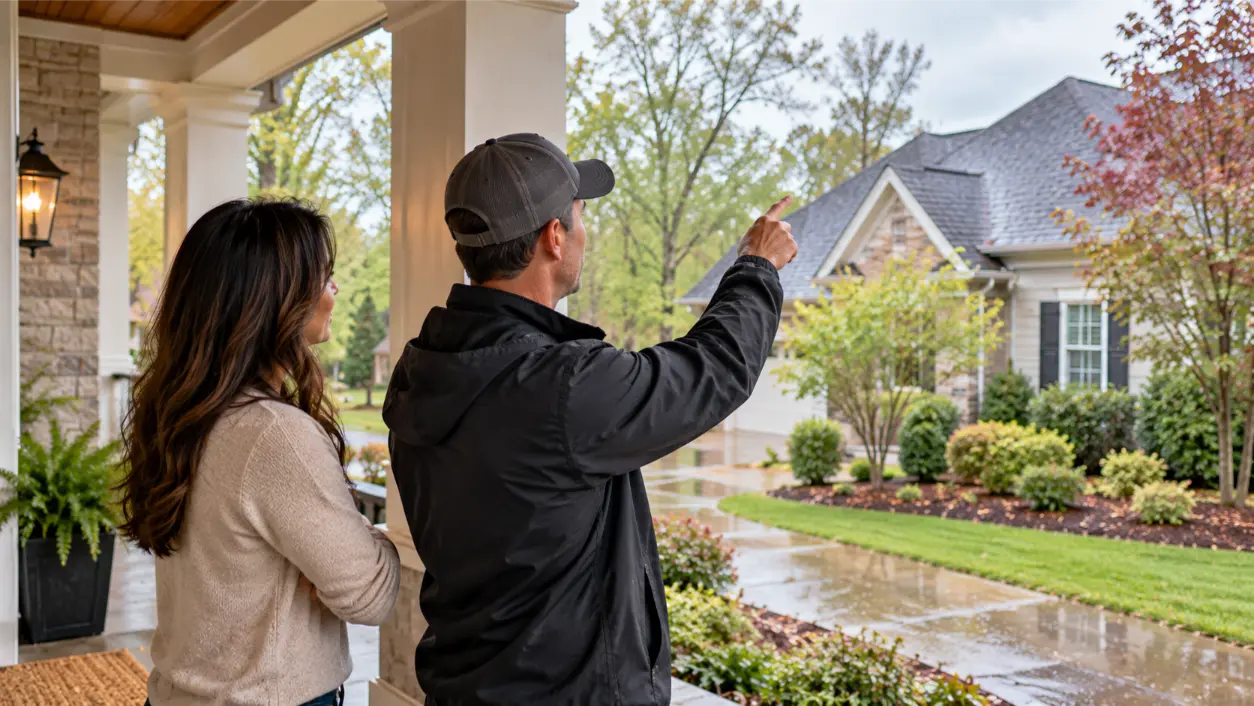
An Atlanta hail season roof guide should answer two practical questions: when are North Georgia homeowners more likely to encounter hail, and what should they do if a storm crosses their neighborhood?
The local risk is real, but it is uneven. A hail report a few miles away does not prove that your roof was struck, and a clean-looking roof from the driveway does not rule out damage. The most useful plan combines reliable weather information, safe observations, and a documented inspection when conditions justify one.
For homeowners in Atlanta, Cartersville, Roswell, Dallas, and surrounding communities, this guide explains the seasonal pattern, how to interpret local hail maps, why roof age matters, and when to request an inspection without rushing into unnecessary repairs or unsupported insurance assumptions.
When Is Hail Season in Atlanta?
There is no official date when hail season starts or stops. The National Weather Service office serving North and Central Georgia identifies March, April, and May as the state’s peak severe-thunderstorm season, with a possible secondary peak in September and October. That does not mean every spring storm produces hail or that fall storms are harmless. Severe thunderstorms can occur in any month.
Hail-specific climatology from the same NWS office highlights spring as an especially active period, with its historical large-hail analysis identifying April as the highest month in that dataset. Other NWS educational material emphasizes April and May. These are historical regional patterns—not a forecast of a specific year, subdivision, or roof. The practical takeaway is to review roof condition and storm alerts before spring, and remain attentive after significant storms at other times of year.
Why Summer Storms Still Matter
North Georgia also experiences frequent summer thunderstorms. The main hazard may be wind rather than hail. A roof can suffer lifted or missing shingles, loosened flashing, or debris damage even when no hail is reported. Avoid using a seasonal calendar as the only reason to investigate possible damage.
What Size Hail Can Damage a Roof?
The NWS classifies a thunderstorm as severe when it produces hail at least one inch in diameter, roughly quarter-sized, and/or wind gusts of at least 58 mph. That threshold describes a weather warning category, not the minimum size needed to damage a particular roofing system. Damage depends on hail size and density, wind, impact angle, the roof’s age and material, previous deterioration, and the condition of underlying components.
A large stone may crack or bruise shingles, while wind-driven hail may also affect vents, flashing, gutters, or siding. Small hail may leave no meaningful roof damage at all. Conversely, an older or already compromised roof may need closer attention after a storm that appears modest. Neither a hail-size estimate nor a photograph of a dented vehicle can establish the condition of every roof surface.
Atlanta vs. Dallas, Roswell, and Cartersville: Is One Area Riskier?
Homeowners sometimes search for roof risk in Dallas GA vs Atlanta as though the metro area has one stable ranking. The evidence is not that simple. Hail comes from individual thunderstorm cells and tracks, which can affect one neighborhood while missing another nearby. Local geography and storm paths influence exposure, but available county-level event totals cannot be converted into a reliable probability for an individual address without a defined period, method, and comparable data.
A reported storm near Cartersville does not establish conditions in Roswell; a report for Paulding County does not mean every roof in Dallas was affected. For neighborhood-level context, compare the storm’s date, location, radar and reports, and your own observations rather than treating any metro-area map as a blanket roof diagnosis.
How to Read Local Hail Maps Without Overinterpreting Them
Start with official sources. The NOAA Storm Events Database lets users look up documented storm events by location and date. Its records are organized geographically, often at the county level for hail, and may lag recent events while reports are reviewed. The NWS North and Central Georgia storm information page links to recent preliminary reports and weather resources.
These products have different purposes. A preliminary report is an early observation subject to change. A historical database entry records a reported event in an area. A radar-derived hail swath is an estimate of where hail may have occurred. None verifies that a particular roof was damaged, and an absence of a report does not prove that no hail fell at your home. Ask when the map was produced, what its data represent, and how precisely the location is known.
For a useful personal record, save the storm date, approximate time, the relevant official alert or report, and photographs from your property taken safely after the storm. Describe what you saw rather than assigning an unverified hail size or claiming that a regional report documents damage to your house.
Seven Practical Steps Before and After a North Georgia Hailstorm
1. Build a Baseline Before Spring
Photograph visible exterior conditions from the ground while the weather is calm: roof edges, gutters, attic ceilings, flashing visible from accessible locations, and any preexisting stains. Keep notes about the roof’s approximate age, installation records, prior repairs, and warranties. This makes it easier to separate old issues from changes noticed after a storm.
2. Follow Official Watches and Warnings
Use National Weather Service alerts and an additional reliable method of receiving warnings. A severe-thunderstorm watch means conditions favor severe storms; a warning means the threat is occurring or imminent in the warned area. Stay indoors and away from windows while hail, lightning, or dangerous winds are possible. Do not go outside to collect hailstones, inspect gutters, or photograph an approaching storm.
3. Look for Clues From Safe Ground-Level Locations
After the threat has passed, inspect only from the ground or other normally accessible, safe areas. Possible clues include displaced shingles, granules accumulating at downspouts, dented metal fixtures, broken siding, and branches on the roof. Interior ceiling stains or water entering the attic deserve prompt professional attention. These clues are not definitive: granule loss also occurs through aging and wear, and metal dents do not automatically establish damage to shingles.
4. Do Not Climb the Roof Yourself
Wet shingles, hidden soft spots, loose debris, and steep pitches make post-storm roof access hazardous. Keep away from damaged trees and power lines. The NWS post-thunderstorm safety guidance recommends checking property damage only after conditions are safe and warns about downed electrical lines and other hazards. Leave rooftop assessments and any temporary covering to qualified professionals.
5. Document Changes Before They Disappear
Record the event date and times, save photographs or video of visible conditions, and retain weather alerts or official reports. If there is interior leaking, document the affected area and protect belongings without taking unsafe risks. Keep receipts for necessary mitigation. Photos should reflect actual conditions—not be altered or relabeled to suggest damage that has not been established.
6. Review Your Insurance Policy and Contact Your Insurer
The Georgia Office of the Commissioner of Insurance and Safety Fire recommends understanding your coverage, exclusions and deductibles, reporting claims promptly when needed, retaining records, and documenting damage before temporary repairs when feasible. The Georgia Attorney General also advises contacting the insurance company before committing to roof work or an inspection. Coverage, deadlines, depreciation, and deductibles depend on the actual policy and facts of the loss.
7. Request a Documented Professional Roof Evaluation When Warranted
When a storm appears to have crossed your property, visible conditions have changed, or an older roof has a concerning history, ask about a professional inspection after discussing the next step with your insurer as appropriate. Red Top Roofing offers a free roof inspection in Atlanta and surrounding communities with photo documentation and repair-versus-replacement guidance. The inspection can help you understand the roof’s observed condition; it cannot guarantee coverage or a particular claim result.
How Roof Age Changes the Inspection Conversation
A roof’s installation year is useful context but not a diagnosis. Shingle type, workmanship, attic ventilation, past weather exposure, repairs, and maintenance all affect how a roof ages. An older roof may have weathering, brittle materials, or historic granule loss that should not automatically be attributed to the latest hailstorm. A newer roof can also experience localized storm damage.
The inspection should distinguish ordinary deterioration from evidence consistent with a recent event, note conditions around penetrations and flashing, and document relevant findings. Red Top Roofing’s roofing articles and guidance discuss how documentation supports repair and replacement decisions. If repair is practical, ask what will be fixed and what existing conditions remain; if replacement is recommended, request the reasons in writing.
Should I Get My Roof Inspected Every Spring in Atlanta?
An annual routine review may be useful, particularly for aging roofs or homes with recurring leak issues, but there is no universal requirement that every Atlanta homeowner must schedule a professional hail inspection each spring. A more targeted approach combines routine maintenance, review after significant localized storms, and professional evaluation when damage indicators or water intrusion appear. If you have recently had a qualified inspection with no new concerning events, another immediate visit may offer little added value.
Regular attention to gutters, tree branches, attic leaks, and flashing can help you detect issues unrelated to hail. Any maintenance involving height, power lines, or structural concerns should be handled safely by appropriately qualified workers.
What About Insurance Claims After Hail?
A hail report and an inspection record can help organize information, but neither establishes that a policy covers the loss. The insurer determines coverage under its policy and claims process. A roofing contractor may document conditions and discuss scope, yet should not promise an approved claim or act as an unlicensed public adjuster. The Georgia Attorney General’s storm-fraud guidance cautions consumers about pressure tactics and explains limits on who may file claims for customers.
If temporary repairs are necessary to prevent more damage, coordinate safely, keep receipts, and preserve evidence. Before authorizing permanent repairs, communicate with the insurer about inspection and claim requirements. Ask contractors for a written scope and avoid signing an agreement based solely on an alleged storm map or a promise that the insurance company will pay.
Quick Atlanta Hail-Readiness Checklist
- Know your roof’s approximate age and keep warranty, repair, and installation records.
- Set up reliable National Weather Service warnings before spring storms.
- Photograph existing roof edges, gutters, and interior ceilings from safe places.
- After a storm, record its date, time, and your own observations.
- Check for leaks or visible exterior changes without climbing the roof.
- Consult official weather reports, but do not treat them as proof of roof damage.
- Review insurance deductibles, limits, and reporting requirements with your insurer.
- Seek a documented roofing evaluation when conditions justify it.
- Keep inspection findings, correspondence, and mitigation receipts together.
Frequently Asked Questions
When is hail season in Atlanta for roofs?
Spring—especially March through May—is the main severe-thunderstorm period in North and Central Georgia. Hail can occur outside that window, including in summer and occasionally fall, so actual weather alerts and conditions matter more than a fixed season.
How often does hail damage roofs in North Georgia?
Regional records show that large hail occurs in North and Central Georgia, but they do not provide a dependable annual damage rate for a single home. A reported event may cover only part of a county; the roof’s materials and condition also influence whether damage occurred.
Does a hail map prove my house needs a new roof?
No. Maps indicate reported or estimated storm activity, not the condition of a particular roof. A property-specific evaluation is needed before deciding whether there is damage, what caused it, and whether repair or replacement is justified.
Should I request a roof inspection after every hail alert?
Not necessarily. Consider whether hail actually reached your location, whether visible changes or leaks appeared, the roof’s age, and when it was last evaluated. If there is uncertainty after a meaningful local event, a documented inspection may be reasonable.
Can a roofing contractor guarantee insurance coverage?
No. A roofer can document observed conditions and explain repair options, while the insurer makes coverage decisions under the policy. Discuss claims and authorization requirements directly with your insurer.
Get the Facts Before Making a Roofing Decision
Hail risk in metro Atlanta is seasonal but highly local, and no storm report can substitute for evidence from your property. If your home in Atlanta, Cartersville, Roswell, Dallas, or a nearby community has visible changes after a storm, Red Top Roofing & Exteriors can help document roof conditions and discuss repair or replacement options. Explore the company’s free roof inspection process and contact your insurer about any claim-related requirements before scheduling work.
Safety and insurance disclaimer: This article is general educational information, not a weather forecast, structural or roofing diagnosis, legal advice, or a determination of insurance coverage. Do not climb a damaged roof or approach downed power lines. Have qualified professionals assess roof conditions and consult your insurer regarding policy terms, claim deadlines, and repair authorization.
RELATED LINK: National Weather Service — Hail in North and Central Georgia