
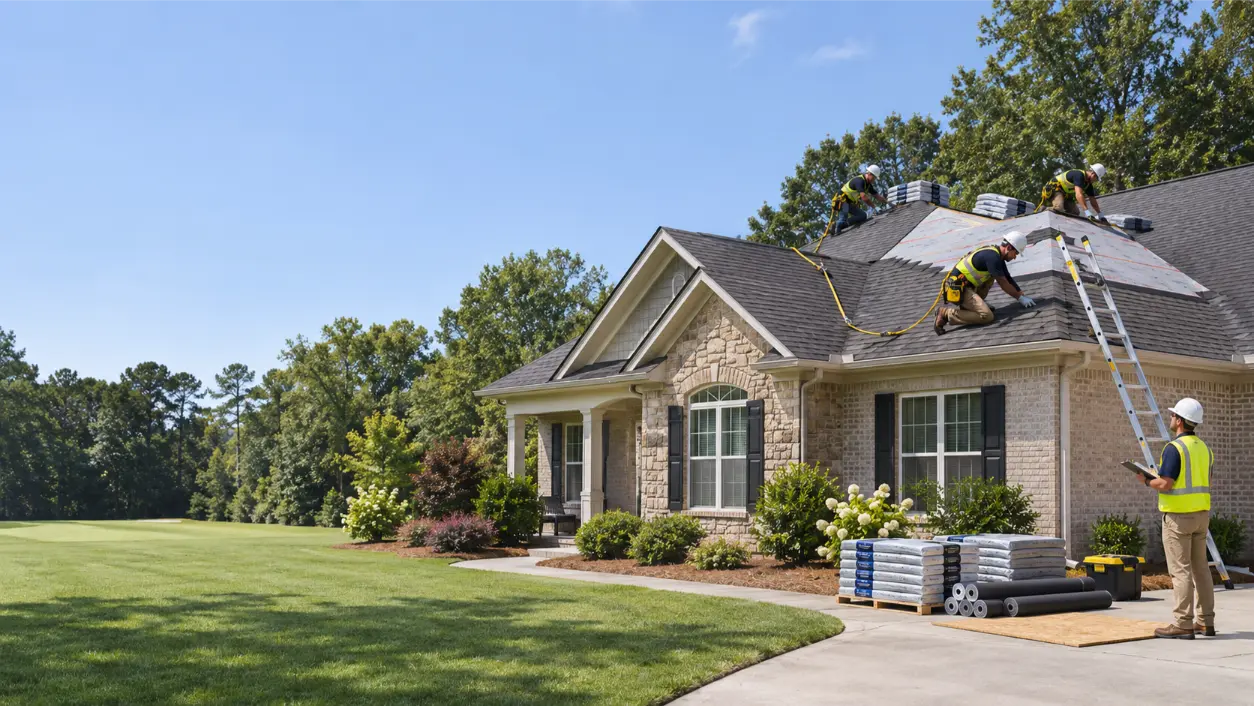
Is a one day roof replacement safe, or does an ultra-fast schedule mean a crew will cut corners? If you have seen an ad promising a new roof before dinner, the right question is not simply how many hours the crew will spend at your house. It is whether the roof’s size, design, existing condition, weather, crew, materials, and inspection requirements make that timeline realistic without skipping essential work. A properly organized one-day installation can be reasonable for some homes; an unconditional one-day promise is a reason to ask more questions.
For homeowners choosing a contractor in Atlanta, Cartersville, Marietta, Canton, Woodstock, and nearby Georgia communities, here is how to distinguish efficiency from haste. Red Top Roofing describes one-day re-roofing as a common goal when conditions permit, with an on-site project manager and planned property protection. The same principles can help you evaluate any contractor’s proposal.
Can a Residential Roof Really Be Replaced in One Day?
Yes, sometimes. The roofing manufacturer GAF says a typical residential replacement often takes one to two days, while larger, more complex roofs and unexpected decking issues can take longer. That is a useful general reference—not a deadline your roofer must hit or a benchmark that proves quality. Some jobs require additional days even when the work is carefully managed.
It also matters what “one day” includes. The statement may refer only to the tear-off and installation day, not the preceding inspection, materials ordering, permit coordination, delivery, or final documentation. A complete project schedule should distinguish work completed before arrival from tasks performed on the roof that day and any follow-up inspections afterward.
Conditions that make a one-day schedule more realistic
- A relatively straightforward roof design with manageable pitch and access
- A verified scope with known material quantities and selected components
- Materials and waste containers delivered or staged before work begins
- An experienced crew of sufficient size with clear supervisory responsibility
- Dry, appropriate weather and enough daylight to do every planned step properly
- Decking that is largely sound, without unexpected structural or moisture problems
- Required permits and inspections arranged according to local rules
None of these makes a fast finish inevitable. A contractor who plans for delays is often more credible than one who insists the schedule cannot change.
What an Organized One-Day Roof Replacement Looks Like
Before installation day: inspect, plan, and stage
The meaningful work begins before a shingle is removed. A contractor should inspect accessible roof conditions, measure the roof, identify valleys and penetrations, discuss ventilation and flashing, and document the selected system. A written scope should specify the shingle product, underlayment, accessories, removal method, cleanup, and what happens if concealed damage appears. Red Top Roofing’s free roof inspection process emphasizes photos, component checks, and repair-versus-replacement clarity before a decision is made.
Ask how the crew will protect landscaping, siding, windows, parked vehicles, and driveway surfaces. Confirm where materials, equipment, and disposal containers will be placed. Prepare children and pets to remain away from the active work area. Any special permit or inspection requirements should be identified in advance, not discovered at the end of the day.
Morning: safe setup and roof tear-off
On installation day, the crew should establish work zones and fall-protection procedures before removing materials. Existing roofing is torn off according to the agreed method, and the exposed deck is inspected for decay, moisture damage, or inadequate fastening. Photographs at this stage are useful because the roof deck will soon be hidden under new materials.
Finding a problem does not mean the crew should cover it to stay on schedule. Damaged decking and unexpected structural conditions may require additional work, owner approval, or a revised timetable. The roof should also be protected from weather exposure if work is delayed.
Midday: build the full roof system
A roof is more than visible field shingles. Depending on the selected system and applicable requirements, installation may involve deck preparation, leak barriers, underlayment, drip edge, starter shingles, flashing, field shingles, ridge and hip components, ventilation details, and carefully sealed penetrations. The sequence and materials must follow the current manufacturer’s instructions and local rules; do not assume all products use identical details.
Ask who checks critical transition points around valleys, chimneys, skylights, vents, and sidewalls. These details deserve attention regardless of whether the overall project takes eight hours or several days. A contractor should explain how the crew will verify fastening, component compatibility, and any warranty-related requirements.
Afternoon: inspection, cleanup, and handoff
Finishing the final shingle is not the same as finishing the job. Allow time for roof checks, ground-level debris collection, magnetic nail pickup where appropriate, final photographs, and a homeowner walkthrough. Ask what documentation you will receive: final scope, approved changes, warranty information, and any permit or inspection follow-up. If official inspection or punch-list work must happen later, that should be stated plainly.
When Fast Becomes a Red Flag
The schedule itself is not the danger. Pressure to bypass necessary work, safety measures, or clear documentation is. Treat the following as signals to slow the buying decision.
- A guaranteed finish regardless of conditions. Heavy rain, inadequate daylight, damage uncovered at tear-off, or code questions can change a responsible schedule.
- No written scope. A one-line price without materials, accessories, disposal, deck contingencies, and property protection leaves important decisions unresolved.
- “We never need to inspect the decking.” Deck condition affects the integrity of the assembly, and concealed damage cannot always be assessed before tear-off.
- Unclear fall protection. Roof construction carries serious fall risks; a contractor who dismisses safety questions is not reassuring.
- Flashing and ventilation treated as optional without explanation. Existing conditions and the selected roof system must be evaluated rather than blindly reused.
- No plan for rain or an unfinished roof. Ask how exposed areas would be covered if work stops unexpectedly.
- Pressure to sign immediately. A special price that expires before you can read the contract is not evidence of a better roofing system.
- Vague warranty promises. Manufacturer and workmanship coverage may have distinct terms, exclusions, and registration requirements.
Safety Standards Still Apply to a One-Day Job
Roofing crews work at height and around falling debris, ladders, equipment, and delivery trucks. Under the federal OSHA residential construction rules, employees working six feet or more above lower levels generally need specified fall protection, subject to the regulation’s provisions and exceptions. Review the OSHA residential fall-protection guidance. This is an employer responsibility—not a reason for a homeowner to inspect the roof personally.
Homeowners should keep children, pets, visitors, and vehicles clear of designated work zones. Do not walk under ladders, approach falling debris, or enter a flagged area to get progress photos. Ask the site supervisor for updates from a safe location. A company that completes jobs quickly should still be able to explain how work is supervised and how the property is protected.
What Can Make a Roof Replacement Take Longer?
Complex geometry and difficult access
Multiple steep slopes, dormers, valleys, chimneys, skylights, limited driveway access, and landscaping constraints can increase time for tear-off and installation. Crew size should match the layout; more people cannot solve every access bottleneck, and crowding may create its own risks.
Weather and daylight
Rain, wind, extreme temperatures, and short winter days affect safe working conditions and product installation. Manufacturer-specific application instructions may impose additional limits or precautions. A postponed installation is often preferable to exposing a roof deck to rain or forcing work under unsuitable conditions.
Deck replacement, permits, or discovered damage
An older roof may conceal soft decking, prior water intrusion, improperly installed components, or unexpected layers. These discoveries can require additional materials, authorization, inspection, and sometimes a revised price. Ask who decides whether the work is paused and how changes are documented.
Different materials or more extensive scope
A simple asphalt-shingle replacement differs from jobs involving substantial flashing reconstruction, structural repairs, specialty roofing materials, or changes to the ventilation design. Make sure the contractor’s time estimate fits the roof being installed, not only the advertisement that attracted you.
Ten Questions to Ask a Contractor Advertising a One-Day Roof
- Does “one day” cover tear-off, installation, cleanup, and final walkthrough, or just installation?
- Who will supervise the job on site and be available for decisions?
- How many workers are planned, and how does that fit my roof’s size and complexity?
- What materials and accessories are included in the written scope?
- What happens if the deck has rot or other damage once exposed?
- How will flashing at valleys, walls, chimneys, skylights, and vents be evaluated?
- What is the plan for weather delays and temporary weather protection?
- How will you protect my driveway, landscaping, windows, family, and pets?
- Which inspections, photos, and completion documents will I receive?
- What warranty terms apply, and what work or documentation is required to qualify?
Ask the contractor to include important answers in the proposal or project documents. A confident, qualified team should be able to explain its process without dismissing questions as unnecessary.
Day-Of-Installation Checklist for Homeowners
- Move vehicles and fragile outdoor items as requested before the crew arrives.
- Keep pets and children away from the roof perimeter and disposal route.
- Confirm the supervisor’s contact information and planned start time.
- Understand how concealed damage and change orders will be handled.
- Allow unobstructed access to areas identified in the preparation plan.
- Request final roof photos, cleanup verification, and warranty documents.
- Confirm whether any permit inspections or punch-list items remain open.
GAF’s homeowner roof-replacement education also recommends preparing space for delivery and disposal and protecting children, pets, and belongings while crews work.
Frequently Asked Questions
Is a one-day roof replacement legitimate?
It can be. An uncomplicated residential roof with an appropriate crew, materials, weather window, and verified deck may be completed in one working day. Ask about the full process and documentation rather than judging quality from speed alone.
How long should a roof replacement really take?
There is no universal duration. GAF describes one to two days as typical for many residential replacements, with complexity and unforeseen conditions changing the schedule. Your contractor should provide a property-specific estimate and contingencies.
Does a larger crew automatically mean better quality?
No. Sufficient staffing can help a job move efficiently, but training, leadership, careful installation, safety practices, and quality checks matter more than a head count by itself.
Should I worry if the contractor needs a second day?
Not necessarily. Stopping for weather, deck repairs, manufacturer requirements, or a safe handoff can be a responsible decision. Ask for the reason, the protection plan, and the revised schedule.
Can I stay home while the roof is being replaced?
Often yes, depending on the property and project, but expect considerable noise and restricted outside access. Ask the supervisor about safe entrances, parking, children, pets, and any specific precautions before work starts.
Choose a Plan, Not Just a Promise
Fast roof replacement is worthwhile only when the contractor can show how the roof will be installed properly, safely, and with clear accountability. Red Top Roofing & Exteriors serves Atlanta and surrounding communities and describes a planned approach with documented inspections, on-site project management, and property-protection measures. To learn whether your home is a realistic candidate for a one-day re-roof, request a free roof inspection and ask for a written scope and schedule tailored to the property.
Disclaimer: General educational information only, not engineering, construction-safety, building-code, legal, warranty, or insurance advice. Installation methods, permit rules, product requirements, roof conditions, and job duration vary. Consult qualified roofing professionals and applicable local authorities.
RELATED LINK: GAF — Homeowner Roof Replacement Guide and Resources