A high commercial roof replacement quote can make any building owner pause. If the roof is aging but not obviously destroyed, it is natural to ask whether a roof coating could extend service life without the cost, disruption, and downtime of a full tear-off.
That question is especially common for low-slope and flat commercial roofs, where coatings may be marketed as a cost-saving alternative. In the right situation, a coating system can be a practical way to restore weather protection, improve reflectivity, and delay a larger capital project. In the wrong situation, it can become an expensive layer over problems that still need structural repair or full replacement.
This guide explains roof coating vs replacement for commercial buildings in practical terms: what coatings can do, when tear-off replacement is unavoidable, what substrate conditions matter, and what questions to ask before choosing a path.
Start With the Real Condition of the Roof
The first decision is not coating or replacement. The first decision is inspection. A commercial roof may look tired from the ground but still have a usable substrate. Another roof may look acceptable from a distance while hiding trapped moisture, failed seams, saturated insulation, bad drainage, or deck damage.
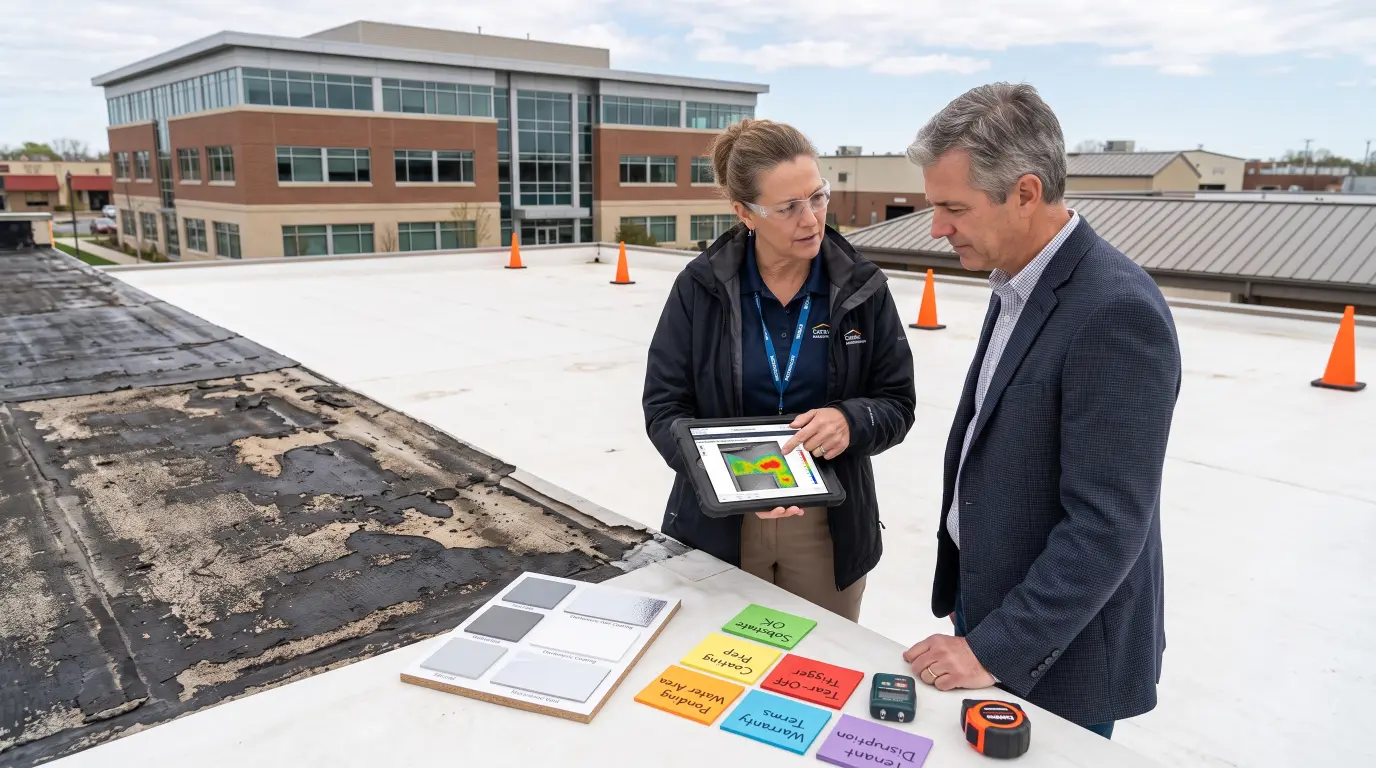
Commercial owners should start with a documented roof inspection that reviews membrane condition, seams, penetrations, flashing, drainage, ponding areas, substrate attachment, signs of water intrusion, and interior evidence such as stains or leaks. The inspection should also identify roof type, age, maintenance history, and whether previous coating or repair layers already exist.
Red Top Roofing’s inspection-first positioning fits this decision because the coating conversation should be based on facts, not a guess from the parking lot.
What a Commercial Roof Coating Is
A commercial roof coating is a fluid-applied system installed over an existing roof surface after cleaning, preparation, detailing, and repairs. Depending on the product and roof type, coatings may help restore weather resistance, protect the membrane, improve reflectivity, and extend the useful life of a roof that is still a good candidate.
Coatings are common on many low-slope roof systems, but they are not a universal fix. They depend on the condition of the existing roof. A coating generally works best when the roof is structurally sound, dry, reasonably well-drained, and repairable before the coating is installed.
For commercial owners, the appeal is clear: a coating may reduce tear-off waste, limit disruption, and create a lower-cost near-term option compared with full replacement. But those benefits only matter when the roof is actually suitable.
What Tear-Off Replacement Means
A tear-off replacement removes the existing roof system down to an appropriate layer, such as the deck or insulation level depending on the project. Damaged materials can be removed, wet insulation can be replaced, deck issues can be addressed, drainage details can be corrected, and a new roof system can be installed.
Replacement is more invasive, but it may be necessary when the existing roof has reached the end of its serviceable life. If water has spread through insulation, the deck is compromised, the membrane is too deteriorated, or the roof has multiple failing layers, coating may only postpone the inevitable.
The important point is that replacement is not simply the expensive option. Sometimes it is the responsible option because it resets the roof system instead of covering a failing assembly.
Pros and Cons of Roof Coatings for Commercial Roofs
The main advantages of coatings are lower disruption, less tear-off debris, potential reflectivity benefits, and the possibility of extending roof service life when the existing roof is still a strong candidate. A coating project may also be easier to phase around tenants, operations, or business hours than a full replacement.
The limitations are just as important. Coatings do not rebuild a rotten deck, dry saturated insulation, correct major slope problems, or make a severely failed roof new again. They also require careful preparation. If the surface is dirty, wet, poorly adhered, or incompatible with the coating system, performance can suffer.
A coating should be viewed as a roof restoration strategy for suitable roofs, not a shortcut around diagnosis.
When Roof Coating May Make Sense
Roof coating may make sense when the existing roof is generally sound, leaks are limited and repairable, moisture is not widespread, drainage is acceptable, seams and penetrations can be detailed properly, and the owner wants to extend service life while managing capital costs.
It may also be worth considering when business disruption matters. Retail centers, medical offices, warehouses, multifamily buildings, schools, churches, and light commercial properties may all benefit from a lower-disruption option if the roof qualifies.
A coating can be especially attractive when the owner has received a high replacement quote and needs a second strategy, but the decision still needs inspection, moisture evaluation, substrate review, and product compatibility confirmation.
When Does Roof Coating Not Make Sense?
Roof coating does not make sense when the roof has widespread saturated insulation, active water intrusion across multiple areas, severe membrane failure, unstable substrate, major ponding that cannot be corrected, extensive deck damage, or multiple layers that exceed practical or code limits.
It may also be a poor fit when the roof has been repeatedly patched without resolving the underlying issue. If water has been moving through the assembly for a long time, a coating over the top may hide symptoms while damage continues below.
Commercial owners should be cautious of anyone who recommends coating before checking whether the roof is dry, sound, cleanable, and compatible with the proposed system.
Substrate Conditions Decide the Path
Substrate condition is one of the most important factors in the coating vs replacement decision. The coating must bond to the existing surface. That means the roof has to be clean, stable, and compatible with the selected coating system.
Different roof types may require different preparation methods, primers, repairs, or product choices. A metal roof, modified bitumen roof, single-ply membrane, built-up roof, or previously coated roof may each create different requirements.
If the substrate is brittle, loose, contaminated, wet, or failing, the coating may not perform as intended. The right contractor should explain what preparation is required and what conditions would stop the project from being a good fit.
Moisture Is the Deal Breaker Many Owners Miss
Water trapped inside the roof assembly is one of the biggest reasons coating may be rejected. A coating can seal the surface, but it does not remove moisture already inside the system. If insulation is wet, the building may need removal and replacement of affected areas before coating is considered, or full tear-off may be the better path.
Moisture evaluation may involve visual inspection, core cuts, infrared scanning, moisture meters, or other methods depending on the roof and project. The goal is to understand whether the roof is dry enough and stable enough to restore.
Skipping this step can turn a coating project into a false economy.
Drainage and Ponding Water Matter
Flat roofs are rarely perfectly flat. They need drainage paths to move water off the roof. Persistent ponding water can shorten roof life, stress seams, collect debris, and create long-term performance concerns.
Some coating systems tolerate incidental ponding better than others, but no owner should ignore drainage. If water sits for long periods because of slope issues, blocked drains, clogged scuppers, low spots, or structural movement, those conditions should be addressed before deciding that coating is enough.
A replacement project may create a better opportunity to correct drainage problems. A coating project may be viable only if drainage issues are minor, manageable, or corrected first.
How to Prepare a Commercial Roof for Coating
Preparation typically includes inspection, cleaning, removal of loose material, repairs to open seams or damaged areas, detailing around penetrations, reinforcement where required, adhesion testing when appropriate, and confirmation that the surface is ready for the selected coating.
The preparation phase is not a formality. It is the project. A coating system depends on the work performed before the final coating goes down.
Owners should ask what preparation is included in the proposal, which repairs are excluded, how penetrations will be treated, whether primer is required, how adhesion will be verified, and how weather conditions affect installation.
Lifespan Expectations for Roof Coatings
Lifespan expectations for roof coatings vary based on roof condition, coating type, thickness, preparation, drainage, climate, maintenance, foot traffic, and manufacturer requirements. A responsible contractor should not make a blanket promise without inspecting the roof and matching the system to the conditions.
Some owners use coatings as part of a planned maintenance cycle. Others use coatings as a bridge to delay replacement while budgeting for a future capital project. Both approaches can be valid when expectations are realistic.
Ask what maintenance will be required after coating, what inspections should happen annually, and what conditions could shorten the expected service life.
Cost Comparison: Look Beyond the Proposal Total
A coating proposal may be lower than a full tear-off quote, but owners should compare total value, not only the first number. Consider disruption, tenant impact, warranty goals, recurring leak risk, future replacement timing, maintenance costs, and whether the project solves the actual problem.
A coating that delays replacement for a suitable roof can be financially useful. A coating on a failing roof can waste money and make the next replacement more complicated.
A full replacement may cost more now but can be the cleaner long-term decision when the existing assembly is beyond restoration.
Business Disruption and Tenant Impact
Commercial roofing work affects operations. Noise, odors, access, parking, staging, equipment, safety zones, tenant notices, and weather delays all matter. A coating project may reduce some disruption compared with tear-off, but it still requires coordination.
Owners should ask how the work will be phased, when crews will be on site, how rooftop units or penetrations will be protected, what tenants should expect, and who communicates schedule changes.
For occupied buildings, the best roofing strategy is not only technically correct. It is operationally manageable.
Warranty and Manufacturer Requirements
Commercial roof systems and coating systems may have manufacturer requirements related to preparation, thickness, repairs, inspections, compatible substrates, and approved installers. Owners should understand what warranty is being proposed, what it covers, what it excludes, and what maintenance is required to keep it valid.
Red Top Roofing’s manufacturer credential signals, including its commercial coating capability profile, are relevant because commercial coating work should be tied to product-specific requirements rather than generic promises.
Before approving a project, ask for the system name, manufacturer documentation, warranty terms, maintenance expectations, and any conditions that could limit coverage.
Questions to Ask Before Choosing Coating or Replacement
Before choosing a path, ask: What roof type do we have? Is the roof dry? Are there wet insulation areas? What is the substrate condition? Are leaks isolated or widespread? Can drainage problems be corrected? Is the roof compatible with the proposed coating? What preparation is included? What repairs are required first? What is the expected disruption? What warranty applies? What maintenance will be needed?
Also ask what would make the contractor recommend replacement instead of coating. A contractor who can explain the limits of coating is usually giving you a more credible recommendation.
How Red Top Roofing Can Help Commercial Owners Evaluate Options
Red Top Roofing & Exteriors serves Atlanta metro and surrounding Georgia communities with roof inspections, roof replacement, insurance-savvy guidance, and commercial roofing capability signals including roof coating inquiry options and GAF CoatingsPro+ credentialing.
For commercial owners facing an expensive tear-off quote, Red Top Roofing can help document roof condition, review whether coating belongs in the conversation, identify replacement triggers, and explain the tradeoffs in a practical way.
Red Top Roofing cannot guarantee coating suitability, lifespan, insurance outcomes, cost savings, or warranty approval without inspection and project-specific review. The value is in getting the facts before committing to a major roof investment.
Roof Coating vs Replacement Checklist
- The roof has been inspected and documented.
- The roof type and substrate are identified.
- Moisture conditions are evaluated before coating is recommended.
- Leaks are mapped as isolated or widespread.
- Drainage and ponding water are reviewed.
- Existing layers and prior coatings are identified.
- Surface preparation requirements are clear.
- Coating compatibility is confirmed.
- Required repairs are included in the scope.
- Tenant and business disruption are planned.
- Warranty terms and maintenance requirements are reviewed.
- Tear-off triggers are clearly explained.
- The owner understands whether coating is a restoration strategy or only a short bridge.
Final Thoughts
Roof coating vs replacement for commercial buildings is not a simple price comparison. It is a condition-based decision. Coatings can be a smart option when the roof is dry, sound, cleanable, compatible, and repairable. Full tear-off replacement becomes the better path when the roof assembly is saturated, structurally compromised, severely deteriorated, or beyond restoration.
If you received a high replacement quote, it is reasonable to ask whether coating is possible. Just do not skip the inspection. A documented review gives you the facts needed to compare coating, repair, and replacement responsibly.
For commercial owners in the Atlanta metro and surrounding Georgia communities, Red Top Roofing can help evaluate the roof and build a clearer plan before you commit to the next step.
FAQ
Should I coat or replace my flat roof?
It depends on roof condition. Coating may make sense when the roof is dry, sound, compatible, and repairable. Replacement is usually better when there is widespread moisture, severe deterioration, deck damage, major drainage problems, or multiple failing layers.
What are the pros and cons of roof coatings for commercial roofs?
Roof coatings may reduce disruption, extend service life, improve reflectivity, and cost less than tear-off when the roof is suitable. The downside is that coatings do not fix saturated insulation, structural damage, major slope issues, or severely failed membranes.
When does roof coating not make sense?
Roof coating may not make sense when the roof has trapped moisture, widespread leaks, unstable substrate, severe ponding, incompatible materials, deck damage, or conditions that require removal and replacement.
How do you prepare a commercial roof for coating?
Preparation may include inspection, cleaning, repairs, seam and penetration detailing, moisture evaluation, adhesion testing, primer where needed, and confirmation that the roof is compatible with the coating system.
How can Red Top Roofing help commercial owners compare options?
Red Top Roofing can inspect and document roof condition, review coating suitability, explain replacement triggers, and help commercial owners compare practical next steps based on the roof, building operations, and long-term goals.
RELATED LINK: