
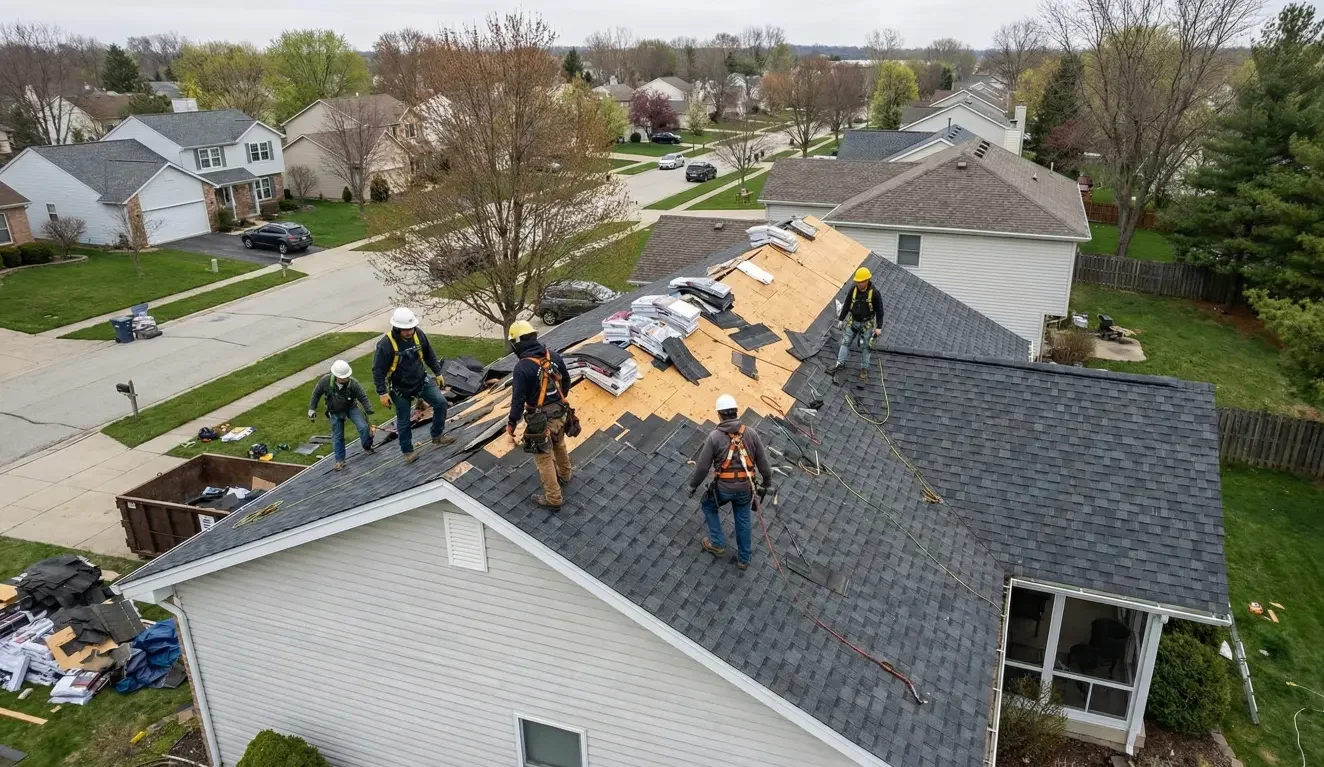
A note from a home inspector, a letter from your insurer, or piles of granules at the end of your downspouts can suddenly make your 15–20-year-old roof feel like a ticking clock. Do you replace it now, before the next Atlanta storm season, or wait and hope that if something happens, insurance will step in? When to replace an asphalt shingle roof?
If you’ve been quietly Googling when to replace asphalt shingle roof and getting mixed answers, you’re not alone. This isn’t just a question about age; it’s about budget, risk, and what you want your next few years in this home to look like.
This guide walks you through those tradeoffs step by step so you can move from vague worry to a clear, evidence-based plan that fits your situation.
The Real Question Behind “How Old Is Too Old?”
Most homeowners start with age: “My roof is almost 20 years old—is that too old?” Age is a helpful signal, but it’s not the whole story. Two roofs can be the same age and in very different shape depending on the shingles used, how they were installed, and what kind of weather they’ve been through.
The deeper question is usually this:
- Am I better off replacing the roof on my terms now,
or - Am I okay riding it out and accepting the risk of leaks, storm damage, or rushed decisions later?
For a 15–20-year-old asphalt shingle roof, this isn’t a hypothetical. You may be seeing:
- Granules collecting at the end of downspouts.
- Shingles that look tired—edges curling, darker or patchy areas, or spots that look “bald.”
- Notes from a home inspector saying things like “roof at or near end of expected life.”
At the same time, you have a budget to protect and other priorities competing for those dollars. Replacing a roof that “seems fine” can feel wasteful; waiting too long and dealing with interior damage feels even worse.
That’s why it’s useful to look beyond a single number and understand how asphalt shingle roofs age, what real replacement signals look like, and how different choices actually play out.
Understanding Asphalt Shingle Lifespan (and Why It’s Not a Fixed Number)
You’ll see a lot of simple answers online: “Shingle roofs last X years.” In reality, there is no single countdown clock that applies to every home.
A more honest way to think about asphalt shingle lifespan is as a range influenced by several factors:
- Shingle type:
Older, thinner “3-tab” shingles are generally on the lighter-duty end of the spectrum. Thicker architectural or dimensional shingles are often designed for longer performance. Two roofs installed in the same year may age differently if one has entry-level 3-tab and the other has a heavier architectural product. - Installation quality:
Even good shingles can underperform if installation was rushed or corners were cut. Nail placement, underlayment choices, and flashing details all affect how well a roof holds up over time. - Ventilation and attic conditions:
A poorly ventilated attic can trap heat and moisture, stressing shingles from below. Over many summers, that can accelerate wear and shorten practical life. - Local weather patterns:
In the Atlanta area, roofs live through a mix of heat, humidity, rain, and regular storm cycles. Over the years, that combination of UV exposure, temperature swings, and wind or hail events all adds up. - Maintenance and previous repairs:
A roof that has been periodically checked, maintained, and repaired correctly may age differently from one that hasn’t been looked at since it was installed.
When you’re trying to decide when to replace asphalt shingle roof in that 15–20-year window, the most important question isn’t, “What did the product brochure say years ago?” It’s, “What does this roof, on this house, in this climate, look like today?”
That’s where signs of wear become more important than the calendar.
Signs It’s Time to Replace, Not Just Repair
An aging asphalt shingle roof doesn’t flip from “fine” to “failed” overnight. It usually gives you a series of clues. The challenge is knowing when those clues add up to “replace” instead of “repair again.”
Here are some of the more common indicators that you might be crossing that line.
Visual clues you can spot from the ground (or safely with binoculars):
- Granule loss:
Granules are the protective layer on the surface of shingles. Seeing some in your gutters or at downspouts is normal over time, but heavy deposits or “bald spots” on shingles can signal significant wear. - Curling or cupping:
Shingle edges lifting, curling, or cupping can be a sign of aging, heat stress, or ventilation issues. It also makes shingles more vulnerable to wind and water intrusion. - Cracking and widespread surface wear:
Random cracks across multiple slopes, not just a one-off damaged shingle, suggest the material is becoming brittle. - Missing or slipped shingles in several areas:
A few isolated missing shingles can sometimes be repaired. When you’re seeing this pattern repeat across the roof, it becomes a bigger question.
Functional clues you experience over time:
- Frequent minor repairs:
If you’ve been “chasing problems”—fixing a leak here, a missing shingle there, and calling a roofer every season—those costs and headaches add up. - Recurring leaks or staining:
Water spots that return after repairs, or moisture history in certain rooms or the attic, hint that underlying issues may be more widespread. - Hot or musty attic conditions:
While not always obvious from below, poor ventilation and moisture can be part of a bigger picture your roofer or inspector may highlight.
A helpful rule of thumb:
When repair work starts to feel like plugging leaks in a boat with too many holes, it’s time to step back and ask if the real decision is repair vs. replace—not just “fix this one more thing.”
Option 1 — Wait and Hope: The “Free Roof” Mindset
Many homeowners have heard a version of the story:
“A big storm came through, the roofer said it was damaged, insurance paid for a full replacement.”
It’s easy to internalize this and think, “If my older roof gets hit hard enough, maybe I can get a ‘free roof’ too. So why replace now?”
There are a few important realities to consider:
- Insurance decisions depend on your policy and the adjuster’s assessment.
Age, pre-existing condition, and the nature of any damage all factor into decisions. A storm passing over your house does not automatically mean your insurer will approve a full replacement. - A very old roof may have limited remaining life regardless of storms.
If your roof is already heavily worn, storm-related damage can be harder to separate from normal aging and may be evaluated differently than on a younger, healthy roof. - Living with a borderline roof through multiple storm seasons carries risk.
You may get lucky for a while. Or you might wake up to interior leaks, ceiling damage, or emergency calls during a heavy rain or hail event. - Emergency replacements are stressful.
It’s one thing to plan a replacement with time to compare materials and schedule around your life. It’s another to rush decisions because water is coming in and you have limited options that week.
Waiting and hoping for a storm-plus-approval scenario is, in practice, a decision to accept more uncertainty and possible disruption later. For some homeowners, that tradeoff feels acceptable. For others, especially those who value predictability or plan to sell in the near future, it doesn’t.
Option 2 — Proactive Replacement Before Storm Season
Proactive replacement is the opposite of “wait and see.” It means you look at the age, condition, and history of your roof and decide to replace it on your terms—before the next big storm cycle.
For a 15–20-year-old asphalt shingle roof, the potential advantages include:
- Predictability and planning:
You choose the timing, budget, and scope instead of reacting to a crisis. You can schedule work around vacations, school, or work-from-home needs. - Reduced leak risk going into heavier weather.
A newer, properly installed roof is generally better positioned to handle intense rain and wind than one that’s already close to the end of its useful life. - Peace of mind.
Instead of watching every thunderstorm warning with a knot in your stomach, you know your roof has been refreshed and documented by professionals. - Alignment with other life events:
If you’re planning to sell in the next few years, replacing proactively can eliminate a big objection during buyer inspections and appraisals.
For contractors like Red Top Roofing, a proactive roof replacement is an opportunity to use a structured, documentation-led process instead of rushing. That often includes:
- Clear photo documentation before and after.
- Planning for ventilation, flashing, and code requirements—not just swapping shingles.
- Coordinated scheduling, sometimes completing the project very quickly when conditions allow.
Proactive replacement doesn’t mean you’re overreacting. It means you’re choosing a controlled, planned change instead of waiting for failure points to decide for you.
How to Decide: Budget, Risk Tolerance, and Home Plans
Ultimately, the decision isn’t made by your neighbors, your inspector, or your roofer. It’s made by you, based on your priorities.
Here are three lenses that can help:
- Budget and cash flow
- Can you comfortably absorb a planned roof investment now?
- Would spreading the cost through financing options be more manageable?
- How would an emergency replacement (possibly with interior repairs) affect you financially?
If a planned project now fits your financial comfort better than an unknown emergency later, that leans toward proactive replacement. If you truly need to defer costs and accept more risk, monitoring may be the more realistic path for the moment.
- Risk tolerance
Ask yourself honestly:
- How would you feel if, during the next strong storm, a leak appeared and damaged ceilings or flooring?
- Are you okay with some level of uncertainty, or do you prefer to reduce “what if” scenarios?
Some homeowners can live with a “we’ll see” approach. Others would rather trade some remaining shingle life for the security of a new system.
- Home plans
Consider your timeline:
- If you plan to stay long-term, a proactive replacement can be seen as investing in the home you’ll continue to live in.
- If you plan to sell in the next few years, an old or borderline roof often becomes a negotiation point. Buyers may ask for concessions, credits, or replacement as a condition.
A simple framework:
- Roof is in the 15–20-year range
- You’re seeing real signs of wear (granule loss, curling, recurrent repairs)
- You plan to stay or sell in the near future and value predictability
In that scenario, proactive replacement often starts to make more sense than continuing to patch and hope.
Why an Inspection-First Approach Keeps the Decision Honest
No matter which way you’re leaning, guessing from the driveway will only take you so far. An inspection-first approach gives you a clearer picture of what’s actually happening on your roof.
A documented aging-roof inspection should include:
- Photos of each slope:
Wide shots and close-ups of areas showing wear or damage. - Detailed notes on shingles:
Observations about granule loss, cracking, curling, or exposed mat. - Flashing and penetration checks:
Condition of areas around chimneys, vents, and roof-to-wall transitions. - Ventilation and attic notes:
Any concerns about airflow or visible moisture that may impact roof life. - Clear explanation of findings:
Plain-language summary of what looks acceptable, what’s a watch-area, and what’s potentially urgent.
The goal isn’t to push you into a decision. It’s to keep the decision honest by grounding it in actual evidence rather than fear or wishful thinking.
You’ll also want to differentiate between:
- Scare tactics:
Vague warnings like “This roof could fail any day now” without clear documentation. - Evidence-based recommendations:
Specific photos, explanations, and options that acknowledge both pros and cons.
A good inspection report can support either outcome:
- “Yes, it’s time to replace,” or
- “You’re close, but you can reasonably monitor things with a re-check in a set timeframe.”
In both cases, you’ve moved from “I have no idea” to “I understand where my roof stands and what my choices actually are.”
Common Mistakes Homeowners Make With Aging Roofs
When you’re busy and the roof is “just there,” it’s easy to fall into patterns that work against you over time. A few pitfalls to avoid:
Waiting for obvious leaks as the only trigger.
If visible dripping water is the only scenario that would push you to act, you may wait until the roof has already allowed damage to your interior. A leak is usually a late-stage symptom, not an early warning.
Confusing cosmetic wear with structural risk—or vice versa.
Some changes in appearance may look worse than they are; others may seem minor but signal deeper issues. This is where a roofer’s trained eye and documentation matter more than online photo comparisons.
Assuming any storm on an old roof will automatically lead to full coverage.
Stories about storm damage and replacements spread quickly, but each situation depends on policy terms and the adjuster’s assessment. Counting on a “free roof” can create unrealistic expectations and delay reasonable planning.
Picking a contractor based only on the lowest bid.
On an older roof, details like tear-off practices, deck inspection, flashing, and ventilation upgrades are critical. A rock-bottom price that skips those steps may cost more in the long run.
Avoiding these mistakes doesn’t require a construction background. It just means you approach your 15–20-year-old roof with your eyes open and a willingness to ask questions.
Your Next Step: Get the Facts on Your Roof Before Storm Season
Standing in the driveway, looking up at a roof that’s been there for 15–20 years, it’s easy to feel torn.
On one hand, it hasn’t failed yet. On the other, you see the granules at the downspouts, the inspector’s note about age, the small repairs that keep popping up—and you know another storm season is coming.
You don’t have to decide everything today. But you can decide to stop guessing.
Getting a free, documented roof inspection is a simple way to:
- See what’s actually happening on your roof, slope by slope.
- Understand how age, condition, and local weather patterns are affecting your shingles.
- Talk through realistic options—monitoring, repairs, or proactive replacement—without pressure.
Whether you end up replacing before storm season or watching things for a bit longer, you’ll be making that choice with facts, not just fear or hope.
You don’t have to guess how much life your roof has left. A documented roof inspection gives you clear photos, expert insight, and practical options—without pressure. Whether you end up replacing soon or monitoring for a few more seasons, you’ll be making that choice with facts, not guesses. Request your free inspection and get a clearer plan before the next storm season.
FAQ content
- How old is too old for an asphalt shingle roof?
There isn’t a single age where every asphalt shingle roof automatically becomes “too old.” Many roofs reach a decision point somewhere in the 15–20-year range, but actual condition depends on shingle type, installation quality, ventilation, and local weather history. The best way to know is to combine age with a documented inspection that shows how your specific roof is holding up. - What are the signs it’s time to replace a roof, not just repair it?
Signs that may point toward replacement include heavy granule loss, widespread curling or cracking, exposed shingle mat, and recurring issues across multiple areas of the roof. If you find yourself doing frequent patchwork repairs or dealing with repeat leaks, it’s a signal to step back and evaluate whether the system as a whole is near the end of its useful life. - Should I replace my roof before storm season or wait for damage?
Replacing before storm season can offer more control over timing and reduce the risk of leaks during heavy weather, especially if your roof is already in the 15–20-year range and showing wear. Waiting and “seeing what happens” keeps cash in your pocket for now but carries more risk of emergency repairs or damage. A roof inspection can help you weigh those tradeoffs for your specific situation. - Does insurance pay for a new roof just because it’s old?
Generally, no. Insurance decisions are usually based on your policy details and the adjuster’s assessment of storm-related damage, not age alone. An older roof may be evaluated differently than a newer one, especially if it already shows significant wear. It’s safer to view insurance as protection against covered events, not as a guaranteed funding plan for an aging roof. - How does granule loss factor into roof replacement timing?
Granule loss is one of several signs that shingles are wearing down. Seeing some granules in gutters over time is normal, but heavy deposits or bald-looking areas on the shingles themselves can mean the roof is losing protection. If granule loss combines with other issues—like curling, cracking, or frequent repairs—it’s a strong cue to look closely at replacement timing. - How can a roof inspection help me decide whether to replace now or later?
A good roof inspection documents the condition of your shingles, flashing, and ventilation, and shows you where wear is mild, moderate, or severe. With photos and clear explanations, you can see whether issues are isolated or widespread, and discuss whether monitoring, targeted repairs, or full replacement makes the most sense. That way, your decision is based on what’s actually on your roof today—not just its age or guesswork.
You don’t have to guess how much life your roof has left.
A documented roof inspection gives you clear photos, expert insight, and practical options—without pressure.
Whether you end up replacing soon or monitoring for a few more seasons, you’ll be making that choice with facts, not guesses.
Request your free inspection and get a clearer plan before the next storm season.
RELATED LINKS
The International Building Code – ICC