
When water starts entering your home after a storm, the situation changes immediately. What was a roof problem a few hours ago is now an interior damage problem too. Ceilings can stain, insulation can get soaked, wood can hold moisture, and flooring can be affected faster than many homeowners expect.
That is why the question is usually not whether the roof needs attention. It is what kind of attention it needs first.
In many storm-related situations, the first recommendation a homeowner hears is to install a tarp. That can be the right move. But it is also where confusion starts. Some people assume a tarp solves the issue. Others worry they are spending money on something temporary when they should be fixing the roof right away. The reality is that emergency roof tarping and permanent roof repair do two very different jobs.
Emergency Roof Tarping vs Repair: What You Should Do First
This guide walks through that difference clearly. If you are dealing with an active leak, trying to protect your home, and wondering what to do first, the goal is to help you understand what tarping can accomplish, where its limits are, and how to move from temporary protection to a real repair plan.
When a Roof Leak Turns Into an Emergency
Not every roof issue feels urgent at first. A few lifted shingles or a small spot on the ceiling may seem like something that can wait a few days. But once water is actively entering the home, the situation becomes more serious.
Storm damage often creates openings in ways homeowners cannot fully see from the ground. Wind can loosen or remove shingles. Hail can damage roofing materials enough to make them vulnerable. Tree limbs or flying debris can puncture the surface. Flashing around roof penetrations or valleys may fail. In some cases, the visible leak inside the home is only the final sign of damage that began outside earlier.
The emergency is not just the hole in the roof. It is what continued water entry does next.
Water can move along framing, soak attic insulation, stain drywall, and spread beyond the original point of entry. A leak over one room may start from damage several feet away on the roof itself. That is why homeowners who wait too long sometimes find that a “small leak” became a larger restoration issue.
In that moment, the first priority is simple: stop more water from getting in. That is where tarping often comes in. Not because it finishes the job, but because it helps stabilize the situation while the roof is properly assessed.
What Emergency Roof Tarping Actually Does
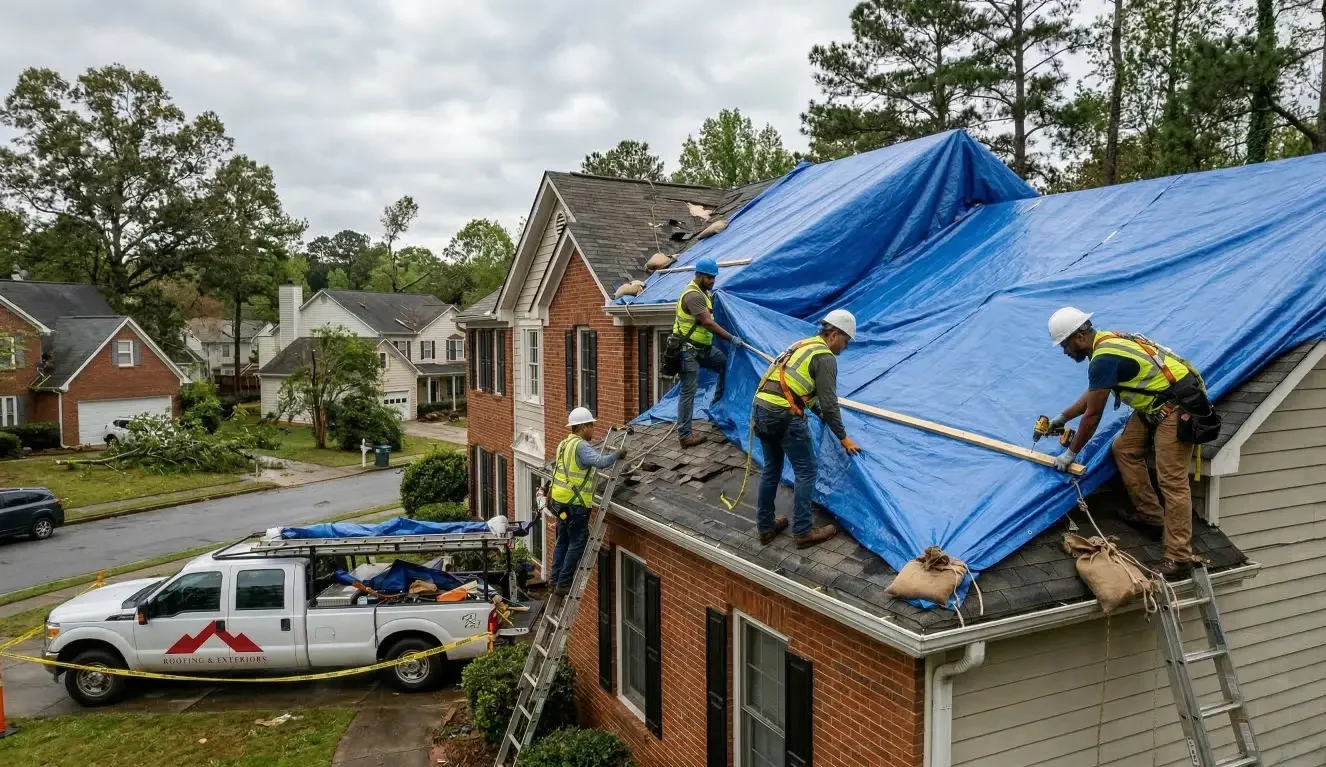
Emergency roof tarping is a temporary protective measure used to cover damaged parts of a roof and reduce further water intrusion. It is not intended to restore the roof system. It is meant to buy time and protect the home until the next step can happen safely and correctly.
A properly placed tarp is usually installed over the damaged area and secured so that wind and rain are less likely to reach exposed sections of the roof. In practical terms, it serves as a short-term barrier between the home and the weather.
This is most common in situations like these:
The purpose of a roof tarp
The immediate purpose of a tarp is mitigation. If shingles have blown off, decking is exposed, or a branch punctured the roof surface, a tarp can help reduce additional water entry before permanent repairs are made.
That matters because the damage after a storm is often not limited to the first event. A roof may be hit once, but the bigger financial and practical problem can come from what happens in the next rain if the opening remains exposed.
A tarp can also create breathing room for the homeowner. In an emergency, people are often trying to manage several things at once: protecting belongings, documenting damage, calling insurance, and figuring out who to trust. Temporary protection helps reduce the pressure while a real inspection and repair decision are made.
Situations where tarping is commonly used
One common scenario is a section of missing shingles after high winds. The shingles may be gone, but the bigger concern is what else was affected underneath and how much exposure the roof now has.
Another is impact damage from debris. A fallen branch may leave a puncture or compromise the roofing surface in one area, even if the rest of the roof looks intact from the ground.
Tarping is also used when flashing fails around vulnerable roof features, or when a storm exposes the decking itself. In any of these cases, the tarp is functioning as short-term protection, not a finished repair.
What Roof Tarping Does NOT Fix
This is where many homeowners need the most clarity.
A tarp may stop or reduce active leaking for now, but it does not fix the roof assembly. It does not reverse storm damage. It does not confirm whether the issue is isolated or more widespread. And it does not replace an inspection.
A tarp does not repair damaged shingles, underlayment, flashing, decking, or ventilation-related issues. It does not tell you whether the roof can be repaired in one area or whether the damage points toward a larger repair or full replacement. It also does not restore the roof’s long-term weather resistance the way a properly completed roofing system is designed to do.
This matters because homeowners under stress sometimes hear “the leak is stopped” and interpret that as “the roof is handled.” Those are not the same thing.
A temporary roof tarp can be a smart first move. But it is still temporary mitigation. The real decision begins after the tarp is in place and the roof can be evaluated properly.
That is the key distinction in emergency roof tarping vs repair. One protects the home for the moment. The other addresses the condition of the roof itself.
How Long an Emergency Roof Tarp Can Stay in Place
Homeowners often ask how long a temporary roof tarp can remain on the roof. The honest answer is that it depends on conditions, installation quality, and the nature of the damage. But the more important principle is this: a tarp should not be treated like a normal long-term roofing solution.
Tarps are exposed to wind, sun, rain, debris, and movement. Even when installed well, they are temporary by nature. Weather exposure can weaken them over time, and harsh conditions may shorten that window. A tarp that performs acceptably for a short period may become less reliable if it stays in place too long.
That is why the safer mindset is not “How long can I get away with leaving this?” but “How quickly can I move from temporary protection to a permanent plan?”
Delays happen for real reasons. Storm volume can overwhelm contractors in the area. Insurance inspections may take time. Material decisions may need to be made. But even in those situations, the tarp should be seen as a bridge, not the destination.
If a tarp has been installed, follow-up matters. The roof still needs to be inspected, documented, and evaluated for the next step. Waiting too long can create a false sense of security, especially if the weather changes or the tarp begins to fail in ways that are not obvious from the ground.
When a Permanent Roof Repair or Replacement Is Needed
Once the immediate leak is controlled, the next question is whether the roof needs a repair in one area or a more extensive solution.
That answer depends on the extent and type of damage, not just whether a tarp was installed first.
Minor localized damage
There are situations where a targeted repair may be appropriate. If the damage is limited to a small area and the surrounding roof system is still in sound condition, a repair may solve the problem. For example, a small area of storm-related damage with otherwise healthy roofing materials might be addressed without full replacement.
But even then, the decision should come from inspection, not assumption. A leak that appears localized from inside the home may still trace back to broader roof issues. What looks like a single damaged area may involve surrounding materials too.
Larger storm damage
A more extensive repair or full replacement may be needed when the damage is widespread, when multiple parts of the roof system are compromised, or when the age and condition of the roof make patchwork less practical.
This is often where inspection-first guidance becomes valuable. The right question is not just “Can this be patched?” It is “What is the most responsible next step based on the condition of the roof, the damage present, and the long-term outcome?”
That is especially important after hail, wind, or debris events, where visible damage may only tell part of the story. A documented inspection helps separate temporary emergency response from the bigger decision: repair one section, or move toward full restoration of the roof system.
Insurance Considerations With Emergency Roof Tarping
Insurance adds another layer of stress for homeowners because decisions are being made quickly and often without much certainty in the moment.
In general, one reason temporary tarping is recommended is that homeowners are expected to take reasonable steps to prevent further damage when possible. That does not mean doing dangerous work themselves. It means not ignoring active water intrusion if protective action is available.
A tarp may also become part of the claim story if storm damage led to emergency mitigation. That is one reason documentation matters so much. Photos of the damage before tarping, photos during the emergency response if safe to capture, and a clear record of what was done can all help create a more understandable timeline.
The key is not to over-assume what insurance will or will not cover. Policies differ. Claim outcomes depend on the actual damage, the cause, the policy terms, and the documentation. So the safest approach is to think of tarping as a practical protective step, while also making sure the roof itself is assessed and recorded clearly.
A homeowner dealing with an active leak is usually better served by asking questions like these:
What damage is visible now?
What was done to prevent further water intrusion?
What documentation exists for the roof condition after the storm?
What does the inspection show about repair versus replacement?
Those questions create a more grounded process than relying on guesses or verbal assumptions during a stressful moment.
Common Mistakes Homeowners Make During Emergency Roof Leaks
Emergency situations create rushed decisions. That is understandable. But a few common mistakes can make the situation harder than it needs to be.
One mistake is waiting too long because the leak seems manageable. A bucket under a drip may feel like enough for one night, but continued water entry can increase interior damage quickly.
Another is treating the tarp as the end of the process. Once the active leak slows down, some homeowners understandably feel relieved and move on to other priorities. But without follow-up, the roof issue remains unresolved.
DIY tarping is another risky area. Aside from safety concerns, damaged roofs are unpredictable underfoot, especially after storms. Wet surfaces, unstable materials, and steep slopes can turn a stressful situation into an injury risk. Even when homeowners are trying to save time or money, climbing onto a damaged roof can create a much bigger problem.
A different mistake is hiring emergency help without any inspection path afterward. If someone installs a temporary patch or tarp but there is no documented evaluation of the roof condition, the homeowner may still be left without clarity on what actually needs to happen next.
And finally, some homeowners focus only on the obvious damaged area. Roof leaks do not always behave neatly. Water can travel, and storm effects can extend beyond the point where the interior stain appears. A documented inspection helps avoid narrow assumptions.
What Happens After the Tarp Goes Up
This is the part many homeowners are not prepared for. The tarp may solve the immediate emergency, but it should also trigger a more structured next phase.
First comes the temporary protection itself. The priority is to reduce additional water intrusion and stabilize the situation.
Then the roof should be inspected. This is where the visible storm damage, vulnerable areas, and overall roof condition need to be assessed with care. If possible, the condition should be documented with photos or video so the homeowner has a clearer record of what was found.
From there, the repair-versus-replacement decision becomes more informed. Is the issue confined to one section, or does the roof show broader storm-related damage? Are the surrounding materials still in reliable condition? Is a localized fix realistic, or does the roof need a more complete solution?
If insurance is part of the process, the inspection and documentation help support that conversation. Instead of relying only on a leak description, the homeowner has a more concrete basis for discussing damage and next steps.
This is also the stage where a calm process matters most. In an active leak situation, homeowners are often pushed into urgency mode. But after the tarp is in place, the goal should be to move from panic to clarity. Temporary protection, documented inspection, decision logic, and then the right permanent scope.
If water has entered your home, stopping the leak is only the first step. A professional roof inspection helps determine whether a repair or replacement is needed and provides documentation for next steps. Red Top Roofing offers inspection-first evaluations designed to give homeowners clear answers. Request a free roof inspection to understand the condition of your roof and the best path forward.
When to Call for a Professional Roof Inspection
In practice, a professional inspection should happen as soon as the immediate emergency is under control.
That is especially true if shingles are missing, decking may be exposed, a tree or branch hit the roof, the leak continues despite temporary protection, or there is uncertainty about how far the damage extends. Even when the tarp appears to be holding, the roof still needs to be evaluated as a roofing system, not just as a leak point.
A proper inspection helps answer the questions homeowners actually care about in this moment:
Where did the failure occur?
How limited or widespread is the damage?
Is this a repair situation, a replacement situation, or still TBD pending more review?
What documentation is available for the homeowner’s records and next steps?
That kind of clarity is hard to get from a quick visual guess, especially from the ground. And it is one reason inspection-led roofing companies position the inspection as more than a quote. In storm-related situations, it is part of how the homeowner moves from uncertainty to a decision.
If your roof has been tarped after a storm, or if water is actively entering and you are still trying to decide what to do first, the next practical step is not to assume the tarp solved the issue. It is to get clear on the actual condition of the roof and what permanent solution makes sense.
Speak with a roofing specialist about storm damage if you need help understanding what comes after temporary protection. A clear inspection can help you see whether you are dealing with a short-term repair, a larger storm restoration issue, or a roof that needs a more complete plan.
Frequently Asked Questions
Should I tarp my roof or wait for a roofer?
If water is actively entering the home, temporary protection is often the immediate priority. A tarp can help reduce further intrusion while you wait for a full inspection and permanent repair decision. The key is not to treat the tarp as the final solution.
How long can an emergency roof tarp stay on a roof?
A tarp is a temporary measure, not a long-term roofing system. How long it remains effective depends on weather, installation quality, and roof conditions, but it should be followed by inspection and permanent repair planning as soon as practical.
Will insurance pay for emergency roof tarping?
Coverage depends on the policy, the cause of loss, and the claim details. Temporary protective work may be part of the overall damage response in some situations, but homeowners should document the condition carefully and review claim handling based on their specific policy and circumstances.
Can a roof tarp stop a leak completely?
It may reduce or stop water intrusion for a period of time, especially when installed correctly over the damaged area. But it does not repair the roof itself, and it should not be relied on as a permanent fix.
Is roof tarping safe to do yourself?
Working on a damaged roof can be dangerous, especially after a storm. Wet surfaces, unstable materials, and steep slopes increase risk. In many cases, it is safer to avoid climbing onto the roof and have the condition assessed by a qualified professional.
What happens after an emergency tarp is installed?
The next steps typically include inspecting the roof, documenting visible damage, determining whether repair or replacement is more appropriate, and evaluating whether insurance is part of the process. The tarp helps stabilize the situation, but the inspection determines the real path forward.
Schedule a Free Roof Inspection
Speak with a roofing specialist about storm damage.
If water has entered your home, stopping the leak is only the first step.
A professional roof inspection helps determine whether a repair or replacement is needed and provides documentation for next steps.
Red Top Roofing offers inspection-first evaluations designed to give homeowners clear answers.
Request a free roof inspection to understand the condition of your roof and the best path forward.
Free Roof Inspection in Atlanta | Red Top Roofing Cartersville GA
RELATED LINKS: