
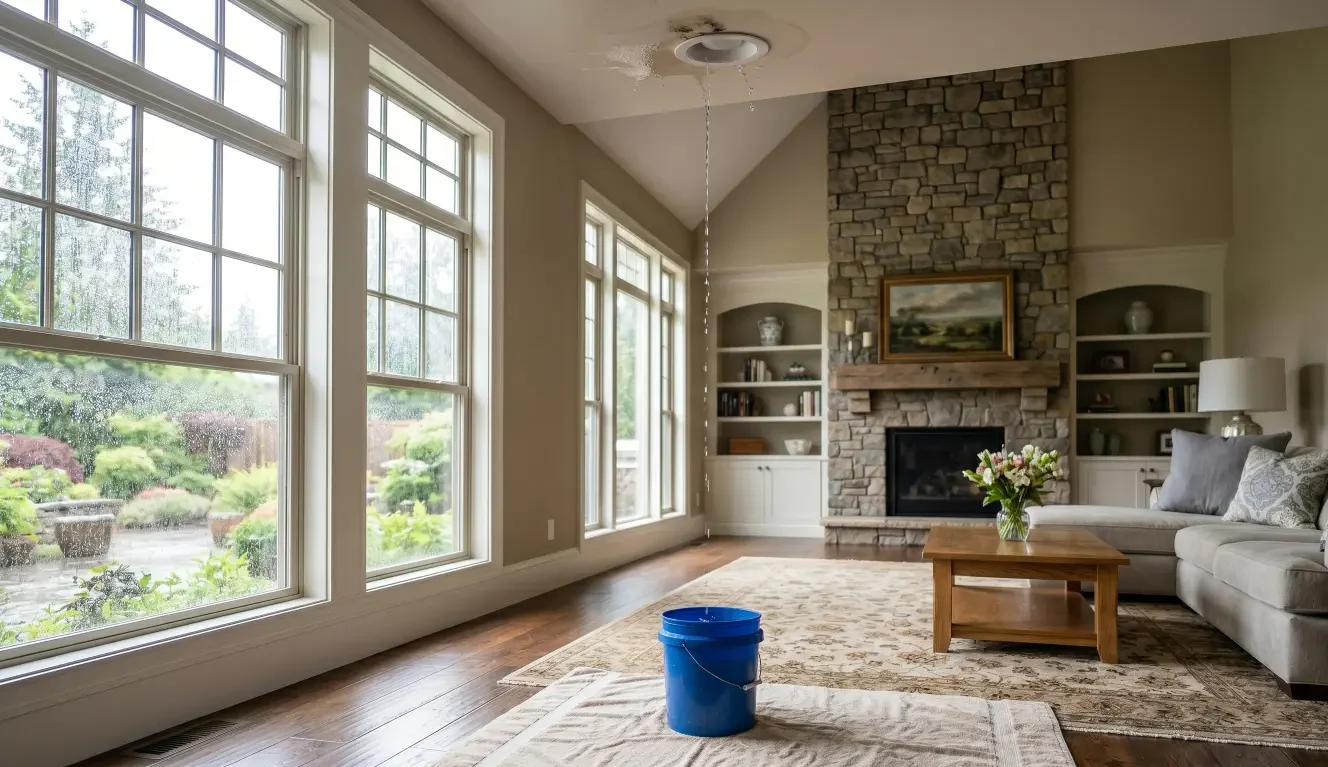
It is after midnight, your phone rings, and a tenant says water is leaking somewhere in the rental. In that moment, most landlords are not looking for plumbing theory. They want a clear order of operations: what to ask, what to tell the tenant to do right now, and how to keep a bad night from turning into damaged flooring, ruined drywall, or a long repair chain the next day.
If you own or manage a tenant-occupied home, a rental property leak emergency is often less about perfect diagnosis and more about fast control. The right first steps can help slow the spread, protect the property, and give you better information before you decide what needs to happen next.
When the Midnight Leak Call Comes In, Start With Control Not Panic
The hardest part of an overnight leak is not always the plumbing itself. It is the gap between the problem and your ability to see it.
You may be at home, half asleep, trying to understand whether the tenant is dealing with a steady stream under the kitchen sink, a ceiling drip below an upstairs bathroom, or a water heater that has been leaking into a garage for hours. The tenant may be stressed, unsure what they are looking at, and waiting for you to tell them what to do.
That is why the first goal is not to identify the exact failed part. The first goal is to get control of the situation.
Think in this order:
- Find out where the water is.
- Figure out whether it is still actively spreading.
- Help the tenant stop or reduce the flow if possible.
- Protect people, belongings, and finishes.
- Get enough documentation to make the next decision well.
Landlords sometimes lose time at this stage by trying to troubleshoot too deeply over the phone. That usually creates more confusion. In a midnight leak, the property is better served by a calm, simple response than a long list of guesses.
If your site has a page for emergency plumbing help, this is a natural place to connect it for readers who need immediate service support. But even before that call happens, a better first response starts with better questions.
First 10 Minutes: What to Ask the Tenant Right Away
When a tenant reports a leak at night, the quality of your first few questions matters. You are not just collecting details. You are deciding how urgent the problem is and whether the tenant can safely limit the damage before anyone arrives.
Where is the water showing up?
Start with location, not cause.
Ask the tenant:
- What room are you in right now?
- Where do you actually see the water?
- Is it coming from under a sink, around a toilet, near the water heater, from the ceiling, or from a wall?
- Is water staying in one area or moving into another room?
This helps you distinguish between a localized fixture leak and a leak that may be traveling from somewhere else. For example, water dripping from a first-floor ceiling may be caused by a second-floor bathroom line, not the ceiling itself. A puddle near a water heater may be the heater, a nearby valve, or a connected line.
Tell the tenant not to focus on naming the exact part. You need them to describe what they see.
Is it a steady flow, drip, or pooling?
Next, get a sense of pace.
Ask:
- Is the water actively running?
- Is it dripping at intervals?
- Is it pooling on the floor?
- Is the puddle getting bigger?
A steady flow creates a different response than a small drip into a bucket. If the water is actively spreading across floors, into cabinets, or through a ceiling, that tends to move the situation higher on the urgency scale. If it is contained and slow, you may have more room to stabilize and assess.
This is also where photos and short videos can help. A tenant describing “a lot of water” may mean a few cups on the floor or a continuous stream. Seeing it changes the quality of the decision.
Is water near electrical outlets, appliances, or ceilings?
This question changes the urgency quickly.
Ask whether the water is:
- Near outlets or power strips
- Around plugged-in appliances
- Coming through a light fixture
- Staining or sagging a ceiling
- Running behind walls or cabinets
You do not need to give technical safety advice beyond common-sense caution, but if water is near electrical areas, treat the situation as more urgent. A ceiling leak also deserves faster attention because the visible drip may be only part of the water movement. By the time water shows below, materials above may already be saturated.
If the tenant sounds unsure, bring the focus back to what is visible and immediate: where the water is, whether it is growing, and whether anyone needs to stay clear of the area.
What the Tenant Should Do Before Anyone Starts Troubleshooting
Once you understand the basic picture, the next step is simple damage control. In a rental property leak emergency, you do not need the tenant to become a plumber. You need them to take a few practical steps that can help limit how far the problem spreads.
Shut off fixtures if the source is obvious
If the leak is clearly tied to a fixture or appliance and the shutoff is easy to reach, start there.
Examples:
- A supply line under the bathroom sink is spraying or dripping: shut off the sink valves.
- A toilet is overflowing or leaking from the supply connection: shut off the toilet stop valve if possible.
- A washing machine supply issue is visible at the connection: turn off the local supply if it can be done safely.
This works best when the source is obvious and the shutoff is accessible. It is not the time to have the tenant disassemble anything or experiment with parts they do not understand.
Keep your instructions short:
- Turn the handle clockwise if it moves that way.
- Stop if it will not move easily.
- Do not force a stuck valve.
The objective is to reduce flow without creating a second problem.
Use the nearest shutoff or main water shutoff if needed
If the leak is active and the local fixture shutoff is missing, inaccessible, or not helping, the next step may be the nearest larger shutoff or the main water shutoff.
This is where many landlords discover an avoidable weakness in the property: the tenant has never been shown where the shutoff is, or the instructions exist only in a move-in packet no one can find at midnight.
If the tenant can locate the main shutoff and turn it off safely, that can help limit how far the damage spreads. If they cannot, the situation becomes more urgent because the property is effectively exposed until someone on-site can intervene.
For landlords, this is one of the clearest lessons from an overnight leak: knowing the shutoff location is not “nice to have” information. It is emergency-readiness information.
Move belongings, towels, bins, and keep people away from unsafe areas
After the water source is reduced or while you are trying to identify it, have the tenant do simple containment.
That may include:
- Moving rugs, electronics, boxes, or personal items away from the wet area
- Putting a bin or pot under an active drip
- Using towels to slow spreading across flooring
- Keeping children or pets away from slick areas
- Avoiding areas with ceiling bulges, visible saturation, or water near electricity
Containment will not solve the plumbing issue, but it can protect finishes and belongings while you decide what happens next.
If They Cannot Find the Shutoff, the Problem Just Got Bigger
This is the part many landlords underestimate until they live through it.
A midnight leak is stressful enough. But a midnight leak in a house where no one knows where the main shutoff is becomes a different kind of problem. At that point, the emergency is not only the water. It is the lack of preparation.
That is the contrarian reality in many rentals: the damage is often made worse not because the plumbing failed, but because the property was not ready for the failure.
If the tenant cannot find the shutoff, ask:
- Is there any labeled panel, utility room, garage wall, crawlspace access, or exterior meter area where shutoff information might be posted?
- Was there ever a move-in sheet, welcome binder, or maintenance guide that mentioned it?
- Is there a previous text, email, or photo showing the location?
If the answer is no, make a note of that for later. It is not just an inconvenience. It is a preventable operating gap.
Many landlords assume tenants will “figure it out” when needed. In reality, most tenants are not thinking about shutoff locations until something goes wrong. By then, every minute feels longer, and vague directions like “check by the side of the house” are often not enough.
This is also where frustration grows between landlord and tenant. The tenant feels alone with the problem. The landlord feels stuck because they cannot control the site remotely. A simple posted instruction sheet or labeled shutoff photo could have made the entire night easier.
How to Tell the Difference Between “Can Wait Until Morning” and “Needs Help Now”
Not every leak requires the same level of response. Some can be stabilized overnight and inspected in the morning. Others clearly need faster on-site help.
The key is not whether the leak is dramatic. It is whether the situation is still active, spreading, or creating greater risk.
Active flow that keeps spreading
If water is still moving and the area is getting worse, the situation usually moves into the “needs help now” category.
Examples include:
- Water actively running from a supply line
- A shutoff that will not stop the leak
- A puddle that keeps expanding despite towels or containment
- Water moving from one room into another
At that point, the problem is not simply that there is a leak. It is that the leak is winning time. Waiting until morning may increase repair scope.
Ceiling leaks, wall saturation, or water near power
These situations deserve extra caution.
A ceiling drip from an upstairs bathroom or laundry line may reflect more water above than what is showing below. Water saturation inside a wall can be hard to judge from the visible surface. Water near outlets, appliances, or fixtures should be treated more urgently, even if the visible amount seems limited.
If the tenant says the ceiling is bowing, staining heavily, or dripping through a light area, do not minimize it because “it is only dripping.” The visible drip is often the symptom, not the full extent.
Slow leaks that are contained but still need documentation and follow-up
Some leaks can wait until morning if they are truly contained and the water source has been shut off or slowed enough that the area is stable.
Examples might include:
- A drip under a sink after the local valve is turned off
- A water heater seep that is contained in a utility area and no longer actively spreading
- A minor fixture leak that has stopped once the supply was shut down
But “can wait until morning” does not mean “ignore it until morning.” The tenant should still document the condition, note what was shut off, and keep the area monitored in case it changes overnight.
This is where many landlord emergency plumbing checklist articles go wrong. They reduce the decision to “emergency or not,” when the better distinction is “contained and stable” versus “active and escalating.”
The Mistakes That Make Overnight Leaks More Expensive
Overnight leaks become expensive for predictable reasons. It is usually not because the landlord did not know the exact repair. It is because one or two early mistakes increased the scope of damage or delayed the right follow-up.
The first mistake is waiting too long because the leak “slowed down.” A slower leak can still point to an active plumbing issue. It may still be wetting cabinets, subflooring, drywall, or insulation even if the visible flow seems less dramatic.
The second mistake is giving unclear instructions. Telling a tenant to “shut the water off” without telling them whether that means a sink valve, toilet stop, or main shutoff is not much help under pressure. Midnight is the wrong time for vague maintenance language.
The third mistake is failing to document what happened before the scene changes. By morning, towels have moved, puddles have dried, buckets have been emptied, and the most useful visual evidence may be gone. That makes both repair planning and leak damage documentation for landlord records harder.
The fourth mistake is fixing only the visible symptom. A ceiling stain is not the cause. A wet cabinet base is not the cause. If the next-day response focuses only on drying or patching the obvious spot without tracing the source, you increase the chance of repeat trouble.
This is also why a related article about the cost of delaying a plumbing repair makes sense to link mid-article. Not to create fear, but to show that overnight leaks often become more expensive through delay, confusion, or incomplete follow-up.
What to Document Before the Scene Changes
The most useful overnight documentation is simple, timely, and tied to the actual sequence of events.
Photos and video the tenant should send
Ask the tenant for:
- A wide photo showing the room and where the water is
- Close-up photos of the visible source area if it can be identified
- A short video showing active dripping, pooling, or water movement
- Photos of any damaged ceiling, cabinets, flooring, baseboards, or belongings nearby
- A photo of any valve or shutoff they used, if possible
You do not need perfect photography. You need enough context to understand where the leak appeared, how active it was, and what areas were affected.
Time stamps, rooms affected, and what was shut off
Have the tenant text or email a simple sequence:
- Time they first noticed it
- Time they contacted you
- Rooms affected
- Whether the leak was active, dripping, or pooling
- What valve or shutoff was turned off, if any
- Whether the leak slowed, stopped, or continued
This kind of note can make repair follow-up much easier the next day. It helps separate “I think it started in the kitchen” from “Tenant first noticed water under the kitchen sink at 12:17 a.m., turned off the left-side valve at 12:23 a.m., and saw dripping continue at a slower rate.”
What the landlord should write down for repair follow-up
Your own notes matter too.
Write down:
- What the tenant reported first
- What instructions you gave
- What the tenant was able to do
- Whether the shutoff location was known or unknown
- Whether the issue appeared contained or active
- What time you arranged follow-up
If the property has had prior leaks in the same area, add that note too. It may change how the next-day inspection is handled. A “new leak” in the upstairs bath is different from the third water event tied to the same plumbing wall.
What the Next Morning Should Look Like
By morning, the goal shifts from emergency control to informed evaluation.
Start with the original leak area, not just the damage below it. If the tenant reported a ceiling drip under an upstairs bathroom, inspect the bathroom plumbing first. If the kitchen cabinet is soaked, look at the supply lines, drain connections, disposal, shutoff valves, and surrounding fittings before focusing only on cleanup.
Inspection priorities should include:
- Identifying the actual source
- Checking how far water spread
- Looking for hidden saturation behind or below the visible area
- Determining whether the problem appears isolated or part of a repeat issue
This is also where repair-versus-replacement thinking begins. A single loose connection may need a targeted fix. An aging valve, worn supply line, failing water heater, or recurring leak point may point to a bigger maintenance decision.
Landlords sometimes rush to restore normal use without asking whether the failure says something broader about the property. If the same sink has leaked twice in two years, if the tenant could not reach the shutoff because of stored items, or if the water heater area has shown prior moisture signs, the event is telling you something. It is not only about repairing what failed last night. It is about reducing the chance that the same call comes again.
If a tenant calls about a leak after midnight, the goal is to protect the property first and sort out the cause as quickly as possible.
Daniel’s Plumbing Services can help with leak-related repairs and next-step evaluation once the immediate situation is under control.
Call or make an appointment if you need help addressing an overnight leak or preventing the next one.
How to Make the Next Midnight Call Easier to Handle
The best time to prepare for an overnight leak is before there is one.
Start with shutoff instructions. If you want to know where to store shutoff instructions for tenants, choose places they can actually access under stress. A buried PDF in a lease portal is not enough. Better options might include:
- A printed move-in sheet in a kitchen drawer or utility folder
- A labeled photo sent by text or email after move-in
- A simple maintenance guide posted inside a utility closet or near the water heater, if appropriate
- A digital copy saved in a place the tenant already uses
Keep it simple. “Main water shutoff is in the garage on the left wall behind the water heater” is more useful than “refer to utility controls.”
Next, create a landlord emergency plumbing checklist for yourself. It does not need to be long. It just needs to be ready. Include:
- Questions to ask first
- Shutoff locations
- Which properties have known risk points
- What photos to request
- Your preferred repair contact process
- What you want the tenant to do while waiting
Finally, think about prevention for properties with repeat risk. Some landlords may want to consider leak-monitoring or automatic shutoff options in higher-risk rentals, especially where past leaks, older plumbing, or vacancy gaps make fast response harder. This does not need to be positioned as a sales pitch. It is simply part of the broader question: how do you make the next problem easier to catch and easier to control?
This is a natural place to connect readers to leak detection systems, residential plumbing services, or smart leak shutoff options, especially if the property has already shown that one overnight leak can become a much bigger headache than expected.
The real win is not just handling one midnight call well. It is turning that bad night into a better process for the future.
FAQ Content
What should a landlord do first when a tenant reports a leak at night?
Start by figuring out where the water is, whether it is still actively spreading, and whether the tenant can safely shut off the nearest fixture or water supply. The first goal is to control the situation and limit damage, not diagnose the plumbing perfectly over the phone.
Should a tenant shut off the main water supply during a leak?
If the leak is active and the local shutoff is missing, inaccessible, or not working, the main water shutoff may be the next step if the tenant can locate it safely. If the leak is minor and clearly tied to one fixture, a local shutoff may be enough. The right choice depends on what is leaking and whether the water is still spreading.
Where should landlords store shutoff instructions for tenants?
Store shutoff instructions somewhere tenants can actually access during an emergency. That may include a printed move-in guide, a labeled photo sent digitally, or a simple instruction sheet kept in a consistent location inside the home. The best system is the one a tenant can find after midnight without guessing.
What photos should a tenant send during a leak emergency?
Ask for one wide photo of the room, close-ups of the visible leak area, photos of affected flooring or ceilings, and a short video if water is actively dripping or pooling. It also helps to get a photo of any shutoff valve the tenant used.
When can a leak wait until morning?
A leak may be able to wait until morning if it is truly contained, the water source has been shut off or slowed, and the area is stable rather than actively worsening. But even then, it should still be documented and checked promptly the next day.
How can landlords prevent repeat leaks in rental properties?
A better prevention plan usually starts with clear shutoff instructions, better documentation, and follow-up after any leak event to confirm the real source was addressed. For properties with repeat issues or higher risk, some landlords may also want to explore leak-monitoring or automatic shutoff options.
If a tenant calls about a leak after midnight, the goal is to protect the property first and sort out the cause as quickly as possible.
Daniel’s Plumbing Services can help with leak-related repairs and next-step evaluation once the immediate situation is under control.
Call or make an appointment if you need help addressing an overnight leak or preventing the next one.
RELATED LINK:
EPA – Water Damage & Indoor Moisture Basics