
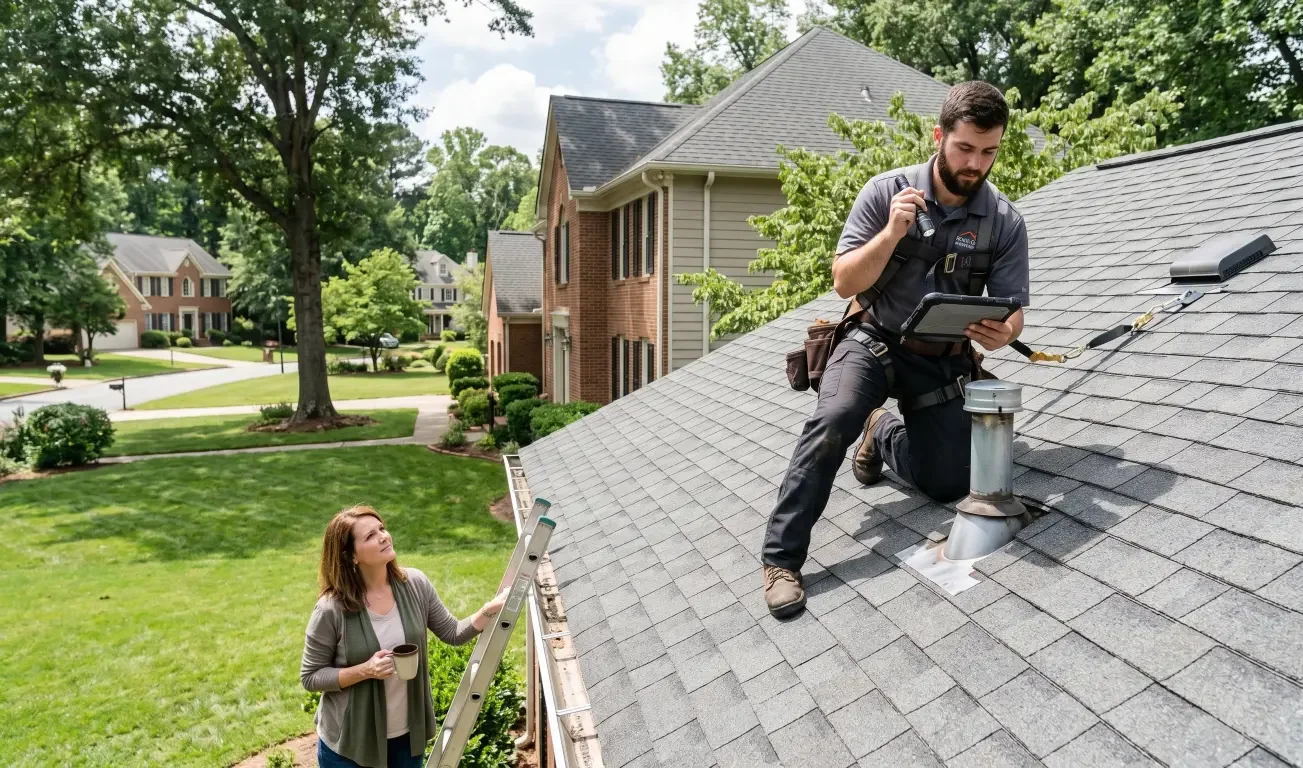
A cheap roof tune-up offer can sound like the responsible thing to do. Maybe you saw a $99 seasonal coupon, got a flyer after a storm, or heard a neighbor mention that a roofer was offering small maintenance work in the area. If your roof is not leaking, the offer may feel like a smart way to stay ahead of bigger problems.
The catch is that “roof tune-up” is not a universal roofing standard. One company may use the phrase for a careful inspection plus a few minor maintenance tasks. Another may use it as a quick visual check, a limited repair package, or a way to start a larger sales conversation. That does not mean every tune-up offer is bad. It means the value depends on what is actually included, what gets documented, and what condition your roof is in before anyone starts work.
So, what is a roof tune up in practical terms? It is usually a small maintenance-style service meant to check vulnerable roof areas, address minor issues where possible, and help a homeowner understand whether the roof needs more attention. The best version gives you clarity. The weak version gives you vague reassurance or a vague warning, without enough evidence to trust either one.
A Roof Tune-Up Sounds Simple—But the Details Matter
When a homeowner buys a roof tune-up, they are not really buying a bundle of small tasks. They are buying confidence that someone looked at the right areas, found small problems before they became larger ones, and explained what should happen next.
That is why the details matter more than the label. A low price is not automatically suspicious. A simple maintenance visit can be useful when the roof is generally sound and the scope is clear. But a low-cost offer should still answer basic questions: What will be inspected? What minor work is included? What is excluded? Will you receive photos? Will the roofer explain the difference between maintenance, repair, and replacement needs?
A tune-up becomes risky when the scope is loose. If the offer only says “roof tune-up” but does not define the work, you may not know whether the roofer is checking shingles, flashing, pipe boots, vents, sealant, gutters, storm impacts, or attic/decking warning signs. You may also not know whether materials are included, whether only one or two small items are covered, or whether the visit is mostly a sales inspection.
The better approach is simple: get facts and documentation before making a roof decision. A homeowner should not have to rely on a coupon, a guess, or a rushed verbal recommendation.
What a Roof Tune-Up Usually Includes
A roof tune-up may include a mix of inspection and minor maintenance. Because the term is not standardized, you should treat any list as something to confirm with the roofer, not something to assume.
Minor shingle attention
The roofer may check for lifted, cracked, curled, missing, or damaged shingles. On some tune-ups, a small number of minor shingle issues may be addressed if the service scope and materials allow it. But if there are many missing shingles, widespread damage, or repeated failures across the roof, that is no longer a simple tune-up conversation.
Fastener and sealant review
Small vulnerable points can develop around exposed fasteners, nail pops, pipe boots, vents, and roof penetrations. A maintenance-focused visit may look for areas where sealant has aged, separated, or cracked. The important question is whether the roofer is simply adding sealant as a quick patch or explaining why the area is vulnerable and whether a more permanent repair is needed.
Flashing check
Flashing helps protect transition areas, such as walls, chimneys, valleys, skylights, and penetrations. These areas are common leak points when they are poorly installed, damaged, or deteriorated. A useful tune-up should at least identify obvious flashing concerns. If flashing is loose, rusted, improperly lapped, or tied into a bigger water-entry issue, a targeted repair or fuller inspection may be more appropriate.
Gutter and debris check
Some tune-up offers include checking roofline debris, gutter edges, or drainage concerns. Others do not. Drainage matters because water that cannot move away from the roofline can contribute to wear, leaks, and fascia or soffit problems. Still, gutter cleaning and roofing work are not always the same service, so this should be clarified before you buy.
Photo documentation
This is one of the clearest signs that a tune-up is meant to help you make a decision, not just accept a recommendation. Photos can show what was checked, what was corrected, and what still needs attention. Without documentation, you are left with a verbal summary that may be hard to compare, verify, or remember later.
When a Roof Tune-Up Can Be Worth It
A roof tune-up can be worth it when the roof is generally in decent condition and the goal is preventive maintenance rather than solving a known major problem.
It may make sense if you do not have active leaks, large missing sections, major storm damage, or visible interior warning signs. It may also be useful if your roof has not been checked in a while and you want someone to look at small vulnerable points before storm season, after heavy weather, before listing a home, or before an insurance renewal where roof condition may matter.
The strongest tune-up offers have a defined scope. They explain what the roofer will inspect, what minor maintenance is included, what materials are covered, and what happens if the roofer finds something outside the tune-up scope. They also include photos or a written summary, so you can see whether the recommendation matches the roof condition.
A tune-up is most valuable when it answers a practical question: “Is my roof basically okay, or is there something I need to deal with now?” If the answer is based on visible evidence and clear next steps, the service may be money well spent.
When a Tune-Up Is Not Enough
A tune-up is not a magic reset for an aging, leaking, or storm-damaged roof. Some situations call for a more detailed inspection before you spend money on small maintenance.
If you have water stains on a ceiling or wall, active dripping, repeated leaks in the same area, several missing shingles, widespread granule loss, soft decking concerns, visible hail or wind damage patterns, or a roof that is near the end of its expected service life, a tune-up may be too small for the problem.
That does not automatically mean you need a full replacement. It means you need better information before choosing a path. A small service may temporarily address one symptom while missing the underlying issue. For example, sealing around a pipe boot may help if the boot is the actual problem. But if water is entering because of damaged flashing, compromised shingles, or broader storm damage, the tune-up may not solve what matters.
This is where documentation becomes especially important. A careful inspection should distinguish between minor maintenance, targeted repair, and system-level concerns. It should also explain what is urgent, what can be monitored, and what evidence supports the recommendation.
Roof Tune-Up vs. Roof Repair vs. Full Replacement
The easiest way to think about the decision is to separate three different categories.
A roof tune-up is minor maintenance. It is generally about checking vulnerable points, tightening up small details where the scope allows, and helping the homeowner understand whether small issues are starting to appear.
A roof repair is a targeted fix for a known issue or damaged area. That might involve replacing damaged shingles, addressing flashing problems, correcting a leak source, or repairing a specific roof section. Repairs should be tied to a clear finding, not a vague statement that the roof “needs work.”
A full roof replacement is a larger system decision. It may become appropriate when age, repeated failures, widespread damage, storm impact, or overall condition make small repairs a poor long-term answer. Replacement should not be recommended just because a homeowner asked about a tune-up. It should be supported by inspection evidence.
The right answer should come from the roof, not the coupon. Photos or video, roof age, shingle condition, flashing, decking indicators, ventilation, and storm impact should all inform the recommendation. If a contractor moves too quickly from “cheap tune-up” to “you need a new roof” without showing clear evidence, slow the conversation down and ask for documentation.
Questions to Ask Before You Buy a Cheap Roof Tune-Up
Before you agree to a low-cost roof tune-up, ask direct questions. A good roofer should be able to answer without making you feel difficult.
What exactly is included in the tune-up?
Will I receive photos or video of what you found?
Are materials included, or is the price only for inspection and labor?
What is excluded from the offer?
Will you check shingles, pipe boots, flashing, vents, penetrations, and visible storm damage signs?
Will you explain whether this is maintenance, repair, or replacement territory?
If you find a bigger issue, will I get written options before approving additional work?
Is the advertised price valid only if I agree to additional repairs or a replacement estimate?
These questions do not assume bad intent. They simply protect you from buying a vague service. They also help you compare a tune-up offer against a documented roof inspection. If the roofer cannot define the scope or refuses to provide photos, the cheap price may not be the most important part of the decision.
Common Mistakes Homeowners Make With Roof Maintenance
One common mistake is treating a tune-up as a substitute for a real inspection. A tune-up may include inspection elements, but if the roof has active symptoms or storm history, you may need a more complete evaluation.
Another mistake is waiting until a ceiling stain appears. Roof problems are easier to address when they are caught early, but that does not mean every minor maintenance service is enough. The goal is to identify the right level of response.
Homeowners also make decisions based only on verbal recommendations. A roofer may be honest and experienced, but photos and written notes still matter. They help you understand what was found, compare options, and avoid confusion later.
Ignoring roof age and storm history is another issue. A roof that is relatively young and mostly intact may be a good candidate for minor maintenance. An older roof with repeated patching, storm exposure, or widespread wear may need a different conversation.
Finally, many homeowners assume every roofer defines “tune-up” the same way. They do not. The phrase is flexible, which is why scope and documentation matter.
How to Verify Whether the Recommendation Is Legitimate
A legitimate recommendation should be specific. Instead of “your roof is in bad shape,” you should hear what area is affected, what the roofer saw, and why it matters.
Look for clear photos of the roof areas being discussed. Ask for specific locations: front slope, rear slope, left valley, chimney flashing, pipe boot near the ridge, shingles above the garage, or another identifiable area. Vague language like “damage everywhere” is less useful than a documented set of findings.
The roofer should also separate urgency levels. Some items may need prompt repair. Some may be maintenance notes. Some may be signs to monitor. A credible inspection does not turn every observation into an emergency.
Good documentation should also distinguish between maintenance, repair, and replacement. If the roof only needs minor attention, the recommendation should say that. If a targeted repair makes more sense, the roofer should explain the repair area. If replacement needs to be discussed, the roofer should show evidence related to age, condition, storm impacts, repeated failures, or system-wide issues.
This is the inspection-first mindset: get the facts, not a guess. The more clearly a roofer can document shingles, flashing, decking indicators, ventilation, and storm-related concerns where relevant, the easier it is for you to make a confident decision.
The Practical Next Step: Get the Roof Documented Before You Decide
If a roof tune-up offer raised the question, start with documentation. You do not have to assume the offer is a scam, and you do not have to assume your roof needs replacement. You simply need enough evidence to decide whether small maintenance is appropriate.
If the roof only needs minor attention, good documentation should make that clear. If there is a specific repair issue, you can review that option before approving work. If bigger concerns exist, you can have a more informed conversation about roof replacement, insurance documentation, or timing.
Not sure whether that roof tune-up offer is worth it? Start with the facts before paying for vague maintenance or agreeing to a bigger project. Red Top Roofing can inspect your roof, document what is actually going on, and help you understand whether you need simple maintenance, a targeted repair, or a larger roof plan. Request a free roof inspection and make the decision with evidence—not guesswork.
FAQs
What is a roof tune-up?
A roof tune-up is usually a small maintenance-style service that checks vulnerable roof areas and may address minor issues within a defined scope. Because the term is not standardized, homeowners should ask exactly what is included before buying one.
What does a roof tune-up include?
A roof tune-up may include checking shingles, fasteners, sealant, pipe boots, vents, flashing, debris, drainage issues, and other visible weak points. Some offers include minor fixes, while others are mostly inspection-based, so the scope should be confirmed in writing.
Are roof tune-ups worth it?
A roof tune-up can be worth it when the roof is generally in good condition, there are no active leaks or major damage signs, and the roofer provides clear scope and documentation. It is less useful when the roof has symptoms that call for a more complete inspection or targeted repair.
How often should I get roof maintenance?
Many homeowners schedule roof checks seasonally, after strong storms, before selling a home, or when the roof is aging and has not been looked at recently. The right timing depends on roof age, weather exposure, tree coverage, prior repairs, and visible warning signs.
What is the best time of year for a roof tune-up?
Spring and fall are common times to check a roof because homeowners often want to catch issues before or after harsher weather. After heavy wind, hail, or a severe storm, it can also make sense to get the roof documented even if you do not see an active leak.
How do I know if I need a roof tune-up, repair, or full replacement?
Use evidence from a documented inspection. Minor wear may point to a tune-up, a specific damaged area may call for repair, and widespread age-related or storm-related issues may require a replacement conversation. Photos, written findings, and a clear explanation should guide the decision.
RELATED LINKS:
GAF — Roofing 101 / Roof Maintenance
https://www.gaf.com/en-us/roofing-101