
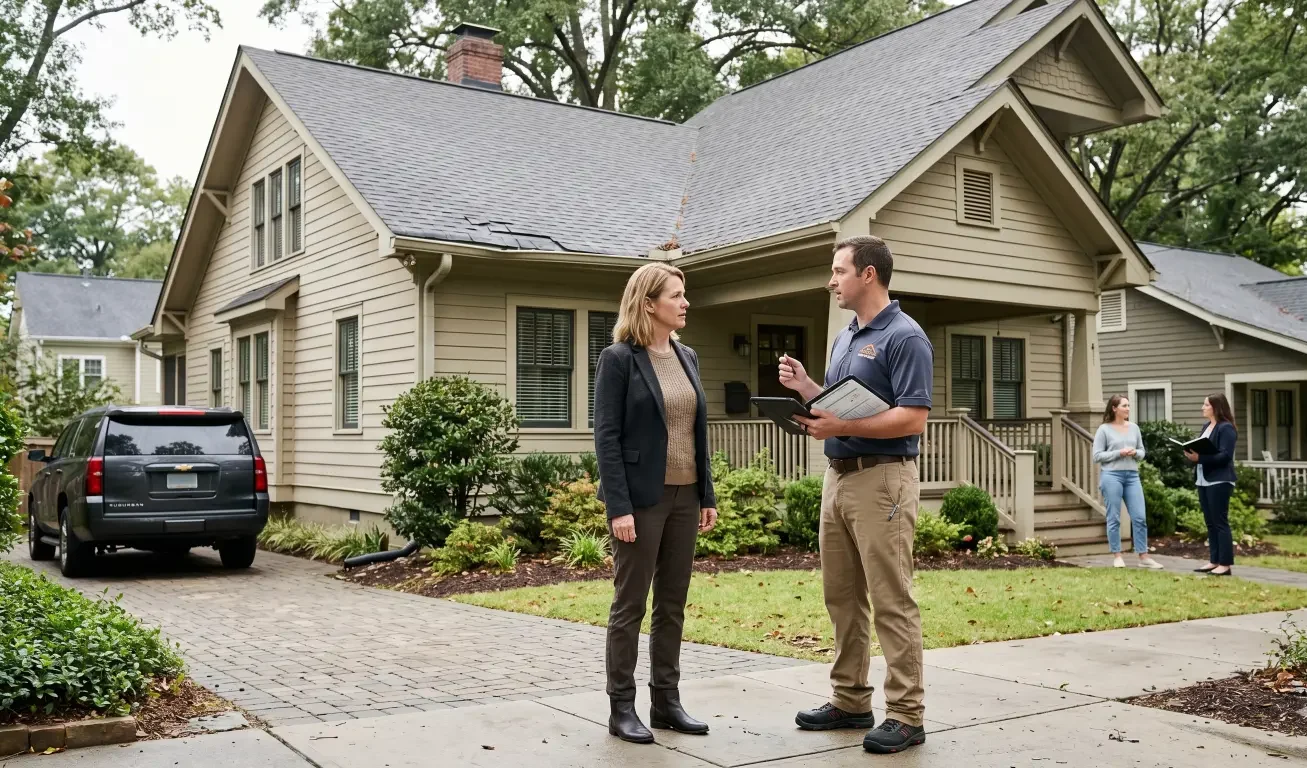
A missing shingle on a rental roof can look like a small problem. A tenant reports a drip near a bathroom fan. A few granules wash out of a downspout after a hailstorm. A branch scuffs the shingles but the roof still looks mostly intact from the ground. For a landlord trying to manage cash flow, it can be tempting to wait, especially if the property is still occupied and the leak seems minor.
But ignoring minor storm damage on a rental roof can create costs that are much larger than the first repair would have been. Small storm damage can turn into interior water damage, tenant complaints, mold concerns, insurance complications, emergency repair premiums, vacancy risk, and a more expensive replacement discussion later.
Rental property owners do not need to overreact to every scuff on a roof. They do need a clear post-storm process. When a tenant reports a small leak or shingle loss after wind or hail, the safest path is to document the condition, inspect the roof, protect the property, and make a decision before the damage spreads.
Why Minor Storm Damage Is Different on a Rental Property
A homeowner may notice small roof problems because they live under the roof every day. A landlord often learns about damage secondhand. The tenant may not know whether the issue is urgent, may underreport it, or may wait until water becomes visible. By the time the landlord hears about it, the leak may already have entered insulation, drywall, flooring, or attic materials.
Rental properties also create a duty-to-respond issue. Even if a roof problem seems small, a tenant complaint creates a record. If the landlord delays action and the problem gets worse, the issue can move from maintenance inconvenience to habitability concern, lease friction, or a documented dispute.
Storm damage also has timing implications. If the roof was damaged by hail or wind, the condition may need to be documented while the storm event is still fresh. Waiting too long can make it harder to connect damage patterns, collect supporting photos, and decide whether an insurance claim is appropriate.
The First Hidden Cost: Interior Water Damage
A small roof opening can let water travel farther than expected. Water rarely drops straight down in a neat line. It can follow rafters, insulation, decking, wiring, ceiling joists, and wall cavities before it finally appears as a stain.
What begins as a damaged shingle can become ceiling stains, soft drywall, swollen trim, peeling paint, damaged flooring, wet insulation, or cabinet damage. If the rental has an attic, water may sit above the living space before the tenant sees anything at all.
Interior repairs can quickly exceed the cost of an early roof repair. Once water enters finished materials, the landlord may need roofing work, drywall repair, painting, insulation replacement, flooring repair, and cleanup. If the water reaches personal property, the conversation with the tenant can become more complicated.
Tenant Complaints Can Escalate Quickly
A tenant roof leak complaint should never be treated as routine noise. Tenants may become understandably frustrated if they report water intrusion and the response feels slow or dismissive.
Even a small leak can disrupt daily life. The tenant may need to move furniture, place buckets, avoid a room, worry about odor, or repeatedly ask for updates. If the leak happens during heavy rain, after-hours calls may become likely. If water appears near lighting, electrical fixtures, or a ceiling fan, the concern becomes more urgent.
The hidden cost here is time and relationship damage. A delayed roof response can lead to more phone calls, written complaints, poor renewal likelihood, negative reviews, or requests for rent concessions. For landlords with multiple properties, a preventable maintenance dispute can consume hours that could have been avoided with early documentation and inspection.
Small Damage Can Spread During the Next Storm
Storm damage is not always static. A creased shingle, lifted tab, exposed fastener, damaged flashing area, or missing shingle may allow more water in during the next rain. Wind can lift already-weakened materials. Hail impacts can accelerate granule loss. Debris can loosen roof accessories or gutters.
If the roof is already aging, minor storm damage can expose weaknesses that were not obvious before. A landlord may think the roof is fine because it survived the first storm, only to discover that the next storm created a larger leak.
This is why waiting for a bigger sign can be expensive. The bigger sign may be water inside the rental, not just more visible damage outside.
Insurance Timing and Documentation Can Become Harder
Insurance implications are one of the most important reasons not to ignore rental roof storm damage. A landlord should not assume every small roof issue is claim-worthy. But if the damage may be storm-related, delaying inspection can weaken the documentation needed to make a good decision.
Photos, videos, weather context, tenant reports, and professional inspection notes are easier to organize soon after the event. Over time, damage can be affected by additional storms, normal wear, repairs, debris removal, or tenant observations that are hard to verify.
Insurance carriers may also ask when the damage occurred, when it was discovered, what steps were taken to prevent further damage, and whether temporary repairs were made. A landlord who waits months after a tenant reported a leak may have a more difficult documentation story than a landlord who acted quickly.
Red Top Roofing’s inspection-first approach is built around documented roof condition, photo and video evidence, and practical guidance. That kind of process can help a rental owner understand whether the issue looks like a maintenance repair, storm damage worth discussing with the insurer, or a larger roof replacement question.
Delayed Maintenance Can Complicate Coverage Conversations
Roof damage on a rental property raises a common question: who pays? The answer depends on the policy, cause of damage, deductible, exclusions, maintenance history, lease terms, and the facts of the situation. A roofer does not decide coverage, and this article is not insurance or legal advice.
What landlords can control is maintenance behavior. If a known roof issue is ignored, an insurance conversation may become more complicated. A carrier may distinguish between sudden storm damage and damage worsened by lack of maintenance. A tenant may also point to delayed response if the leak was reported and not addressed.
The practical lesson is simple: document, inspect, and mitigate. Do not wait until a small issue becomes a large interior loss before creating a record.
Emergency Repairs Usually Cost More Than Planned Repairs
A landlord who delays a small repair may eventually pay emergency pricing. Roofers, water mitigation crews, drywall contractors, and cleanup teams may cost more when the call happens during a storm, at night, over a weekend, or after interior damage appears.
Emergency work can also be less efficient. A temporary tarp may be needed before permanent repair. A tenant may need immediate updates. The landlord may need to coordinate access while the property is occupied. If the roof is steep, wet, or unsafe, permanent work may have to wait anyway.
Planned inspection and repair give the landlord more control. There is more time to compare scope, understand the damage, coordinate with the tenant, and decide whether the issue is isolated or part of a larger roof condition.
Vacancy and Turnover Risk
Tenants care about responsiveness. A roof leak that is handled quickly may be a maintenance event. A roof leak that lingers can become a reason not to renew.
If a tenant leaves because the property feels poorly maintained, the landlord may face vacancy loss, turnover repairs, cleaning, marketing, leasing commissions, and a new move-in process. In competitive rental markets, a home with unresolved water damage or visible ceiling stains can also be harder to show.
A small roof issue can therefore affect more than the repair budget. It can affect income continuity.
Mold and Odor Concerns
Moisture inside a property can create odor and indoor air quality concerns. Not every roof leak creates mold, and not every stain is a major environmental issue. But repeated moisture, hidden wet materials, and delayed drying increase risk.
For landlords, moisture concerns are especially sensitive because the tenant lives in the property. If a tenant reports a musty smell after a roof leak, the situation may require more than patching shingles. The landlord may need to verify that wet materials were dried, damaged materials were repaired, and the source of water was stopped.
Early action helps keep the problem smaller. A quick roof inspection and timely repair may prevent the kind of interior moisture problem that becomes harder to resolve later.
Roof Damage Can Affect Other Building Components
Minor storm damage may not stay limited to the roof covering. Water can affect decking, fascia, soffit, gutters, attic ventilation, insulation, siding, and interior finishes. Wind can loosen flashing around chimneys, walls, skylights, and vents. Hail can dent soft metals and damage roof accessories.
A rental owner who only looks for missing shingles may miss the larger picture. A good inspection should consider shingles, flashing, vents, gutters, roof penetrations, and evidence of water movement.
This matters because the repair scope may change. Replacing one shingle may not solve a flashing leak. Clearing debris may not address hail impact. A patch may not be enough if the roof is near the end of its service life.
How to Respond When a Tenant Reports a Small Leak
When a tenant reports a small leak after a storm, respond in a structured way. First, ask for basic information: where the water appeared, when it started, whether it is active, whether there is ceiling sagging, and whether any electrical fixtures are involved.
Second, ask for photos or a short video from inside the home if it is safe. The tenant should not climb on the roof. Interior photos can show the room, ceiling, wall, floor, and any water intrusion. Ask the tenant to move belongings away from the wet area when safe.
Third, document the date of the report and the recent storm timing. Keep messages, photos, and notes in one folder. Fourth, schedule a roof inspection quickly. If water is actively entering, temporary protection may be needed before the permanent repair decision.
What Landlords Should Photograph After a Storm
Landlords should document the property without putting themselves or tenants at risk. Take wide photos of all sides of the home from the ground. Capture the roofline, gutters, downspouts, visible missing shingles, debris, tree damage, and any visible dents on soft metals.
Inside, document ceiling stains, wall stains, bubbling paint, flooring issues, buckets, and any temporary mitigation. Take both close-up and room-level photos so the location is clear.
If a professional roofing inspection is performed, ask for photo or video documentation organized by roof area. Red Top Roofing emphasizes inspection documentation, which can help landlords move from vague tenant reports to a clearer plan.
Should You Fix Small Hail Damage on a Rental?
Small hail damage should be inspected before a landlord decides to ignore it. Hail can cause granule loss, bruising, soft metal dents, and damage that is difficult to see from the ground. The decision may be repair, monitor, replace, or discuss with the insurer, depending on the roof condition and policy situation.
The key is not to assume. A professional inspection can help separate cosmetic-looking issues from functional roof concerns. It can also identify collateral damage that supports the storm history.
For a rental property, the threshold for action may be lower because the landlord is responsible for protecting the structure and maintaining the tenant’s housing conditions.
Repair vs. Replacement: Why a Minor Issue May Reveal a Larger Decision
Sometimes a small storm report reveals that the roof is already near the end of its useful life. A few missing shingles on a newer roof may be repairable. Similar damage on an older roof with brittle shingles, widespread granule loss, poor ventilation, or repeated leaks may point toward a replacement conversation.
A landlord should not decide based only on the cheapest immediate repair. The better question is: what repair path reduces total risk for the property? If repeated patching leads to recurring tenant complaints and interior damage, it may not be the lowest-cost path over time.
Red Top Roofing positions itself around re-roofing, documentation-led inspections, and insurance-savvy guidance. For landlords, that can help clarify when a roof is a simple repair candidate and when the property needs a more complete plan.
Create a Rental Roof Storm Response Checklist
A simple checklist can help landlords avoid delayed decisions after storms.
After a severe weather event, check whether tenants have reported leaks, ceiling stains, missing shingles, gutter damage, or fallen debris. Review exterior photos if you are near the property. Ask tenants to report water quickly and send safe interior photos if they notice stains or drips.
Schedule a professional inspection if there is visible damage, tenant-reported leakage, nearby confirmed hail or wind damage, missing shingles, dented gutters, or a roof that is already older. Keep the inspection report, photos, tenant messages, and repair invoices together.
If temporary repair is needed, document the condition before and after the work when safe. If an insurance claim may be considered, review policy requirements and contact the insurer as appropriate.
How Red Top Roofing Helps Rental Property Owners
Red Top Roofing serves homeowners and property owners across the Atlanta metro and surrounding Georgia communities with free roof inspections, photo and video documentation, claim-aware guidance, and roof replacement planning. The company’s message is direct and useful for landlords: get the facts, not a guess.
For rental property owners, that matters because roof decisions affect more than the roof. They affect tenants, documentation, repair timing, interior damage risk, and long-term property value. A documented inspection can help a landlord respond responsibly without overreacting or ignoring the issue.
If a tenant has reported a small leak, shingle loss, or storm-related roof concern, Red Top Roofing can inspect the roof, document the condition, and help you understand the next step.
Final Thoughts
Ignoring minor storm damage on a rental roof can feel like a short-term savings decision. In reality, it can create larger costs through interior damage, tenant complaints, emergency repairs, insurance documentation problems, vacancy risk, and moisture concerns.
The smarter approach is to respond early and document well. When a storm hits or a tenant reports a leak, create a record, collect safe photos, schedule a professional inspection, and make a repair or replacement decision based on evidence.
For landlords in the Atlanta metro area, Red Top Roofing can help turn uncertainty into a clear roof plan before a small storm issue becomes a larger property problem.
FAQ
Should I fix small hail damage on a rental property roof?
Yes, small hail damage should at least be inspected. Some damage may be minor, but hail can weaken shingles, remove granules, dent roof accessories, and contribute to future leaks. A documented inspection helps you decide whether repair, monitoring, replacement, or an insurance conversation is appropriate.
What should I do if a tenant reports a roof leak after a storm?
Ask for safe interior photos, document the date and location of the leak, tell the tenant to move belongings away from the wet area, and schedule a professional roof inspection quickly. If water is actively entering, temporary protection may be needed before permanent repairs.
Who pays for roof damage on a rental property?
Payment depends on the cause of damage, insurance policy terms, maintenance history, lease terms, and the facts of the situation. A roofing contractor can document damage and repair needs, but insurance coverage questions should be handled with your insurer or qualified advisor.
What are the risks of delaying roof repair on a rental?
Delaying roof repair can lead to interior water damage, tenant complaints, mold or odor concerns, emergency repair costs, insurance documentation problems, and possible vacancy or turnover risk.
When should a landlord call Red Top Roofing after a storm?
Call Red Top Roofing if a tenant reports a leak, shingles are missing, gutters or vents are dented, nearby properties show storm damage, or you are unsure whether the roof needs repair or replacement. A free inspection can help document the condition and clarify the next step.
RELATED LINK:
NOAA National Severe Storms Laboratory – Severe Weather 101: Hail