
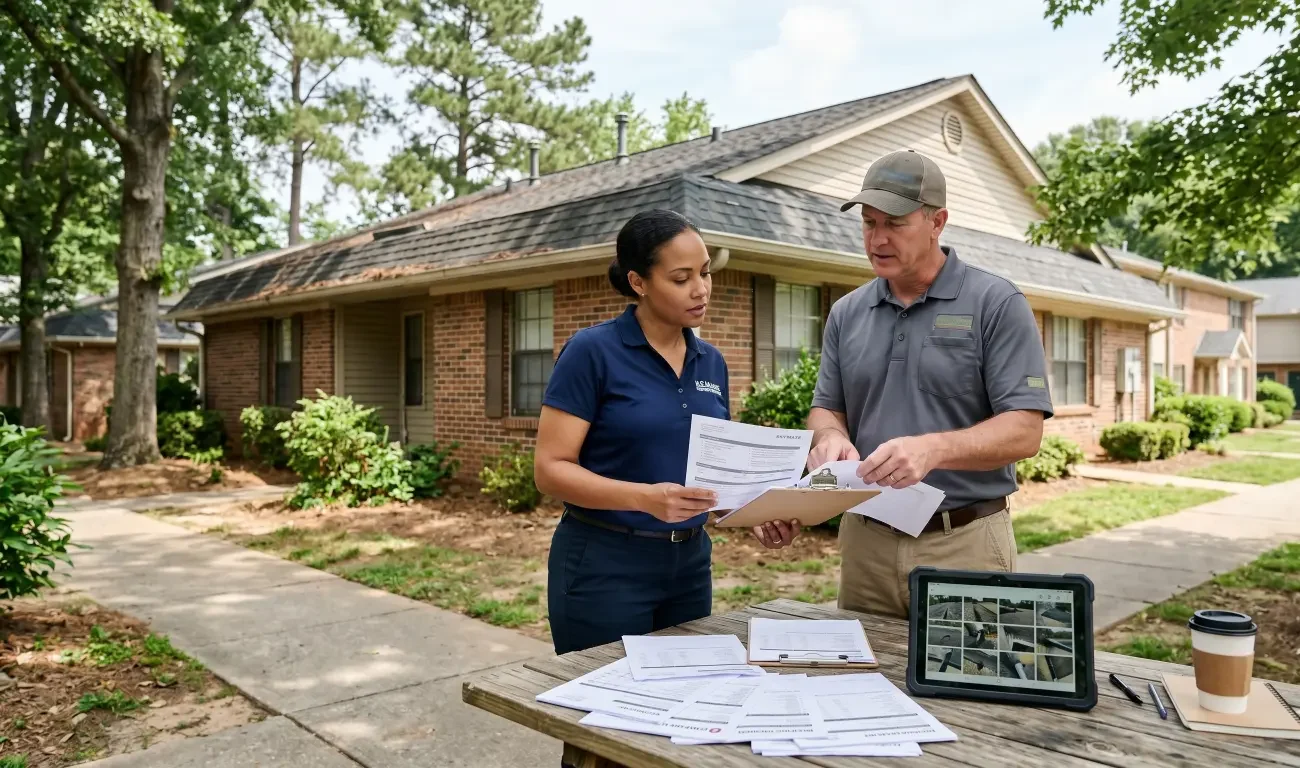
A roofing estimate can look complete at first glance. It may include a total price, a few material names, a warranty line, and a promise to get the work done quickly. For a busy property manager comparing multiple bids, that may seem like enough to move forward.
But roofing estimates are not all written the same way. A low number can hide missing scope. A vague warranty can create confusion later. A short proposal can leave out debris handling, code items, decking assumptions, flashing details, ventilation, or property protection. When the work involves an HOA, rental portfolio, multifamily building, or commercial property, those gaps can become budget surprises and owner complaints.
The most important red flags in roofing estimates are not always dramatic.
They are usually omissions. If the estimate does not clearly explain what is included, what is excluded, who is responsible for cleanup, what warranty applies, and how the contractor will document the roof condition, the property manager should pause before recommending approval.
Why Property Managers Need More Than a Total Price
Property managers are often asked to compare roofing bids quickly. The owner wants to know why one bid is lower. The board wants to know whether the project is properly scoped. Tenants want to know when work will begin. The manager needs a contractor who can explain the estimate clearly enough to support a responsible decision.
A roofing estimate is not just a price sheet. It is a scope document. It should explain what the contractor inspected, what work is being proposed, what materials will be used, what assumptions are built into the price, and what conditions could change the final cost.
When an estimate is vague, the property manager carries more risk. If the project later requires change orders, debris cleanup, decking replacement, or warranty clarification, the owner may ask why those issues were not identified earlier. A clear estimate protects the property, the budget, and the person recommending the contractor.
Red Flag 1: Missing Line Items
The first red flag is an estimate that gives a lump-sum price without enough line-item detail. A roof replacement involves more than shingles. Depending on the property, the scope may include tear-off, underlayment, starter shingles, drip edge, flashing, pipe boots, ridge vent, ridge cap, decking repair, gutters, cleanup, disposal, permit considerations, and manufacturer-specific installation requirements.
If those items are not listed, it is hard to know what the contractor actually plans to do. One bid may include new flashing, ventilation corrections, and full tear-off disposal. Another may exclude those items or leave them to be addressed later. The lower bid may not be lower at all once missing scope is added.
Property managers should look for clear descriptions of materials, quantities or areas where practical, roof sections included, and any conditions that may affect pricing. The estimate does not need to be confusingly technical, but it should be specific enough that another knowledgeable person can understand the scope.
A missing line item is not always dishonest. Sometimes it is simply incomplete. But an incomplete estimate should not be treated as a complete proposal.
Red Flag 2: Vague Warranty Language
Warranty language is another area where roofing estimates can look reassuring while saying very little. Phrases like “warranty included,” “lifetime shingles,” or “work guaranteed” may sound strong, but they do not explain what is covered, who provides the warranty, how long workmanship is covered, what manufacturer warranty applies, or what conditions could void coverage.
A property manager should understand the difference between material warranties and workmanship warranties. Material warranties generally come from the manufacturer and relate to product performance under specific terms. Workmanship warranties relate to the contractor’s installation work. Both matter, but they are not the same.
The estimate should identify the product line, the manufacturer warranty category when applicable, the contractor workmanship warranty, and any registration or installation requirements. If the contractor references extended warranty eligibility, the property manager should ask what must be done for that warranty to apply.
Vague warranty language becomes a problem after the job, when a leak, defect, or owner question arises. If the estimate never defined the warranty clearly, the manager may be left sorting out expectations that should have been addressed before approval.
Red Flag 3: No Clear Debris Handling or Property Protection Plan
Roofing is disruptive work. Old shingles, nails, underlayment, flashing, vents, and packaging all have to come off the building and leave the property safely. If the estimate does not explain debris handling, cleanup, and property protection, the manager should ask for clarification.
For residential property managers, this may include driveway protection, landscaping protection, nail cleanup, dumpster or trailer placement, tenant communication, and access planning. For HOA or multifamily properties, it may also include parking coordination, common-area protection, daily cleanup expectations, and how work areas will be secured.
A vague cleanup promise can create tenant complaints and owner frustration. Nails in a driveway, damaged landscaping, blocked parking, or debris left in common areas can turn a roof project into a management headache.
Red Top Roofing’s positioning emphasizes structured execution and property-protection practices, including project-managed replacement and cleanup standards. That kind of detail matters because a roof project is not complete just because the shingles are installed. The property also has to be left in usable condition.
Red Flag 4: The Bid Is Unusually Low Without a Clear Explanation
A low bid is not automatically a bad bid. Contractors may price differently based on crew availability, material relationships, scope, overhead, or project efficiency. But a questionable low roofing bid should make a property manager slow down and compare the details, not just the number.
Ask what is different. Does the low bid include full tear-off? Does it include permits if required? Does it include code-related items? Does it include flashing replacement or only reuse? Does it address ventilation? Does it assume no decking replacement? Does it include cleanup and disposal? Does it include a comparable warranty?
If the answer is unclear, the low bid may be leaving work out. That can lead to change orders, shortened roof life, inspection issues, warranty problems, or tenant complaints.
When comparing roofing bids for an HOA, rental property, or managed building, create a scope comparison sheet. Put each contractor’s line items side by side. The cheapest proposal may still win, but only if the scope is clear and the risk is understood.
Red Flag 5: No Documentation Behind the Estimate
A roofing estimate should be connected to an inspection. If the contractor provides a price without documenting the roof condition, the property manager should ask how the scope was determined.
Documentation may include photos, videos, slope notes, measurements, storm damage evidence, flashing observations, ventilation notes, decking concerns, and repair-versus-replacement reasoning. This is especially important when insurance, owner approval, board review, or capital planning is involved.
Without documentation, the estimate may feel like a guess. If an owner asks why replacement is recommended instead of repair, or why one roof section is included and another is not, the manager needs evidence, not general statements.
Red Top Roofing’s inspection-first approach is built around documented roof condition and practical decision guidance. For property managers, that kind of estimate support can make approval conversations easier because the recommendation is tied to visible evidence.
Other Estimate Gaps Worth Questioning
The five red flags above are the most common, but property managers should also watch for several smaller issues that can create problems later.
If the estimate does not identify the exact roofing materials, ask for brand, product line, color, and accessory details. If it does not address flashing, ask whether flashing will be replaced, repaired, reused, or evaluated during tear-off. If ventilation is missing, ask whether the existing system was reviewed and whether changes are needed.
If decking replacement is not mentioned, ask how damaged decking will be handled and priced. Some decking conditions cannot be fully known until tear-off, but the estimate should explain the unit cost or process for approval. If permits or code items are not addressed, ask who is responsible for verifying requirements.
The goal is not to make every estimate longer. The goal is to make it more useful.
How to Read a Commercial Roof Estimate or Managed Property Proposal
Commercial and managed-property roofing estimates often have additional considerations. The roof may include coatings, low-slope assemblies, penetrations, rooftop equipment, drainage, access limitations, tenant operations, or warranty requirements that differ from a single-family roof.
A commercial roof estimate should clarify roof area, system type, preparation steps, penetrations, coating or membrane details if applicable, drainage assumptions, warranty terms, staging, access, safety requirements, and how work will be coordinated around building operations.
For property managers, the estimate should be clear enough to share with an owner, board, or facilities contact. If the proposal depends on technical assumptions, those assumptions should be explained in plain language.
What Should Be Included in a Roof Replacement Estimate?
A strong roof replacement estimate should usually answer these questions: What roof areas are included? What materials will be installed? What will be removed? How will flashing, ventilation, pipe boots, drip edge, underlayment, and ridge components be handled? What is excluded? What could trigger additional cost? What warranty applies? How will debris be managed? Who will supervise the project?
It should also explain timing, weather dependencies, payment expectations, and communication. For managed properties, it should identify any coordination needs such as tenant access, parking, dumpsters or trailers, working hours, and daily cleanup.
If insurance is involved, the estimate should also be aligned with documentation and scope clarity. A contractor should not promise coverage, but they can provide inspection evidence and a clear description of the work needed.
Questions Property Managers Should Ask Before Recommending a Bid
Before recommending a roofing bid, property managers should ask a few direct questions. What did you inspect? What photos or videos support the scope? What line items are included? What is excluded? How are hidden decking issues priced? What warranty applies to materials and workmanship? Who manages the project onsite? How will debris and nails be handled? What could change the final price?
For HOA or owner approval, ask whether the contractor can provide a written scope summary, product details, warranty information, and documentation that supports the recommendation. A contractor who can explain the estimate clearly is usually easier to work with once the project begins.
How Red Top Roofing Helps Clarify Roofing Estimates
Red Top Roofing serves the Atlanta metro and surrounding Georgia communities with an inspection-first, documentation-led approach to roof replacement and storm-related roofing decisions. The company’s process emphasizes clear inspection evidence, practical guidance, insurance-aware communication, and structured execution.
For property managers, that matters because roofing decisions often have to be explained to owners, boards, tenants, or insurance stakeholders. A vague bid leaves the manager exposed. A documented estimate creates a clearer path from inspection to decision.
If you received an unusually low or vague roofing estimate, Red Top Roofing can provide a free inspection and help you understand what the scope should include before you recommend a contractor or approve the work.
Roofing Estimate Red Flag Checklist
Use this checklist when reviewing roofing bids:
- The estimate gives only a total price with little scope detail.
- Key line items such as flashing, ventilation, underlayment, drip edge, disposal, or decking are missing.
- Warranty language is vague or does not separate manufacturer and workmanship coverage.
- Debris handling, nail cleanup, and property protection are not clearly described.
- The bid is much lower than others without an obvious scope reason.
- The estimate is not supported by photos, video, measurements, or inspection notes.
- Exclusions and potential change orders are not explained.
- The contractor cannot explain how hidden decking or code items will be handled.
- Project management, schedule, and communication are unclear.
- The proposal is not detailed enough to share confidently with an owner or board.
A roofing estimate should help a property manager make a better decision, not create more uncertainty. If the estimate is missing line items, using vague warranty language, ignoring debris handling, offering an unusually low price without explanation, or lacking inspection documentation, pause before recommending it.
The best roofing proposal is not always the shortest or the cheapest. It is the one that clearly explains the work, supports the recommendation with evidence, and reduces surprises for the property manager, owner, board, and tenants.
If you are comparing roofing bids for a managed property in the Atlanta metro area, Red Top Roofing can help you get the facts, not a guess, with a documented inspection and a clearer path to the right roofing decision.
FAQ
What are the biggest red flags in a roofing estimate?
Major red flags include missing line items, vague warranty language, unclear debris handling, an unusually low bid without explanation, and no inspection documentation behind the proposed scope.
What should be included in a roof replacement estimate?
A roof replacement estimate should describe the roof areas included, materials, tear-off, underlayment, flashing, ventilation, drip edge, pipe boots, decking assumptions, cleanup, warranty terms, exclusions, and any potential change-order conditions.
Is the lowest roofing bid always risky?
Not always. A low bid can be legitimate, but it should be compared against scope. If the bid is missing materials, cleanup, warranty details, or hidden-cost explanations, it may not be the best value.
How should property managers compare roofing bids for an HOA or rental portfolio?
Create a side-by-side scope comparison. Review materials, included line items, warranty terms, project supervision, debris handling, documentation, exclusions, and how each contractor handles unknown conditions such as damaged decking.
When should a property manager call Red Top Roofing for a second look?
Call Red Top Roofing if you received a vague or unusually low roofing bid, need documentation for owner or board approval, suspect storm damage, or want a clearer inspection-backed estimate before recommending a contractor.
RELATED LINK: