You finally found a house, got under contract, and now the inspection report is making the roof feel bigger than it did during the showing.
Maybe the report says the roof is older. Maybe it calls out flashing wear, exposed nail heads, or “repairs recommended” without much detail. Maybe your agent says it is common, but you still have that uneasy feeling: Is this routine, negotiable, or the start of an expensive surprise?
That is exactly why roof questions for first time homeowners matter so much during the inspection period.
If this is your first home purchase, the roof can feel especially hard to read. It is expensive enough to matter, technical enough to feel vague, and easy to misunderstand when you are already juggling deadlines, negotiations, and a dozen other inspection notes. The goal is not to panic over every mention of age or wear. The goal is to ask better questions so you can tell the difference between normal ownership planning, a legitimate seller conversation, and a roof issue that deserves a closer look before closing.
Why Roof Notes Hit First-Time Buyers So Hard
Roof comments tend to land differently than other inspection items.
A loose handrail or a sticky window feels understandable. You can picture the repair, estimate the hassle, and move on. Roof language is different. Terms like “aged,” “serviceable,” “recommended for further evaluation,” or “end of useful life” sound important, but they do not always tell you what the situation actually means for your purchase.
That uncertainty hits first-time buyers especially hard because the inspection window is short. You are trying to understand the house fast enough to make good decisions, but not so emotionally that you blow up a solid deal over routine issues. And because the roof is one of the bigger future expenses a homeowner may face, even vague comments can feel heavy.
In Atlanta, that pressure can be even more pronounced because many buyers are looking at homes that are not brand new. Older homes often come with older roofing systems, patch histories, visible wear, or maintenance notes that are not necessarily alarming—but do require interpretation.
This is why roof comments feel both vague and financially important. They rarely say, in plain English, “Here is what matters now, here is what can wait, and here is what you should budget for.” That is the gap your questions need to fill.
The First Question to Ask: Are We Talking About Aging, Active Problems, or Replacement Planning?
Before you ask anything else, ask this:
Are we looking at normal aging, an active problem, or a roof that needs near-term replacement planning?
That one question changes everything.
If the answer is normal aging, the roof may still be functioning reasonably well even if it is not new. That usually points to ownership planning, budgeting, and monitoring rather than panic.
If the answer is an active problem, you are in a different category. That could mean visible moisture concerns, more urgent repair needs, or roof conditions that deserve clarification before closing.
If the answer is replacement planning, the roof may not be failing today, but it may be old or worn enough that you should not buy the home assuming many carefree years ahead. That affects how you think about budget, negotiation, and timing.
A lot of inspection confusion happens because buyers treat all roof comments like they mean the same thing. They do not.
A report that says the roof is older is not the same as a report that suggests active leakage. A report recommending repair in isolated areas is not the same as one implying broader wear across the system. And a roof that passes inspection is not automatically a roof that will be cheap to own.
You do not need a dramatic answer right away. You need a category first. Once you know which category you are likely dealing with, the rest of the questions become much more useful.
The Roof Questions That Actually Matter During Inspection
There are plenty of questions you could ask, but these are the ones that actually help first-time buyers make better decisions.
How old is the roof, and do we know that for sure?
Start with age—but do not stop there.
Ask whether the roof age is documented, estimated, or assumed. There is a big difference between “the seller says it was replaced about eight years ago” and “the inspector believes it appears older.” If there are permits, invoices, warranty records, or seller disclosures that support the age, that helps. If there is no documentation, treat roof age as a useful clue, not a precise fact.
This matters because buyers often anchor too hard on age alone. A roof’s age can help you think about planning, but it does not tell you everything about condition. Still, if the roof is clearly older and unsupported by documentation, that is worth noting early.
What visible issues were noted—and how serious do they appear?
Do not settle for broad phrases like “wear present” or “repairs recommended.”
Ask what the inspector actually saw. Was it damaged flashing? Missing shingles? Exposed fasteners? Granule wear? Soft spots? Patchwork repairs? Evidence of moisture? Ask for the visible issues in plain language.
Then ask the follow-up question that matters most: How serious do these appear? Not in the sense of demanding a guarantee, but in the sense of understanding whether the note sounds cosmetic, maintenance-related, or like something that could turn into a bigger expense.
This is often where buyers realize the report sounds scarier than the actual finding—or, sometimes, less specific than it needs to be.
Are the concerns isolated repairs or signs of broader wear?
This is one of the best questions to ask about roof during home inspection because it forces a more useful distinction.
A few isolated repair items may be manageable. A pattern of issues across multiple areas may suggest something different. You want to know whether the roof comments point to a handful of fixes or to broader aging that may shape your ownership timeline.
For example, a single flashing issue and a couple of worn seal points create a different planning picture than widespread shingle wear and multiple prior patch areas. The report may not spell that out clearly unless you ask.
Does anything suggest active moisture entry or just deferred maintenance?
This question helps separate present risk from future planning.
A roof may have deferred maintenance without showing signs of active moisture entry. That still matters, especially if you are budgeting for the first few years of ownership. But it is a different conversation than signs that water may already be getting where it should not.
You are not asking for a legal or engineering opinion. You are asking whether the available observations suggest an active problem, a maintenance backlog, or more of a “watch this and plan ahead” situation.
That difference may shape how you approach negotiation and how much urgency you assign to the issue.
What should I budget for in the first few years?
This is the question first-time buyers often forget because they are focused on one thing: getting to closing.
But budgeting for roof replacement after buying a home may matter even if the roof is currently serviceable. If the roof shows meaningful age or wear, it is smart to start planning for future roofing costs early. That does not mean replacement is immediate. It means the roof should be part of your ownership math, not a surprise waiting in the background.
A roof issue does not have to be a deal breaker to be financially important.
What’s Common on Older Atlanta Homes—and What That Does Not Automatically Mean
When buyers look at older homes in Atlanta, roof questions often show up alongside everything else that makes an older property appealing and complicated at the same time.
Older homes may come with older roofing materials, prior repairs, flashing wear, patchwork maintenance, ventilation questions, or roofs that are still functioning but clearly no longer young. Older homes often come with roofing wear patterns and maintenance questions that deserve closer review.
None of that automatically means the roof is failing.
That is the important part.
A buyer can hear “older roof” and immediately translate it into “bad house” or “imminent disaster.” That is not always accurate. Older roofs can still be serviceable depending on condition, documented issues, and how well they have been maintained. At the same time, an older roof may still deserve more budget attention than a first-time buyer expected.
That is why the right mindset is planning, not panic.
If the home is older, expect the roof conversation to involve more nuance. You may be thinking about remaining service life, recent repairs, visible wear, or whether the roof condition should change how you prioritize post-closing improvements. The question is not whether age exists. The question is what the age appears to mean in context.
The Contrarian Reality: An Old Roof Isn’t Always a Deal Breaker, and a “Passable” Roof Isn’t Always Cheap
Buyers tend to fall into one of two traps.
The first trap is assuming an old roof automatically makes the house a bad buy. The second is assuming that if the roof is “passable” or “serviceable,” it is basically not a concern.
Both can lead to poor decisions.
Roof age matters, but condition and documented issues often matter more than age alone. An old roof may still fit the deal if the house is priced appropriately, the condition is understood, and you have a realistic plan for what ownership may require. A newer roof can also be disappointing if installation quality, repairs, or documentation are poor.
On the other side, a roof that technically makes it through inspection is not necessarily a cheap roof to own. “Passable” may mean it is functioning today, not that it comes with no near-term maintenance or planning costs. Buyers sometimes hear reassuring language and mistake it for long runway.
This is the contrarian reality first-time buyers need: the right question is not “Is this roof old?” and not even “Did it pass?” The better question is, “What does this roof mean for my timeline, budget, and negotiating position if I buy this house?”
That puts the roof in its proper role. Not an emotional symbol of whether the house is good or bad, but a practical ownership factor that needs to be understood.
When to Push for Seller Repairs, Credits, or Better Documentation
This is usually the moment buyers care about most: Should I request seller repair roof items, ask for a credit, or leave it alone?
The first step is to get clearer on what the inspection report is actually saying.
If the language is vague—something like “roof appears aged” or “further evaluation advised”—better documentation may be more useful than an immediate negotiation demand. An inspection report may raise the issue without fully defining the roofing scope. In that case, a roofing-specific evaluation may help you understand whether you are dealing with a small repair conversation or a broader planning issue.
If the report identifies specific repairable concerns, that may support a more focused seller conversation. If the concern looks broader and tied to age or overall condition, the conversation may shift toward credits, pricing, or whether you are comfortable planning around the roof after closing.
The key is not to turn every roofing note into a dramatic demand. It is to match your ask to the quality of the information you have.
A few practical signals that more documentation may help:
- The report uses general language without photos or detail
- The roof comments sound important but not clearly scoped
- The seller’s disclosures and the report do not line up well
- Your agent is reassuring you, but you still do not understand the roof condition itself
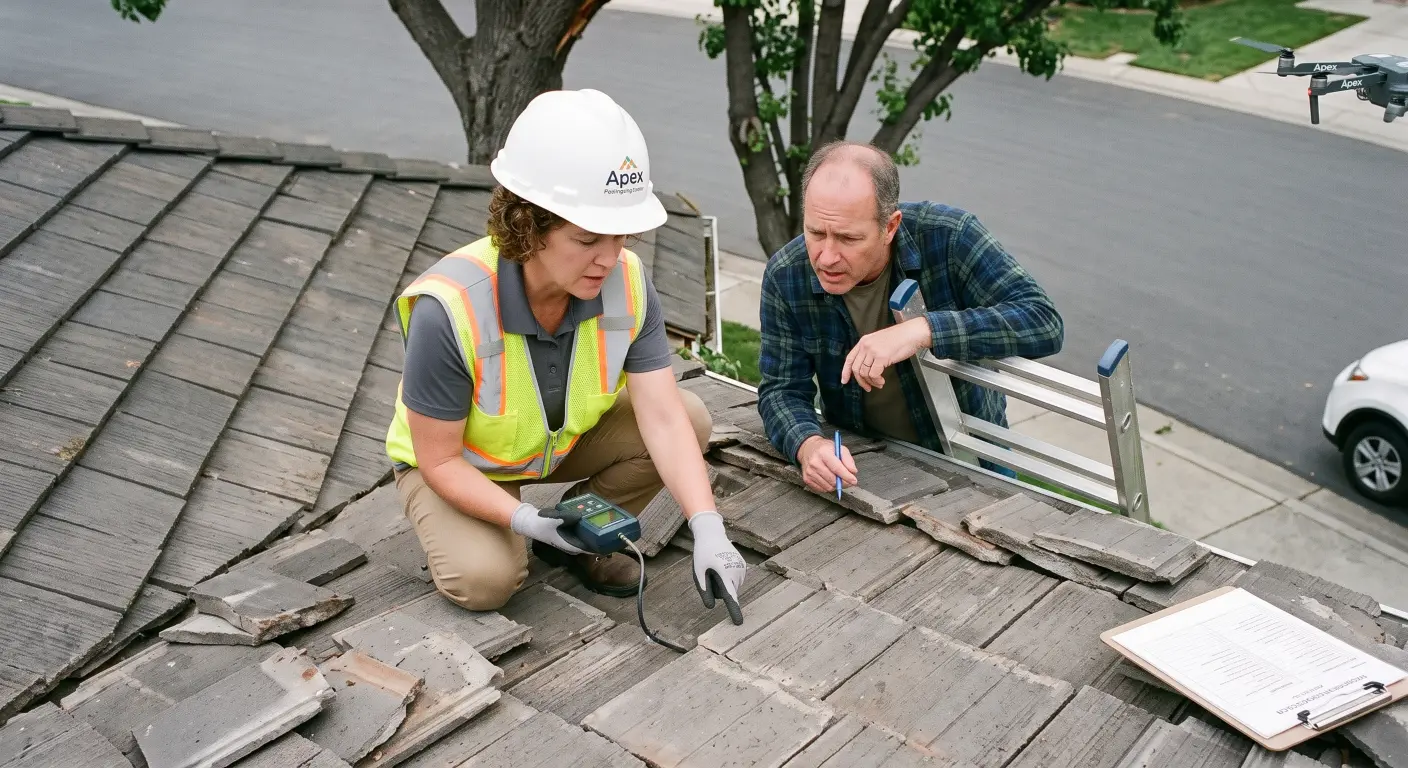
This is also where a low-pressure, documented roof inspection can be helpful. Not because it automatically leads to replacement, but because it may help clarify whether you are looking at routine maintenance, a negotiation issue, or future replacement planning.
If you’re under contract and the roof comments still feel vague, start with clarity. A documented roof inspection can help you understand whether you’re looking at routine aging, a repair conversation, or a roof you should plan around before closing. No pressure—just a clearer picture of what the report actually means.
Common Mistakes Buyers Make When Reading Roof Comments in an Inspection Report
One common mistake is treating any mention of age like a crisis.
A roof being older is relevant, but it does not tell you everything by itself. Buyers sometimes see the word “aged” and mentally jump straight to full replacement, even when the report is really pointing to planning and closer evaluation rather than immediate failure.
Another mistake is assuming “no leak” means no future expense.
A roof may still require planning or repair even if there is no active interior leak today. Many first-time buyers want a simple yes-or-no answer, but roofs rarely work that way. No visible leak can still coexist with deferred maintenance, limited remaining life, or repair needs that matter financially.
A third mistake is relying only on agent reassurance without understanding the roof.
Good agents can be helpful, but you still need your own clarity on what the roof notes mean. “That’s normal” may be true. It may also be incomplete. The better question is normal for what—normal aging, normal maintenance, or normal signs of a roof nearing a bigger expense?
Another mistake is failing to budget because the roof “made it through inspection.”
Passing inspection is not the same as being financially invisible. Buyers sometimes leave the inspection period thinking the roof is settled simply because the transaction kept moving. Then, once they own the home, they realize they never actually translated the roof findings into a repair or replacement plan.
What Good Verification Looks Like Before You Close
Good verification should leave you with something more useful than general worry.
That usually means photos, clearer notes, and a better explanation of scope. Better documentation can make the next step easier to evaluate. You want to know what was observed, where it was observed, and whether the issue appears isolated, maintenance-related, or part of a broader condition story.
It also helps to understand the difference between a general home inspection note and a roofing-specific evaluation.
A home inspector is usually looking at the property as a whole. That is valuable, but it is different from someone evaluating the roof more directly. A general inspection report may tell you where to ask more questions. A roofing-specific opinion may help you get closer to an actual plan.
That distinction matters for first-time buyers because many roof concerns live in the gray area between “ignore this” and “replace everything.” General notes often identify the gray area without fully resolving it.
Before you close, useful verification may include:
- Photos of the actual roof concerns
- Clearer explanation of whether issues appear isolated or broader
- Better understanding of whether the concern suggests maintenance, repair, or planning for replacement
- Documentation that helps you make a calmer decision rather than a rushed one
You do not need perfect certainty. You need enough clarity to make a smart choice.
The Best Next Step if You Want Clarity Without Overreacting
If you are under contract and the roof still feels like one of the fuzzier parts of the inspection report, that does not mean the deal is bad. It usually means you need a little more clarity before you assign the right weight to the issue.
That is the real value of asking good roof questions for first time homeowners. Not to become a roofing expert overnight, but to make better decisions while the inspection window is still open.
The best next step is often a documented roof inspection that helps translate vague comments into something more practical: routine aging, repair conversation, or future replacement planning. That gives you a better chance of entering homeownership with eyes open instead of crossing your fingers.
If you’re under contract and the roof comments still feel vague, start with clarity. A documented roof inspection can help you understand whether you’re looking at routine aging, a repair conversation, or a roof you should plan around before closing. No pressure—just a clearer picture of what the report actually means.
FAQ
What roof questions should first-time homeowners ask during inspection?
Start with the questions that help you make decisions, not just collect details. Ask how old the roof is, whether that age is documented, what visible issues were noted, whether the concerns appear isolated or broader, whether anything suggests active moisture entry, and what roof costs you may need to plan for in the first few years.
How do I know if an old roof is a deal breaker?
An old roof is not automatically a deal breaker. What matters more is the roof’s apparent condition, the quality of the documentation, whether repairs look isolated or widespread, and whether you can realistically plan for future costs if you move forward.
Should I ask the seller to repair the roof before closing?
Sometimes that makes sense, but it depends on what the inspection actually shows. If the roof concerns are specific and reasonably well-defined, a repair request may be easier to support. If the report is vague, better documentation or a roofing-specific evaluation may help before deciding what to ask for.
What roof problems are common in older Atlanta homes?
Older homes often come with roof aging, maintenance history, flashing wear, patch repairs, and questions about how much life may be left in the system. That does not automatically mean the roof is failing, but it usually means the buyer should ask more pointed questions and plan more carefully.
How much should I budget for roof replacement after buying a home?
The exact number depends on the roof type, size, condition, and scope of work, so this article cannot give a universal figure. But if the inspection suggests meaningful age or wear, it is wise to begin planning early for future roofing costs instead of treating the roof as an unknown.
Is a home inspector’s roof comment enough, or should I get a roofer’s opinion too?
A home inspection comment is often a good starting point, but it may not fully define the roofing scope. If the notes feel vague, financially important, or hard to interpret, a roofing-specific evaluation may help you understand whether you are looking at maintenance, repair, or a bigger planning issue.
If you’re under contract and the roof comments still feel vague, start with clarity. A documented roof inspection can help you understand whether you’re looking at routine aging, a repair conversation, or a roof you should plan around before closing. No pressure—just a clearer picture of what the report actually means.
RELATED LINK: