
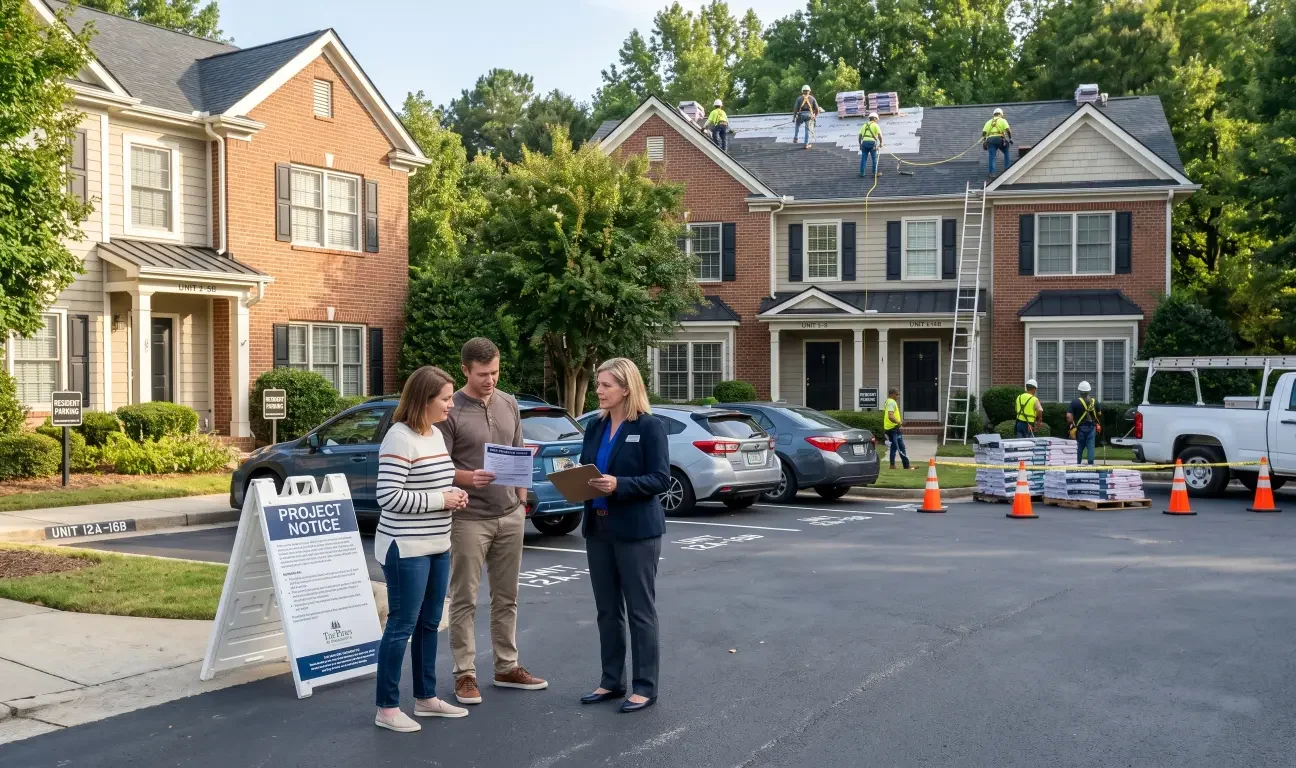
When an HOA board approves a community-wide roof replacement, the construction plan is only half the job. The other half is communication.
Residents want to know what is happening, why it is happening, when crews will be near their home, where they should park, what they need to move, how noisy the work will be, and who they should contact when something feels unclear. If the board waits too long to explain those basics, residents often fill in the blanks themselves. That is when rumors, repeated emails, hallway complaints, and social media frustration start to build.
A roof project will always create some disruption. The goal is not to pretend otherwise. The goal is to reduce avoidable confusion by giving residents clear, repeated, practical updates before the trucks arrive.
For HOA boards, COA boards, and community managers, communicating HOA roof replacement to residents works best when the board treats the project like a phased information campaign: explain the reason, centralize the facts, repeat the schedule, answer the obvious questions, and create one clear path for concerns.
Start Communication Before Residents Start Filling In The Blanks
The first message should go out before every detail is final. That may feel uncomfortable, but silence usually creates more trouble than an early, honest update.
Residents do not need a perfect construction calendar in the first notice. They need to know that the board has approved or is preparing for a roof project, why the project matters, who is helping coordinate it, and when more specific scheduling information will be shared.
A strong first update answers four basic questions:
- What has the board decided?
- Why is the roof work needed?
- Who is involved in planning and execution?
- When should residents expect the next update?
That early note helps prevent the impression that the board is hiding information. It also gives residents time to plan around noise, parking, pets, remote work, deliveries, and other daily-life concerns.
Keep the first message simple. Do not overload residents with every technical detail. Tell them what is known, what is still being finalized, and where official updates will appear.
Build One Source Of Truth For The Roof Project
A major roofing project can create information sprawl quickly. One board member answers a text. The manager sends an email. A contractor gives a verbal update. A resident posts a question online. Suddenly, several versions of the project are circulating at once.
That is why every community roof project should have one source of truth.
This can be a page in the resident portal, a PDF packet, an email thread from the community manager, a printed notice series, or a project page linked from the association website. The format matters less than the consistency. Residents should know where to look before asking the board the same question again.
A good project information hub includes:
- Project overview and reason for the work
- Current schedule or phase map
- Expected work hours
- Parking and access instructions
- Material staging areas
- Safety reminders
- Resident preparation checklist
- Contact path for questions or urgent issues
- Weather-delay policy
- Frequently asked questions
- Cleanup and completion process
The board, community manager, and contractor should all refer residents back to this same information source. That prevents side conversations from becoming unofficial promises.
Use A Phased Notice Sequence Instead Of One Long Announcement
One long announcement is rarely enough. Residents may miss it, skim it, forget it, or assume it does not apply to their building until the crew is already nearby.
A better approach is a phased notice sequence. Each message has a job.
Notice 1: Project Approved Or Project Planned
This notice explains the reason for the roof project, the general scope, the contractor selection or planning process, and when residents will receive scheduling details. It should be calm, factual, and early.
Notice 2: Schedule And Resident Instructions
Once the schedule is ready, send a more specific notice. Include buildings, phases, estimated dates, work hours, parking rules, staging areas, and preparation steps. If the schedule is weather-dependent, say so clearly.
Notice 3: 48- To 72-Hour Reminder
Send a reminder shortly before work begins in a specific building, street, or section. This is where residents need practical instructions: move vehicles, secure patio items, expect noise, keep children and pets away from work zones, and follow posted access guidance.
Notice 4: Day-Of Reminder
A short day-of message can prevent last-minute problems. It should repeat the most important instructions only. If parking must be cleared by 7:00 a.m., do not bury that detail in a paragraph.
Notice 5: Completion And Follow-Up
After work is complete in a phase or building, send a closing update. Explain cleanup, magnet sweeps, punch-list review, warranty or documentation next steps, and how residents should report a legitimate issue.
This notice sequence reduces complaints because residents hear the same key information more than once, at the time it matters most.
Sample HOA Roof Replacement Notice Language Boards Can Adapt
Every association should adapt notices to its governing documents, manager process, and legal requirements. The examples below are not legal templates, but they can help a board or manager draft clearer resident updates.
Sample First Announcement
Subject: Upcoming Community Roof Replacement Project
Dear Residents,
The Board is preparing for a community roof replacement project to address the condition and long-term performance of the roofing system. We are working with our roofing contractor and management team to finalize project details, including schedule, staging, parking instructions, and resident preparation steps.
At this stage, residents do not need to take action. A detailed schedule and preparation checklist will be shared before work begins in each affected area.
Future updates will be sent through the official association communication channel. Please rely on those updates for current project information.
Thank you for your patience as we coordinate this important community project.
Sample Pre-Work Reminder
Subject: Roof Work Reminder For [Building/Street/Phase]
Dear Residents,
Roof replacement work is scheduled to begin for [Building/Street/Phase] on or around [Date], weather permitting. Crews are expected to work during [Work Hours].
Please complete the following before work begins:
- Move vehicles from marked work or staging areas.
- Remove fragile items from patios, balconies, and exterior walls where vibration may be a concern.
- Keep children and pets away from work zones.
- Follow all posted access and parking instructions.
- Contact [Manager/Project Contact] with questions instead of approaching crew members directly.
Roof work is noisy and schedules may shift because of weather or field conditions. We will share updates if the schedule changes.
Thank you for helping the project move safely and efficiently.
FAQs Residents Should Receive Before Roof Work Begins
The best time to answer common questions is before residents ask them. A short FAQ can reduce repeated emails and help the board sound prepared.
When will crews be on my building?
Give residents the best available schedule by building, street, or phase. Use estimated dates when needed, and clearly state that roofing schedules can shift because of weather, material delivery, or field conditions.
Will I need to move my vehicle?
If vehicles must be moved from driveways, garages, parking lots, fire lanes, or staging areas, explain exactly where and when. Parking instructions should be repeated in the schedule notice, reminder notice, and day-of notice.
Will the work be noisy?
Yes. Roof replacement involves tear-off, installation, trucks, equipment, and cleanup. Residents who work from home, have pets, have young children, or are sensitive to noise should be told to plan ahead.
Do I need to be home?
In many projects, residents do not need to be home for exterior roof work. However, the answer depends on access needs, building type, attic conditions, skylights, interior protection requirements, or management policy. Give a clear answer for your specific project.
What should I do with patio furniture, grills, decorations, or attic items?
Tell residents what to move or secure before work begins. If vibration is possible, residents may also want to protect fragile items on walls or shelves. The board should ask the contractor what preparation steps make sense for the property type.
What happens if weather changes the schedule?
Roof work is weather-sensitive. Explain how schedule changes will be announced, where updates will be posted, and how much notice residents can expect when a phase moves.
Who should I contact with questions or concerns?
Residents should have one official contact path. That may be the community manager, a project email address, or an assigned board liaison. Avoid sending every resident directly to the crew or multiple board members.
How To Reduce Complaints During An HOA Roofing Project
No communication plan can eliminate every complaint, but it can reduce unnecessary ones.
Most project complaints come from surprise. A resident is surprised by blocked parking. Surprised by noise. Surprised by materials. Surprised that the schedule changed. Surprised that a crew is working near their unit. The more the board reduces surprise, the calmer the project usually feels.
Start by naming the disruption honestly. Tell residents that roof work is loud. Tell them trucks and materials will be visible. Tell them weather can change the sequence. Tell them some inconvenience is unavoidable, but the board and contractor are working to keep the project organized.
Next, create a clear triage system for concerns.
- Urgent safety issues should be handled immediately.
- Property damage concerns should be documented with photos and routed through the official process.
- Schedule questions should be answered from the project source of truth.
- General complaints should be acknowledged, logged, and answered consistently.
The board should also keep updating the FAQ. If five residents ask the same question, that question belongs in the next community update.
Finally, keep the tone calm. Defensive messages usually make residents more frustrated. Acknowledge the inconvenience, repeat the facts, and explain the next step.
Coordinate Contractor Communication Before The First Notice Goes Out
The board’s communication is only as strong as the information behind it. Before sending detailed resident notices, the board or community manager should ask the roofing contractor for the practical details residents will care about.
Ask for:
- A phase-by-phase schedule assumption
- Expected work hours
- Material delivery and staging plan
- Parking and access needs
- Safety restrictions
- Property protection steps
- Cleanup process
- Weather-delay process
- Point of contact for the manager or board
- Photo or documentation process
Completion and punch-list process
This is where a documentation-led contractor matters. Red Top Roofing’s process is built around inspection evidence, clear planning, project oversight, and practical guidance. For an HOA or COA board, that kind of structure can make the resident communication plan easier to write because the board is not guessing about scope, schedule, or site logistics.
Boards should not wait until the week of construction to ask these questions. The earlier the communication details are built into the project plan, the easier it is to keep residents informed.
What The Board Should Not Promise Residents
Clear communication does not mean overpromising. In fact, overpromising is one of the fastest ways to create conflict during a roof project.
Avoid promising exact completion dates if weather, hidden conditions, or scope changes could affect the schedule. It is better to say “estimated” and explain how updates will be shared.
Avoid promising that there will be no disruption. Roof replacement is noisy, visible, and active. Residents may need to move vehicles, adjust routines, and stay away from work zones.
Avoid giving legal, insurance, or warranty interpretations unless the association has confirmed the answer with the right professional. Boards should coordinate with the community manager, governing documents, association counsel, insurance representatives, or manufacturer warranty information when those issues arise.
Avoid letting individual side conversations override official updates. If a resident asks a good question, answer it through the official channel when it affects more than one household.
The board’s safest communication posture is simple: factual, consistent, documented, and careful about what is still subject to change.
A Calmer Roof Project Starts With A Clearer Communication Plan
A community roof replacement does not have to become chaotic. Residents may not love the noise or temporary inconvenience, but they are more likely to cooperate when they understand what is happening and what they need to do.
The strongest HOA roof project communication plans are built around a few simple habits: communicate early, create one source of truth, send phased notices, repeat resident instructions, answer common questions before work begins, and keep complaints moving through one documented process.
Before your board sends dates to residents, make sure the roofing plan is documented well enough to communicate clearly. Red Top Roofing & Exteriors helps Atlanta-metro communities and property owners move from uncertainty to a practical roof plan through inspection, documentation, project guidance, and organized execution.
If your board is preparing for roof replacement, schedule a free roof inspection or project consultation before the resident communication plan is finalized.
FAQs
How early should an HOA board tell residents about a roof replacement project?
The board should usually send an initial notice as soon as the project is approved or actively being planned, even if exact dates are not final. Early communication helps prevent rumors and gives residents time to prepare for future scheduling details.
What should be included in a roof replacement notice to residents?
A useful notice should include the reason for the work, affected buildings or areas, estimated dates, work hours, parking instructions, access restrictions, preparation steps, safety reminders, weather-delay expectations, and the official contact path for questions.
How can an HOA reduce complaints during roof work?
The board can reduce complaints by setting realistic expectations, repeating instructions, using one source of truth, giving residents advance reminders, documenting concerns, and separating urgent safety issues from general inconvenience complaints.
Should residents contact the roofing crew directly?
Usually, no. For safety and consistency, residents should use the official contact path provided by the association or community manager. The crew should be able to focus on the worksite while the manager, board liaison, or project contact handles questions.
What if weather changes the roof replacement schedule?
The board should explain before work begins that roofing schedules are weather-dependent. Residents should know where revised dates will be posted and how they will be notified if their building or phase changes.
Can the board promise residents a specific completion date?
The board should be careful with exact promises. Estimated schedules are helpful, but roof work can shift because of weather, hidden conditions, material logistics, or safety needs. It is better to communicate realistic ranges and update residents when facts change.
RELATED LINKS: