
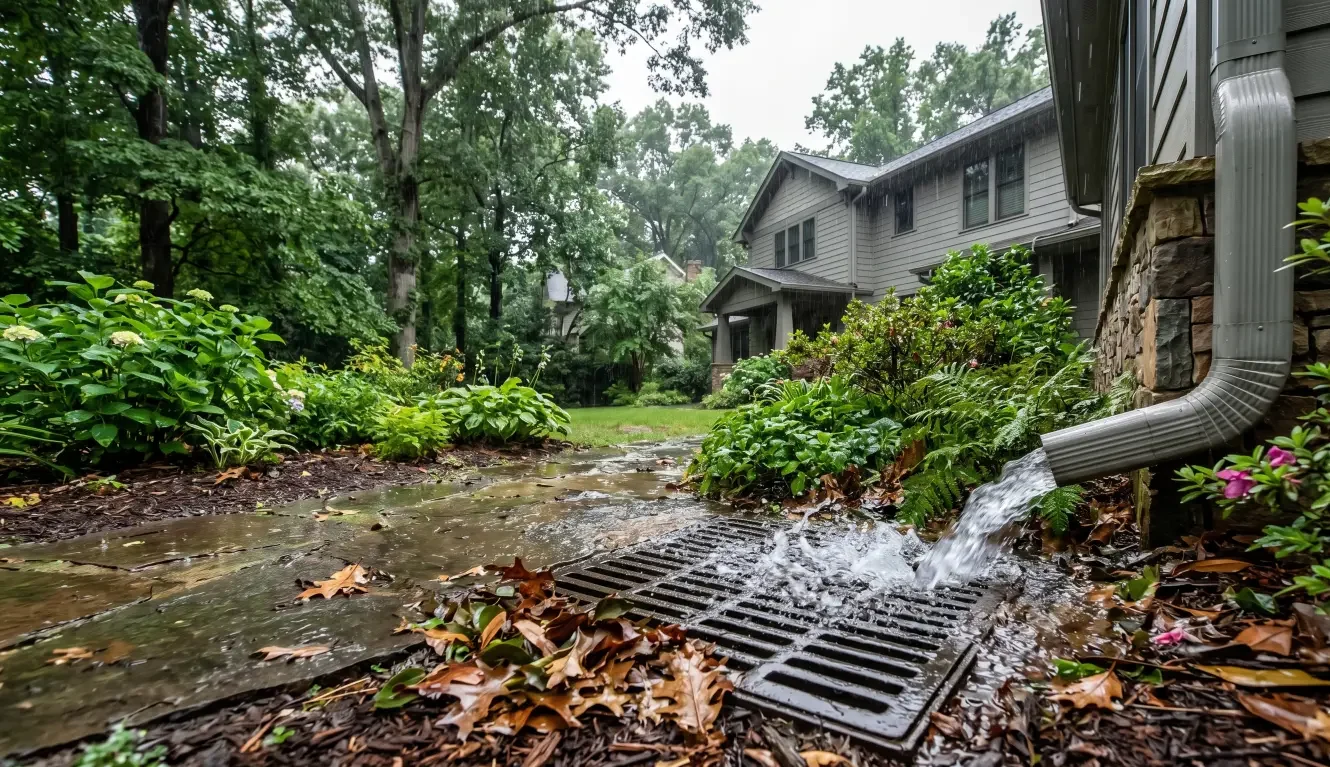
The first heavy rain of the season has a way of exposing problems that stayed quiet for months. A parking lot that looked fine in dry weather suddenly has standing water. A roof drain that seemed to be working now sends water toward an entryway. A catch basin backs up, and before long, tenants are calling about flooding, foul odors, or slippery walkways.
For property managers and facility managers, a storm drain backup around the building is rarely just a nuisance. It can disrupt access, create safety concerns, damage finishes, and turn into an ongoing source of complaints if the real cause is never identified. The good news is that you do not need to guess your way through the first response. A few smart checks can help you separate a surface-level blockage from a deeper drainage issue and decide what needs attention now versus what needs a closer inspection.
When Storm Drain Backups Signal a Bigger Problem
Not every storm drain backup means the entire system has failed. Sometimes a grate is simply blocked with leaves, pine straw, trash, or sediment that built up during a long dry stretch. But when the first major storm causes repeated ponding, slow drainage, or water movement in places it should not be, that often points to more than routine debris.
This is especially true in commercial settings where multiple drainage components work together. A building may have roof drains, downspouts, area drains, parking lot inlets, underground storm lines, and site grading that all affect how water moves. If one part of that chain is restricted, damaged, or overloaded, the symptom may show up somewhere else.
That is why the first heavy rain can be such an important warning sign. Dry months allow debris to collect unnoticed. Minor pipe restrictions may not show themselves until runoff volume increases. A drain that can handle light rain may struggle when a stronger storm pushes more water through the system at once.
If the issue returns after more than one storm, or if backups come with odors, interior seepage, or water lingering long after the rain stops, it is worth treating the situation as a system problem rather than a one-time cleanup job.
Start Here: Fast Triage After a Storm
When a backup happens, the goal is not to diagnose every possible cause on the spot. The first step is to observe the right things while the evidence is still visible.
Check surface-level blockages
Start with the most accessible points. Look at drain grates, catch basins, roof drains, downspout exits, and low points in paved areas. Leaves, mulch, trash, roofing debris, and sediment can collect quickly, especially after the first storm washes everything that built up during dry weather into the system.
In a commercial property, this may mean checking:
- Parking lot and drive-lane inlets
- Sidewalk or courtyard drains
- Roof drain strainers
- Drainage areas near loading zones
- Low spots around dumpster pads or landscaped beds
If a grate is buried under debris or a basin is packed with sediment, that may explain the immediate backup. But even if you find a blockage, do not assume the problem ends there. Surface debris can be the visible symptom of a system that has not been cleaned or inspected in a while.
Look for pooling patterns
Where water collects matters. A puddle at the mouth of one drain tells a different story than water backing up across a large section of the site.
Pay attention to questions like these:
- Is water pooling only around one inlet, or across several areas?
- Does water drain away slowly, or not at all?
- Is runoff overflowing curbs, crossing walkways, or moving toward doors?
- Are some drains accepting water while others are surcharging?
Patterns help narrow the issue. Water concentrated at one inlet may point to a local blockage. Widespread ponding can suggest a downstream restriction, inadequate capacity, or site drainage problems beyond a single drain opening.
Note odors or slow drainage inside the building
If a storm drain backup is accompanied by a sewer-like odor, that deserves attention. It does not automatically mean the storm system is tied directly to the sanitary sewer, but it can indicate stagnant water, trapped debris, or a drainage issue that is affecting other parts of the system.
Also note whether interior floor drains, service-area drains, or lower-level drains seem slow during or after the storm. In some buildings, what looks like a site drainage issue can overlap with broader drain infrastructure problems. The goal is not to jump to conclusions, but to document what happens, where it happens, and when.
This is also a good point to connect to relevant service resources on your site, such as commercial plumbing services or drain cleaning services, so readers understand that storm drain problems can overlap with broader facility drainage concerns.
What’s Actually Causing the Backup?
Once the immediate situation is under control, the next question is simple: why is this happening now?
Debris overload after dry seasons
This is one of the most common starting points. Over time, parking lots gather dirt and litter. Landscaped areas shed mulch, leaves, and seed pods. Roofs collect sediment and debris around drain openings. During a long dry period, all of that can sit in place unnoticed.
Then the first heavy rain arrives and pushes that material into catch basins, drain throats, and underground lines. Even a system that worked last season can struggle if it begins the rainy period partially blocked.
This is why seasonal timing matters. A backup after the first major storm often suggests deferred maintenance, accumulated debris, or both.
Pipe restriction or buildup inside the system
Not every blockage is visible from the surface. Storm lines can develop internal restrictions from sediment, roots, scale, construction debris, or a combination of material that narrows flow over time.
A property may go through one storm with only minor symptoms, then experience a more obvious backup during the next event because the system is already operating with less capacity than it should. From the outside, the drain may look clear. Inside the pipe, the flow path may be reduced enough that the system cannot keep up during peak runoff.
This is one reason a storm drain backup after rain should not be judged only by what you can see at the grate.
Structural issues
If a drain keeps backing up despite cleaning, the problem may be in the pipe itself. Underground storm lines can shift, crack, separate, or partially collapse. In older commercial sites, settlement or age-related wear may create offsets that catch debris and reduce flow. In newer sites, installation defects or site movement can create similar trouble spots.
You may not know the exact defect without inspection, but repeated backups in the same area, especially after surface cleaning, can point to a structural problem rather than a maintenance one.
Cross-connection or system overload
In some properties, drainage issues are complicated by how different systems interact. Roof runoff, area drains, hardscape grading, and underground piping may all converge. A system that is undersized, partially obstructed, or poorly routed may be able to handle normal rain but struggle during heavier events.
There are also cases where a drainage issue appears to be isolated but is actually connected to a larger problem downstream. That is why broad site observation matters. If several drains behave poorly at once, it is less likely that you are dealing with one clogged opening and more likely that the issue is further into the system or tied to overall flow capacity.
The Misconception: “If It Drains Eventually, It’s Fine”
This is one of the most common traps in commercial property maintenance. Water goes down eventually, the storm passes, and the immediate pressure fades. It is easy to treat that as a close call instead of a warning sign.
But delayed drainage still matters.
A drain that takes too long to clear can indicate partial restriction, reduced pipe capacity, or a developing problem that only shows itself under stress. The fact that water eventually recedes does not mean the system is healthy. It may simply mean the runoff volume finally dropped low enough for the drain to catch up.
That distinction matters because the consequences are rarely limited to one storm. A partially restricted system can lead to repeat ponding, recurring tenant complaints, premature pavement wear, erosion near landscaping, or water tracking toward entrances. Even when the site avoids major flooding, slow drainage creates risk every time a storm pushes the system near its limit.
For property managers, the better question is not “Did it eventually drain?” It is “Did this system perform the way it should have under the conditions it faced?” If the answer is no, there is usually value in looking deeper before the next storm tests it again.
Common Fixes That Don’t Solve the Real Issue
Storm drain problems are frustrating partly because some quick fixes seem to work, at least for a while. The issue is that temporary relief can delay the deeper diagnosis that would prevent a repeat problem.
Repeated snaking without inspection
Snaking can help in some drain situations, but using the same approach again and again without learning what is inside the line can leave the real problem untouched. If the pipe has heavy sediment, root intrusion, offsets, or structural damage, clearing a temporary path may not solve much.
For a commercial property with recurring problems, repeated cleaning without inspection can become an expensive cycle: backup, emergency response, temporary relief, repeat.
Ignoring roof drain systems
Ground-level ponding gets attention fast because it is visible, but roof drainage can play a major role in storm issues around a building. A blocked roof drain or overloaded downspout system can push water to places it should not go, including walls, entrances, or lower-level collection points.
If the property includes flat roofing, internal roof drains, or multiple drainage zones, roof drainage should be part of the conversation, not treated as a separate issue unless you know it is unrelated.
Treating each storm as a one-off event
One of the easiest ways to normalize a drainage problem is to respond the same way every time without documenting patterns. If every strong rain produces backups in the same corner of the property, or if complaints always come from the same tenant area, that pattern matters.
A one-off cleanup mindset tends to focus on restoring order quickly. A facility mindset also asks: what is recurring, what conditions trigger it, and what has changed over time?
That is where a maintenance record, inspection notes, and even simple photos from the site can become useful. They help turn “it happened again” into something actionable.
How to Decide: Maintenance, Repair, or Rehab
Once the immediate backup is over, the next step is deciding what kind of response makes sense. Not every issue calls for repair, and not every recurring issue should be handled as routine maintenance.
When routine cleaning is enough
If the problem is clearly tied to visible debris at the surface, sediment in a basin, or a drain that has simply gone too long without service, routine cleaning may be enough. This is more likely when:
- The issue is isolated
- The system drains normally after debris removal
- There is no history of repeat backups in the area
- No signs point to damage or deeper restriction
Even then, it is smart to use the event as a prompt to review the maintenance schedule. If the first heavy rain exposed the issue, the site may benefit from pre-season cleaning rather than reactive cleanup.
When you need a camera inspection
If the same drain backs up again, if water drains slowly even after cleaning, or if the site has signs of a deeper restriction, camera inspection becomes much more useful. A storm drain camera inspection can help show whether the line is obstructed, misaligned, damaged, or holding debris in a way that routine cleaning alone will not solve.
This step is especially valuable when the backup involves underground piping you cannot evaluate from the surface. It can help answer questions such as:
- Is there standing water in the pipe?
- Is the line partially blocked?
- Are there offsets, cracks, or collapsed sections?
- Does the pipe condition support cleaning only, or is repair more likely?
For property managers trying to justify next steps internally, that kind of visual evidence can also help move the conversation from guesswork to a defined plan.
When rehab may be considered
In some cases, a line is not fully collapsed but is in poor enough condition that ongoing cleaning is no longer the best long-term answer. That is where rehabilitation options may come into the discussion.
Depending on the pipe condition, access, and layout, lining or other trenchless rehabilitation methods may be considered for certain storm drain applications. The key word is considered. Whether that approach is appropriate depends on the actual condition of the pipe and the goals of the repair.
This is a good place to reference a pipe lining or trenchless repair service page, as well as a related article on trenchless versus pipe replacement, because the decision is often less about chasing a trend and more about choosing the least disruptive solution that fits the conditions on site.
What a Proper Inspection Should Tell You
A useful inspection does more than confirm that the drain is currently open. It should help the property team understand what happened, how serious it is, and what kind of response makes sense before the next storm.
First, it should clarify flow capacity. Can the system handle runoff the way it is supposed to, or is it operating with a bottleneck? If water is slowing down at a specific point in the line, that matters.
Second, it should say something about pipe condition. A clean line in poor structural condition may still be a problem. A dirty line in otherwise sound condition may be a maintenance issue rather than a repair issue. Those are different conversations, and the difference matters when budgets and timelines are involved.
Third, it should help separate short-term relief from long-term planning. If the immediate problem can be cleared, that may solve today’s complaint. But if the system has repeated buildup, failing sections, or limited capacity during strong storms, the property manager needs to know that too.
A proper inspection should leave you with more than “it’s flowing now.” It should leave you with enough information to answer:
- What caused the backup?
- Is the issue likely to repeat?
- What should be done now?
- What should be planned for later?
That is the kind of clarity that supports both operations and communication with owners, tenants, and maintenance teams.
Preventing the Next Backup Before the Next Storm
Storm drain problems are much easier to manage before the next heavy rain arrives. Once a site has shown signs of backup, the goal should shift from reacting faster to reducing the chance of repeat failure.
A practical prevention approach usually starts with timing. Instead of waiting for the first major storm, schedule drain and basin checks before the rainy season or before predictable weather shifts. For many commercial properties, the best maintenance window is not when the phone starts ringing. It is before debris is mobilized and runoff volume spikes.
System awareness also matters. Many properties inherit drainage layouts that are only partly understood by the current team. Roof drains, site drains, underground lines, low areas, discharge points, and past problem zones should be documented as clearly as possible. Even a simple site map with notes can help future response efforts.
It also helps to track patterns. If a certain parking lot inlet backs up after every heavy rain, or a rear loading area holds water longer than the rest of the site, that should be recorded. Over time, this kind of documentation helps distinguish isolated events from recurring failure points.
This is also a natural place to link to an article about the cost of delaying plumbing repairs. Not because every drainage issue becomes a major expense, but because recurring problems often become harder to manage when they are treated as temporary inconvenience rather than early warning.
A commercial storm drain maintenance checklist might include:
- Clearing debris from grates and inlets
- Inspecting roof drain strainers and downspout discharge points
- Removing sediment from catch basins as needed
- Checking areas with known ponding history
- Documenting odors, slow drainage, and repeat problem zones
- Scheduling deeper inspection if the same issue returns
The exact schedule may vary by property, but the principle stays the same: maintenance works best when it is tied to weather patterns, site conditions, and known risk areas.
When to Call a Professional (and What to Ask)
There is a difference between a drain that needs cleaning and a drainage problem that needs diagnosis. If the same area backs up more than once, if odors persist, if water drains unusually slowly, or if the site shows signs of a deeper piping issue, it makes sense to bring in a professional who can evaluate the system more completely.
For a commercial property, the right call is not just “clear the drain.” It may be “inspect the storm line,” “evaluate recurring ponding,” or “help us understand whether this is maintenance, repair, or rehab.”
When you talk to a contractor, it helps to ask specific questions:
- Are you evaluating only the visible blockage, or the full drainage path?
- Do you recommend camera inspection based on these symptoms?
- If the line is open today, what signs would still point to a deeper issue?
- What maintenance schedule would make sense for this site?
- If the pipe is damaged, what repair or rehabilitation options should we consider?
The best answers should give you direction, not just a temporary result. You want to know not only whether water is moving today, but why the problem happened and what reduces the chance of seeing it again.
If your building is dealing with repeat storm drain backups, it’s worth getting a clear answer—not just a quick fix.
A proper inspection can show what’s happening inside the system and help prevent the next issue.
Call Daniel’s Plumbing Services or schedule an appointment to have your drainage system evaluated before the next storm hits.
FAQ Content
Why does my storm drain back up after heavy rain?
A storm drain may back up after heavy rain because the system cannot move water fast enough under peak runoff conditions. That can happen because of visible debris at the drain opening, sediment or buildup inside the pipe, structural pipe issues, or broader site drainage problems that overload the system.
Is it normal for storm drains to drain slowly after a storm?
Slow drainage is not something to ignore. Even if water eventually clears, delayed drainage can suggest that the system is partially restricted or not handling runoff as well as it should. If the same area drains slowly after multiple storms, it is worth investigating further.
What causes sewer smells in storm drains?
A sewer-like odor near a storm drain can have several causes, including stagnant water, trapped organic debris, or a drainage issue affecting nearby systems. It does not automatically confirm one specific problem, but persistent odor is a good reason to inspect the area more closely.
How often should commercial storm drains be cleaned?
That depends on the property, surrounding vegetation, runoff patterns, and history of buildup. In many cases, it makes sense to inspect and clean problem areas before the rainy season and to review drains again after major storms, especially at properties with known debris or ponding issues.
Can storm drain pipes be repaired without digging?
In some cases, trenchless or lining-based rehabilitation methods may be considered for storm drain pipes. Whether that is an option depends on the pipe’s condition, layout, and accessibility. An inspection is usually needed before deciding whether cleaning, spot repair, rehab, or replacement makes the most sense.
What does a storm drain camera inspection show?
A storm drain camera inspection can help reveal what is happening inside the pipe. Depending on conditions, it may show standing water, debris buildup, root intrusion, offsets, cracks, or other issues affecting flow and pipe condition. It is often useful when backups keep returning after routine cleaning.
If your building is dealing with repeat storm drain backups, it’s worth getting a clear answer—not just a quick fix.
A proper inspection can show what’s happening inside the system and help prevent the next issue.
Call Daniel’s Plumbing Services or schedule an appointment to have your drainage system evaluated before the next storm hits.
Free Roof Inspection in Atlanta | Red Top Roofing Cartersville GA
RELATED LINK: