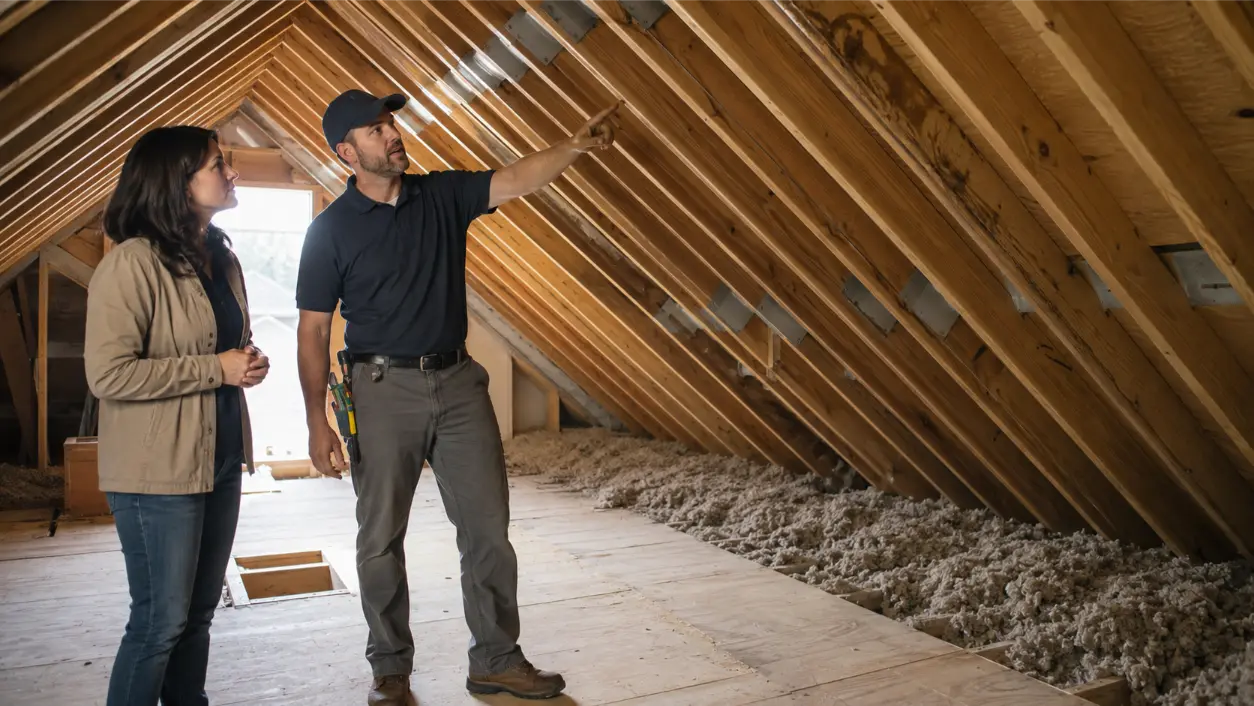
Roof ventilation and decking problems can undermine a new roof long before the shingles themselves appear worn out. Homeowners often focus on the visible finish – shingle color, brand, impact rating, or warranty – but the roof system also depends on what is underneath and inside the attic. If the roof deck is rotted, warped, soft, or unable to hold fasteners properly, new shingles are being installed over a weak foundation. If attic airflow is poorly designed or blocked, heat and moisture can accumulate in ways that affect the deck, insulation, fasteners, and overall roof assembly.
Red Top Roofing & Exteriors uses an inspection-first approach that looks beyond shingles to flashing, decking, ventilation, and storm impacts. That broader view matters during a reroof because tear-off creates one of the best opportunities to see the actual roof deck and correct hidden conditions before the new roofing system covers them again.
A New Roof Is More Than New Shingles
Asphalt shingles are the weather-facing layer, not the entire roof. Beneath them are underlayment, leak-protection components, flashing, fasteners, roof decking, framing, insulation, and the attic or roof-assembly ventilation strategy.
GAF describes the roof deck as the structural base for the roofing system and notes that damaged decking may not securely hold roofing nails. Its current guidance says decking with moisture damage, rot, holes, cracks, shrinkage, warping, or other integrity problems may require replacement. GAF also advises that existing decking provide a smooth and sound substrate before shingles are installed.
That is why a roof can look new from the street and still have unresolved problems underneath.
1. Bad Decking Can Compromise the New Roof From Day One
The roof deck – typically plywood, OSB, or another approved sheathing system – is what the roofing materials are fastened to. If it is soft, delaminated, rotten, badly warped, or otherwise unsound, fasteners may not perform as intended and the finished roof may not lie flat.
GAF’s technical guidance calls the substrate the foundation of the roofing system and requires an existing deck to be smooth and sound for shingle installation. The manufacturer also warns that inferior substrate conditions can compromise the integrity of the roof system.
Common decking concerns include:
- Rot or decay from past leaks.
- Soft or spongy areas.
- Holes, cracks, or broken panel edges.
- Warping, buckling, or uneven panels.
- Large gaps or unsupported areas.
- Moisture-damaged OSB or plywood.
- Old board decking that does not meet the requirements of the selected roofing system without additional work.
2. Why Roofers Cannot Always Price Decking Exactly Before Tear-Off
One of the most important homeowner expectations to set before a reroof is that some decking damage may remain hidden until the old shingles and underlayment are removed. GAF notes that widespread water-damaged or rotted wood is sometimes discovered only during tear-off.
That does not mean decking should be a vague surprise. Before work starts, ask the contractor how hidden decking will be handled:
- What condition triggers replacement?
- How is replacement decking priced?
- Will the crew photograph damaged areas before covering them?
- Who approves additional decking work?
- What material and thickness will be used?
- How will the crew handle older board or plank decking if it is not suitable for the new shingle system?
A clear process is more useful than a promise that no extra decking will be needed.
3. Attic Ventilation Is an Intake-and-Exhaust System
Ventilation is often discussed as if adding more vents automatically solves the problem. In reality, a vented attic is a system. GAF’s current ventilation guidance states that proper attic ventilation consists of a balance between intake air, typically near the soffits or eaves, and exhaust air near the ridge or upper roof.
Its steep-slope field guidance says intake and exhaust should be balanced and cautions that exhaust should not exceed available intake. Local building codes and the specific roof design also matter.
This means installing a ridge vent without enough clear soffit intake may not create the intended airflow. Likewise, soffit vents that are covered by insulation can exist on paper but provide little useful intake.
4. Poor Ventilation Can Become a Moisture Problem
Attic ventilation is partly about controlling heat, but moisture is just as important. Red Top Roofing’s current attic-inspection guidance notes that ventilation-related moisture may show up as generalized decking stains, moisture around fasteners, musty odors, or recurring dampness without one obvious roof-leak entry point.
U.S. Department of Energy building-science guidance explains that roof and attic assemblies must control water vapor, air flow, and condensation risk. In mixed-humid climates such as much of Georgia, moisture behavior can be complex because humid outdoor air, indoor air leakage, HVAC conditions, insulation, and roof-assembly design can interact.
For homeowners, the practical lesson is simple: do not assume every dark attic stain is a roof leak, and do not assume every ventilation concern can be solved by adding vents without evaluating the assembly.
5. Bathroom Fans and Other Exhausts Should Not Dump Moisture Into the Attic
A reroof inspection is a good time to notice problems that are not caused by the shingles but can still damage the roof deck. One example is a bathroom exhaust duct that terminates inside the attic instead of being properly vented to the exterior.
Warm, moisture-laden air discharged into an attic can contribute to condensation on cooler surfaces. Red Top Roofing’s attic-inspection article specifically lists improperly terminated bathroom fan ducts as a clue when diagnosing attic moisture.
A roofer should flag the condition, but the final correction may involve HVAC, electrical, or other qualified trades depending on the home.
6. Blocked Intake Can Make a Good Ventilation Design Perform Poorly
Even when soffit vents and ridge vents were included in the original design, attic insulation can block the airflow path at the eaves. GAF’s ventilation installation guidance instructs installers to keep insulation from blocking intake airflow and notes that attic baffles may be used to maintain a clear path.
During a roof replacement, ask the contractor whether they evaluate:
- Existing soffit or eave intake.
- Whether insulation blocks intake openings.
- Ridge or other exhaust vent configuration.
- Whether different exhaust systems are interacting inappropriately.
- Whether additions, vaulted ceilings, dormers, or other roof geometry interrupt airflow.
Complex homes may need more than a simple vent-count calculation.
7. Roof Deck Moisture Can Hide Until the Old Roof Is Removed
From the attic, moisture damage may appear as staining, darkened sheathing, softened wood, fastener staining, or localized decay. From the top, some defects may only become visible after the old roof is stripped away.
GAF advises that a reroof is an important opportunity to inspect the decking and verify its condition. It also cautions that decking should be dry before roofing materials are installed because wet wood can move as it dries and may affect the finished roof system.
The tear-off stage should therefore include an actual deck inspection, not simply a race to cover the wood with underlayment.
8. Why Decking Quality Matters for Fasteners
Shingles depend on properly installed fasteners, and fasteners depend on a suitable substrate. GAF’s technical guidance emphasizes sufficient nail-holding capacity as an important deck characteristic.
If a nail is driven into rotten or badly deteriorated wood, the fact that the shingle was nailed at the correct location does not make the substrate sound. A strong roof installation requires both correct fastening technique and material capable of holding those fasteners.
9. Ventilation and Decking Problems Can Feed Each Other
These two issues should not be evaluated in isolation. A past roof leak can damage decking. Persistent attic moisture can also contribute to wood deterioration. Damaged decking can then make the next roof harder to install correctly.
That is why Red Top’s inspection-first positioning – shingles, flashing, decking, ventilation, storm impacts, and attic clues where appropriate – is useful for homeowners researching quality. The question is not just, “What shingle are you installing?” It is, “What are you doing with the system beneath it?”
10. Ask How the Ventilation Plan Was Calculated
A contractor should be able to explain why the proposed ventilation approach fits the home. The answer may involve attic size, roof geometry, existing intake, proposed exhaust, insulation placement, local code, and manufacturer requirements.
Avoid treating a universal ratio from the internet as a complete design for every roof. Codes can contain different provisions depending on vapor-retarder conditions, vent distribution, assembly type, and jurisdiction. Manufacturer requirements may add another layer.
A better homeowner question is: “Show me how you determined the intake and exhaust plan for my attic, and show me where each path is located.”
11. Ask What Happens if Bad Decking Is Found
Before signing a roofing agreement, get a clear answer to this question. A professional scope should explain how concealed decking is handled after tear-off.
Useful questions include:
- Will damaged decking be photographed before replacement?
- Will I be notified before significant additional work is performed?
- How is replacement measured and priced?
- Will replacement panels match the required structural and manufacturer specifications?
- How do you handle small isolated areas versus widespread deck problems?
- Will the crew verify the replacement deck is dry and ready before underlayment goes on?
12. Ask How You Can Verify the Work Afterward
Once underlayment and shingles cover the roof, most of the deck is hidden again. Documentation matters.
Ask the contractor to provide photos or video showing:
- Representative deck condition after tear-off.
- Areas of damaged decking before removal.
- Replacement decking before it is covered.
- Intake and exhaust vent locations.
- Blocked or corrected airflow paths when relevant.
- Important flashing or substrate details that will no longer be visible later.
This does not turn a homeowner into a roofing inspector. It creates a clearer record of what was actually found and corrected.
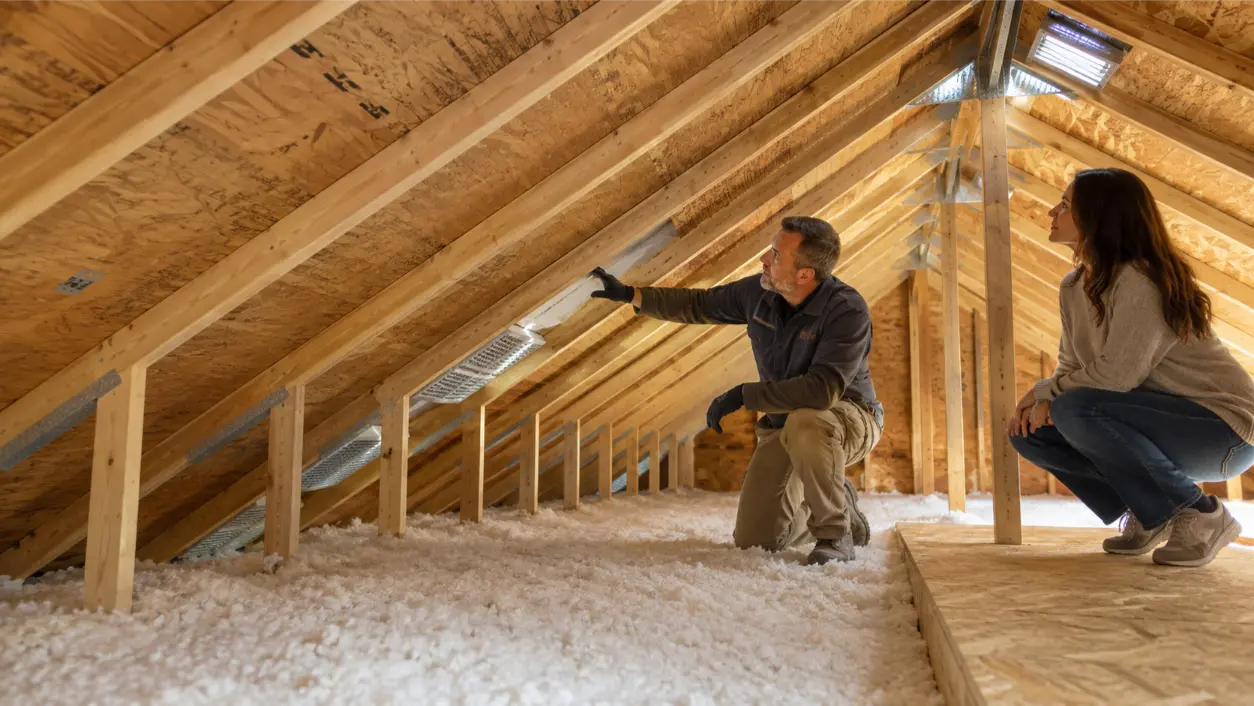
Signs Your Attic or Decking Deserves a Closer Look
- Repeated attic moisture or musty odors.
- Dark staining across broad areas of roof decking.
- Rust or moisture marks around roof fasteners.
- Soft, sagging, or visibly deteriorated sheathing.
- Ceiling stains that return after exterior spot repairs.
- Soffit vents buried under insulation.
- Bathroom exhaust ducts terminating in the attic.
- Wavy or irregular roof surfaces.
- A reroof proposal that never mentions decking or ventilation.
These are warning signs, not final diagnoses. Moisture and roof-shape problems can have multiple causes.
Roof Replacement Quality Checklist
- Ask whether the roof inspection includes attic observations when appropriate and safe.
- Confirm that decking will be inspected after tear-off.
- Get the decking replacement process and pricing method in writing.
- Ask what material and thickness will be used for replacement sheathing.
- Request photos of significant decking damage and replacement.
- Ask how intake and exhaust ventilation were evaluated.
- Confirm soffit intake is not blocked by insulation.
- Ask how bathroom fans and other exhausts terminate.
- Review manufacturer ventilation and substrate requirements for the selected roof system.
- Do not allow new roofing to cover wet, rotten, or obviously unsound decking.
- Keep final documentation with your roofing records and warranty documents.
Frequently Asked Questions
Can Bad Decking Ruin a New Roof?
It can compromise the roofing system. Damaged or unsound decking may not provide a flat, stable, dry surface or sufficient nail-holding capacity. The severity depends on the condition and extent of the problem, which is why damaged decking should be addressed before new shingles cover it.
What Are Signs of Poor Roof Ventilation in an Attic?
Potential clues include persistent attic moisture, broad decking stains, moisture around fasteners, musty odors, blocked soffit intake, and recurring condensation patterns. These conditions can have multiple causes, so a qualified inspection should distinguish ventilation issues from roof leaks, plumbing, HVAC, or other moisture sources.
Does a New Roof Automatically Include New Decking?
No. GAF notes that reroofing does not automatically require replacing all decking. The key is to inspect the existing deck and replace or correct areas that are damaged or unsuitable for the new roof system.
How Can I Tell if My Roofer Replaced Bad Decking?
Ask for pre-cover documentation. Photos taken after tear-off and again after damaged panels are replaced can show what was found and corrected. The contract should also describe how decking quantities and additional charges are handled.
Why Does Ventilation Matter for a Roof Warranty?
Roofing manufacturers often include ventilation and substrate requirements in installation instructions and warranty terms. Exact requirements and coverage vary by product and warranty, so homeowners should review the written manufacturer documents for the selected system rather than assuming that any vent configuration automatically satisfies warranty conditions.
Inspect the Hidden Roof Before You Cover It Again
The best shingles cannot correct rotten decking, blocked intake, moisture problems, or a poorly planned attic ventilation system. A quality reroof should use the tear-off stage to inspect the substrate, document defects, correct damaged decking, and verify that the roof assembly has a sensible ventilation strategy for the actual home.
Red Top Roofing & Exteriors uses a documentation-led inspection process that looks at more than the shingle surface. Atlanta-area homeowners can request a free roof inspection from Red Top Roofing to evaluate shingles, flashing, decking, ventilation, and storm-related conditions before planning a roof replacement. Homeowners dealing with unexplained ceiling stains or attic moisture can also review Red Top’s attic inspection guide for additional diagnostic context.
Roofing, construction, ventilation, and warranty disclaimer: This article provides general educational information and is not structural, engineering, building-code, HVAC, mold, warranty, or manufacturer-specific advice. Ventilation requirements, roof-deck specifications, moisture behavior, code provisions, and warranty terms vary by home, roof assembly, product, and jurisdiction. Final decisions should be based on an onsite evaluation, applicable codes, manufacturer instructions, and qualified roofing or building professionals.
RELATED LINK: GAF — Appropriate Substrates for GAF Asphalt Shingles