
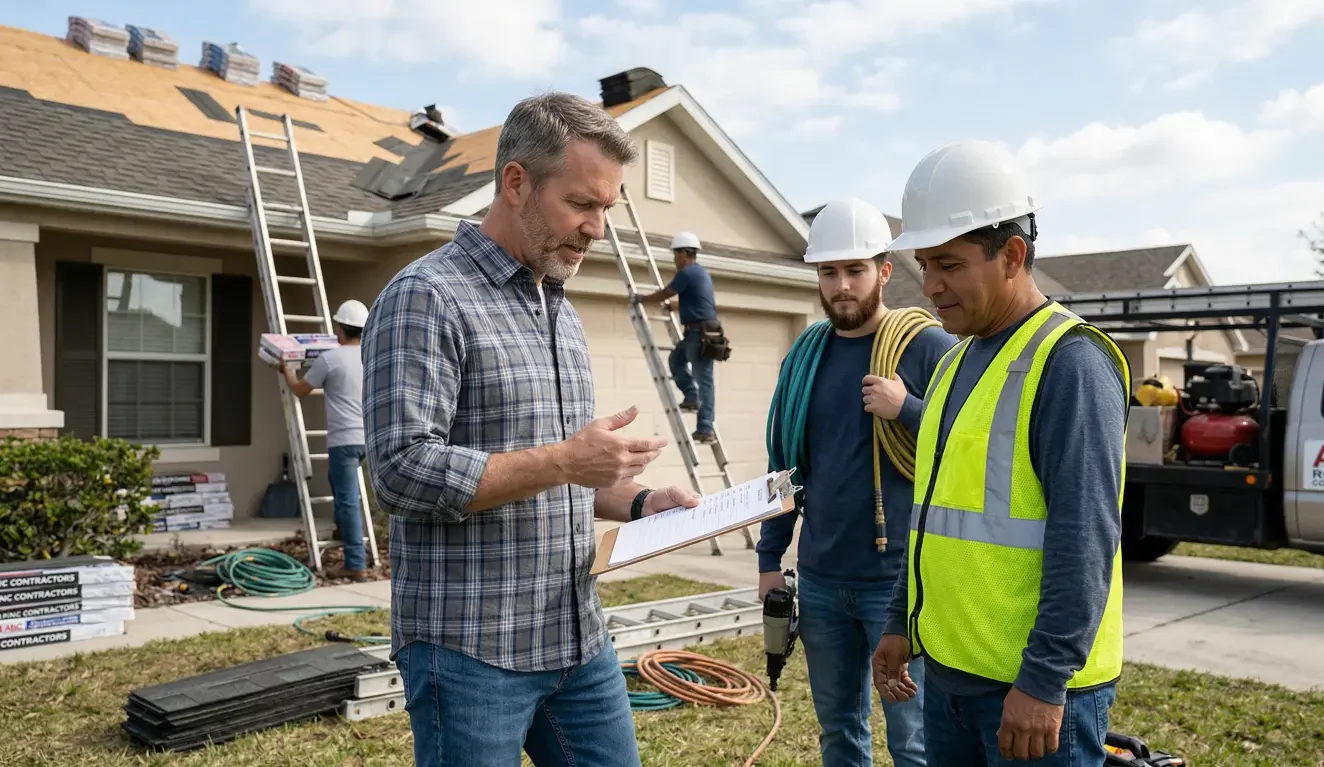
Once the installation date is on the calendar, a different kind of question starts to take over. You are not deciding whether to replace the roof anymore. You are trying to make sure the day itself goes smoothly.
That is why this part of the process can feel more stressful than homeowners expect. The estimate may be signed, the schedule may be set, and you may have already received the project manager introduction email, but practical questions still remain. Where should you park? What should you move? Do you need to stay home? What should you ask before the crew gets fully underway?
This is where a roof replacement day checklist becomes useful. Not because the day has to feel complicated, but because a few small preparations can make it feel much more manageable. The goal is not to control every detail. It is to avoid the preventable friction that makes installation day feel more chaotic than it needs to.
If your install date is already scheduled, it helps to think of preparation in three buckets: access, outdoor items, and communication. Once those are handled, most of the rest becomes easier to navigate. A clear [roof replacement process] and a documented plan can go a long way toward making the day feel more organized before the first truck even arrives.
Why installation day feels more stressful than homeowners expect
Roof replacement day often feels bigger in your head than it did on the day you approved the job. That is not because something is wrong. It is because the project becomes real all at once.
You start noticing practical details that did not seem important during the estimate. The driveway suddenly matters. The patio furniture suddenly matters. The side gate matters. The dog’s routine matters. Whether you need to leave for work or be available for questions starts to matter too.
Part of the stress comes from speed. Roofing crews tend to move with purpose once the day begins. Equipment arrives, materials are staged, work areas take shape, and the house becomes an active jobsite. Even if the project is well managed, it can still feel loud, busy, and unfamiliar from the homeowner’s perspective.
Part of the stress also comes from uncertainty. Many homeowners do not know whether they should be doing more before the crew gets there. They worry about forgetting something obvious or discovering too late that a car, grill, potted plant, or gate code should have been addressed earlier.
That is why install-day preparation is less about doing a lot and more about doing the right few things in advance. You do not need a long technical checklist. You need a practical one.
Start with the short checklist: what to do before the roofing crew arrives
Before the crew pulls in, most homeowners benefit from a short, focused checklist. This is the part that matters most if you want to reduce surprises and feel more prepared that morning.
What to move
Start by moving anything that could interfere with access or that you would rather not leave near active work areas.
This usually includes:
- vehicles in the driveway or immediately next to the work zone
- patio furniture close to the house
- grills and smokers
- potted plants near exterior walls
- hanging decorations or fragile outdoor items
- lawn ornaments or movable yard features
- anything stored near gates, walkways, or garage access points
You do not need to strip your yard bare. You are simply looking for items that could be in the way, get dusty, be exposed to vibration, or make cleanup more awkward later. If you find yourself asking, “Would I be annoyed if this got bumped, covered in dust, or temporarily blocked?” it is probably worth moving.
What to confirm
Before installation day, confirm the practical points that affect how the day will run:
- where you should park
- whether the driveway needs to stay fully clear
- how the crew will access the property
- whether gates need to be unlocked
- who your point of contact is that day
- how to reach the project manager if a question comes up
- whether there are any timing notes you should know about for the morning
This is also the right time to mention anything specific about your property that a crew would not know automatically. That could include a narrow side yard, a gate latch that sticks, a dog that uses the backyard at certain times, or a section of the driveway you are especially concerned about.
What to expect that morning
Expect activity to begin quickly once the crew arrives. There may be vehicles, materials, conversations, and movement around the property early in the day. Even a well-run project can feel busy at the start because there is a lot to set up.
That is why it helps to handle your questions early. If there is something you want clarified, the best time is usually at the beginning of the day, before everyone is fully absorbed in the work.
If you have been wondering what to do before roofers arrive, the answer is not “everything.” It is just this: clear access, move the obvious items, know your contact person, and ask the practical questions before the day gets noisy.
Clear the driveway and think through access before trucks show up
Of all the things homeowners can do ahead of installation day, clearing the driveway is usually one of the most helpful.
Roof replacement work often involves vehicle movement, material delivery, and debris handling. Even when equipment is placed thoughtfully, the workday is easier when the crew does not have to work around cars that could have been moved earlier. If the driveway is tight, shared, or your garage access is important during the day, that is worth discussing before the work starts.
Think through these questions in advance:
- Do all vehicles need to be moved out of the driveway?
- Should cars be parked on the street or in a neighboring safe area?
- Will you need to leave during the day, and if so, how will that affect access?
- Is there a gate, alley, or side-yard path the crew needs to use?
- Are there any special entry instructions the project manager should know?
This is especially important for homeowners who normally make small last-minute movements in the morning. On install day, a casual “I’ll move the car later” can become more disruptive than expected once vehicles and equipment are already in place.
Garage access deserves a quick thought too. If you typically enter and leave through the garage, ask yourself whether you will need that access during the workday. If so, it is worth bringing up with the project manager early. The goal is not to create a special exception for every preference. It is simply to avoid avoidable confusion.
The same goes for side gates. If the crew needs access to the backyard or along the side of the home, make sure nothing is blocking that route. If there is a code, latch, or gate that only opens a certain way, say so before it becomes a delay.
Homeowners do not need to know every operational detail of the crew’s setup. But they do benefit from thinking through access the same way they would for any major workday at the house: make it easy for the right people to move where they need to move, and remove the obvious obstacles in advance.
Move or protect the outdoor items you will care about later
Most homeowners already know to move the car. Fewer think carefully about the smaller things they will care about later.
This is where day-of-install stress often shows up. The work begins, everything feels loud and active, and suddenly you realize the grill is still next to the house, the ceramic planter is still by the front steps, or the string lights are still hanging where people need to move around them.
A better approach is to do one calm walk around the house the day before or the evening before the install. As you walk, look for anything that falls into one of these categories:
- breakable
- movable
- sentimental
- easy to dust-cover or relocate
- likely to be near where crews need room
That often includes patio chairs, umbrellas, planters, grills, toys, hanging décor, small tables, movable garden pieces, and anything leaning against the house.
This does not mean you need to over-prepare. Large fixed landscaping features are not the same as small movable items. The point is not perfection. It is reducing the number of things you are mentally tracking once the day is already underway.
This part of how to prepare your yard for roof replacement also includes thinking about pets and children. If your dog normally uses the backyard first thing in the morning, think ahead about how that routine may need to change. If children are home during part of the day, consider which doors and outdoor spaces may feel calmer and easier to manage.
Noise and vibration are worth acknowledging too. Even if nothing is physically in the way, some homeowners prefer to move fragile décor from porches or covered outdoor areas simply because they would rather not think about it during the workday.
A simple rule helps here: if moving an item now would take two minutes and save you from worrying about it later, move it now.
Meet the project manager with a few practical questions, not a long punch list
When homeowners receive a project manager introduction email, it often answers one big question without saying it directly: who do I talk to on install day?
That matters more than many homeowners realize. Having a clear point of contact can make the day feel much more organized, even when the work itself is naturally busy. It gives you a place to direct practical questions instead of trying to interpret everything happening around the house in real time.
The key is to use that first conversation well. You do not need a long technical list. You need a short, useful one.
Good meeting roof project manager questions usually sound like this:
- Where would you like us to park?
- Is there anything near the house you want moved before the crew starts?
- Do you need access through a gate or side yard?
- If we need to leave during the day, is there anything we should know?
- What is the best way to reach you if a question comes up?
- Is there anything homeowners commonly forget on install day?
These questions work because they are practical. They help you understand timing, access, communication, and anything specific to your property.
This is not the moment to turn the morning into a second sales consultation. If the scope has already been approved and the project is scheduled, most homeowners benefit more from clarifying logistics than from reopening broad questions about materials or process details that were already handled earlier.
It is also the right time to mention anything the crew cannot reasonably guess. A narrow driveway. A backyard gate with a tricky latch. A pet routine. A child’s nap schedule if you are trying to plan around noise. A concern about getting out for an appointment. These are the kinds of details that can make communication easier when shared early.
A good project manager conversation often feels less like a formal meeting and more like a practical handoff. That is exactly what it should be.
Do not assume being home all day is the only responsible option
Many homeowners quietly assume that the responsible thing is to stay home all day and keep watch. Sometimes that does feel more comfortable, especially if it is your first major exterior project. But being home every minute is not always the most important part.
In many cases, what matters more is being prepared, reachable, and clear on logistics before the work gets fully underway.
That means:
- your vehicles are where they should be
- your outdoor items are handled
- your access notes are clear
- your project manager knows how to reach you
- you know who to contact if something needs clarification
For some homeowners, staying home for the start of the day and then remaining available by phone may feel completely reasonable. For others, being home all day may simply feel better, especially if they want to hear the initial walkthrough, keep an eye on pets, or feel more at ease while the work is happening.
There is no need to force one answer for every household. The more useful question is this: what level of presence will help you feel informed without creating unnecessary stress for yourself?
If you are wondering, “Should I stay home during roof replacement?” the practical answer is often that you should be available and reachable, and then decide based on your comfort level, property layout, schedule, and any access questions that still feel open.
The misconception to let go of is the idea that hovering all day is the same as being responsible. Often, good preparation does more for a smooth day than constant supervision.
The easy mistakes homeowners make on roof replacement day
Most install-day problems are not dramatic. They are small oversights that become irritating once the day is already busy.
One common mistake is leaving vehicles too close to the house or waiting until the morning to decide where to move them. That can create pressure right when the crew is arriving and trying to get started.
Another is forgetting side-yard or backyard access. Homeowners often think about the front driveway but not the gate, latch, hose, planter, or stored item blocking the route crews need to use.
Pets are another frequent blind spot. Even calm pets can be unsettled by noise, unfamiliar people, and unusual movement around the home. Waiting until the work is underway to figure out a pet plan usually feels harder than deciding it the night before.
Some homeowners also make the mistake of saving their questions for later. They assume they will “ask once things settle down,” but roofing crews rarely become quieter and less busy as the morning goes on. The easier move is to ask your practical questions at the start.
Another common issue is underestimating noise and vibration. Even if you understand intellectually that roof work will be loud, the lived experience can still be more intense than expected. That matters if you work from home, have small children, or planned to use certain rooms during the day as if nothing unusual were happening.
And then there is the simplest mistake of all: not doing one last walk around the property. That final look often catches the forgotten planter, the grill, the decorative item by the wall, or the car still closer to the house than it should be.
None of these mistakes mean the day will go badly. They just tend to create preventable friction. The point of preparation is not to eliminate all disruption. It is to reduce the avoidable version of it.
What a well-run installation day should look like from the homeowner’s side
Homeowners do not need to understand every technical detail of roofing work to get a sense of whether installation day feels organized.
From your side, a well-run day usually feels clear rather than confusing. You know who your point of contact is. You know where to direct a question. The crew’s presence may be busy, but it does not feel random.
Communication is one of the clearest signals. That does not mean constant updates. It means the basic logistics feel handled. You know where to park. You know how access is working. You know who to talk to if something changes or a question comes up.
Another sign is that the day has a visible structure. There is a clear start, purposeful movement, and the sense that the crew is working from a plan rather than improvising every next step. Even if the project is noisy and disruptive, it should not feel like no one is in charge.
Respect for the property is another useful signal. Homeowners should feel comfortable asking how debris equipment and cleanup will be handled around the driveway and yard. The specific methods may vary, but the important part is that the topic is taken seriously and explained clearly rather than brushed aside.
The project manager relationship matters here too. Having a clear point of contact can make installation day feel more organized because you are not left guessing who owns communication.
If your project is expected to move quickly, that can be reassuring, but it is still reasonable to understand that timing may depend on weather and scope. Fast does not need to mean rushed. Homeowners are usually looking for something simpler: a day that feels structured, prepared, and competently led.
That is often the best proof from the homeowner’s side. Not flashy language. Not promises. Just a process that feels thought through.
The simplest next step if your installation date is already scheduled
If your installation date is already scheduled, now is the time to confirm the small details that make the day easier.
Reach out to your project manager with questions about parking, access, outdoor items, and what to expect that morning.
Red Top Roofing can help you move into installation day with a clearer plan and fewer surprises.
That next step matters because most install-day stress does not come from the roof itself. It comes from unanswered practical questions. Once those are handled, the day usually feels much more manageable.
If you still feel unsure, keep it simple. Walk the property once. Move the obvious items. Make a parking plan. Think through pets and access. Then send the short list of practical questions that will help you feel ready.
That is the value of a checklist for roof installation day. It helps you focus on what matters, let go of what does not, and meet the crew feeling prepared rather than rushed.
If you are still early in the process and not yet scheduled, a [free roof inspection] can be a useful starting point for creating a clearer plan before installation day arrives.
FAQ Content
What should I do before roofers arrive on installation day?
Before roofers arrive, move vehicles away from the work area, clear any access points the crew may need, relocate small outdoor items near the house, and confirm who your point of contact is for the day. It also helps to ask any practical questions before the crew is fully underway.
How should I prepare my yard for roof replacement?
Prepare your yard by moving patio furniture, grills, potted plants, decorations, toys, or other movable items that are close to the house or near access routes. You do not need to move everything in the yard, only the items that could be in the way, get dusty, or create extra stress if left in place.
What questions should I ask the roof project manager?
Ask simple logistics questions first. Good examples include where to park, whether anything near the house should be moved, whether access through a side gate is needed, what to expect that morning, and how to reach the project manager if a question comes up during the day.
Should I stay home during roof replacement?
Not always. In many cases, the more important thing is being prepared and reachable rather than physically present all day. Some homeowners still prefer to stay home for comfort or convenience, especially at the beginning of the project, but it is not automatically the only responsible choice.
Where should I park on roof replacement day?
That depends on how the crew plans to access the property and use the driveway. In many cases, it is best to move vehicles away from the driveway or immediate work area before the crew arrives. If you are unsure, confirm the parking plan with your project manager ahead of time.
What should I move before a new roof is installed?
Move anything small, fragile, or in the way near the house. That often includes cars, patio furniture, grills, potted plants, decorations, and items near gates or walkways. A good rule is to move anything you would rather not worry about once the workday begins.
If your installation date is already scheduled, now is the time to confirm the small details that make the day easier.
Reach out to your project manager with questions about parking, access, outdoor items, and what to expect that morning.
Red Top Roofing can help you move into installation day with a clearer plan and fewer surprises.
Free Roof Inspection in Atlanta | Red Top Roofing Cartersville GA
RELATED LINK: